
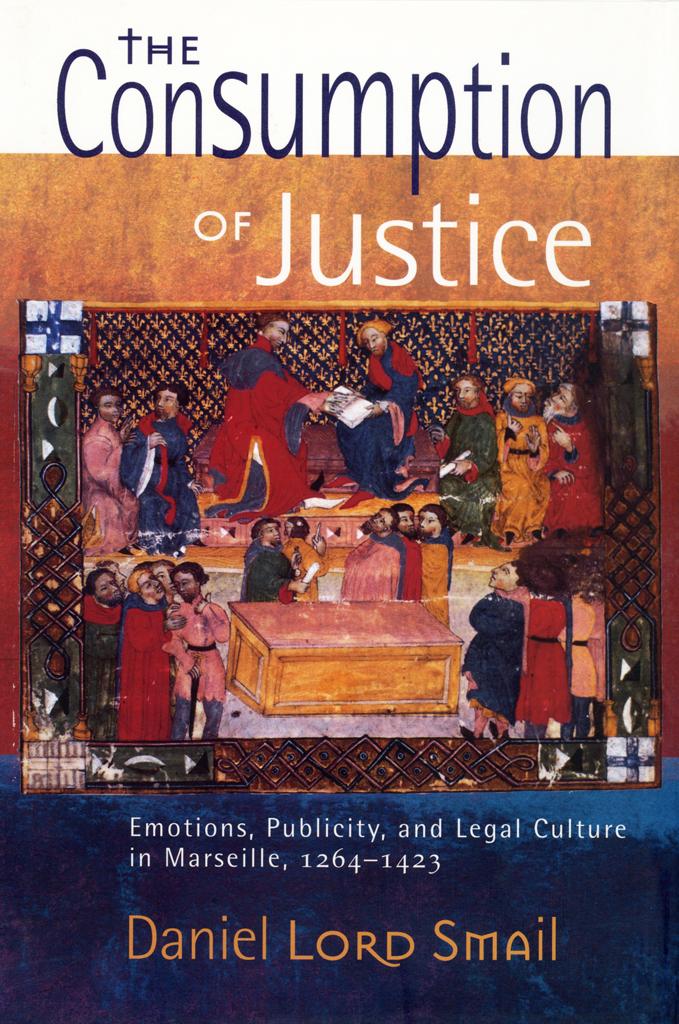
In the thirteenth and fourteenth centuries, the ideas and practices of justice in Europe underwent significant change as procedures were transformed and criminal and civil caseloads grew apace. Drawing on the rich judicial records of Marseille from the years 1264 to 1423, especially records of civil litigation, this book approaches the courts of law from the perspective of the users of the courts (the consumers of justice) and explains why men and women chose to invest resources in the law.
Smail shows that the courts were quickly adopted as a public stage on which litigants could take revenge on their enemies. Even as the new legal system served the interest of royal or communal authority, it also provided the consumers of justice with a way to broadcast their hatreds and social sanctions to a wider audience and negotiate their own community standing in the process. The emotions that had driven bloodfeuds and other forms of customary vengeance thus never went away, and instead were fully incorporated into the new procedures.
Pay easily by card, Klarna, Apple Pay or Google Pay. Not happy? You always have a 14-day money-back guarantee. Read more in our terms. If you have any questions, email us at hello@memmo.org.
Memmo makes studying easier – wherever you are in the world. We bring your course books and smart study tools together in one place: summaries, quizzes, podcasts and flashcards. Plus Ted, your study buddy who answers anything you wonder. Over 50,000 students already study here – built to help you learn faster and stress less.