
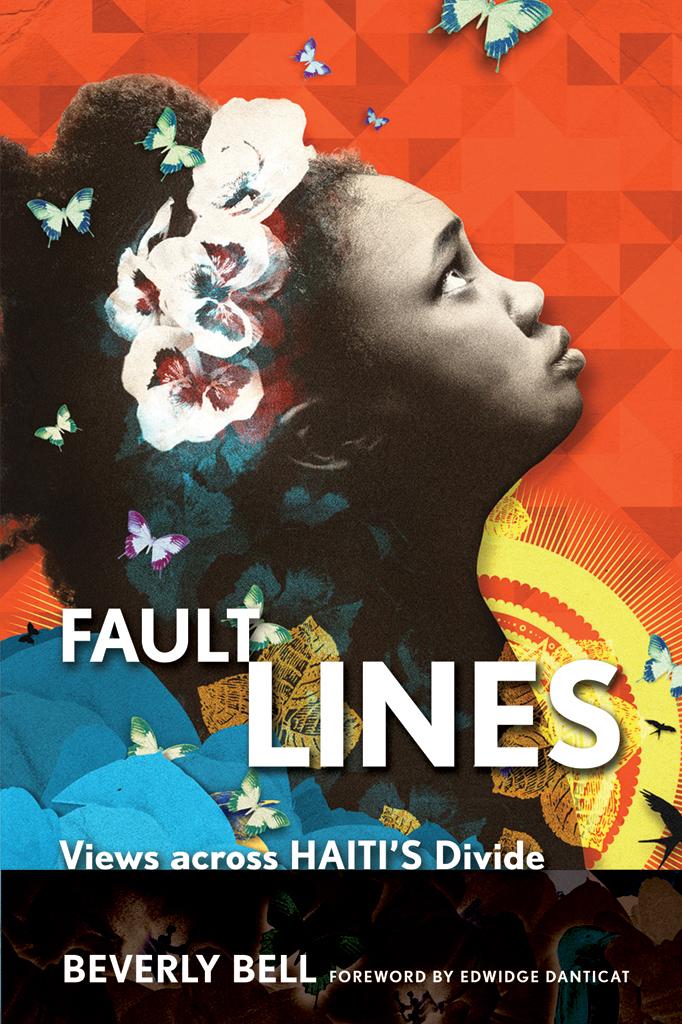
Beverly Bell, an activist and award-winning writer, has dedicated her life to working for democracy, women's rights, and economic justice in Haiti and elsewhere. Since the 7.0 magnitude earthquake of January 12, 2010, that struck the island nation, killing more than a quarter-million people and leaving another two million Haitians homeless, Bell has spent much of her time in Haiti. Her new book, Fault Lines, is a searing account of the first year after the earthquake. Bell explores how strong communities and an age-old gift culture have helped Haitians survive in the wake of an unimaginable disaster, one that only compounded the preexisting social and economic distress of their society. The book examines the history that caused such astronomical destruction. It also draws in theories of resistance and social movements to scrutinize grassroots organizing for a more just and equitable country.
Fault Lines offers rich perspectives rarely seen outside Haiti. Readers accompany the author through displaced persons camps, shantytowns, and rural villages, where they get a view that defies the stereotype of Haiti as a lost nation of victims. Street journals impart the author's intimate knowledge of the country, which spans thirty-five years. Fault Lines also combines excerpts of more than one hundred interviews with Haitians, historical and political analysis, and investigative journalism. Fault Lines includes twelve photos from the year following the 2010 earthquake.
Bell also investigates and critiques U.S. foreign policy, emergency aid, standard development approaches, the role of nongovernmental organizations, and disaster capitalism. Woven through the text are comparisons to the crisis and cultural resistance in Bell's home city of New Orleans, when the levees broke in the wake of Hurricane Katrina. Ultimately a tale of hope, Fault Lines will give readers a new understanding of daily life, structural challenges, and collective dreams in one of the world's most complex countries.
Pay easily by card, Klarna, Apple Pay or Google Pay. Not happy? You always have a 14-day money-back guarantee. Read more in our terms. If you have any questions, email us at hello@memmo.org.
Memmo makes studying easier – wherever you are in the world. We bring your course books and smart study tools together in one place: summaries, quizzes, podcasts and flashcards. Plus Ted, your study buddy who answers anything you wonder. Over 50,000 students already study here – built to help you learn faster and stress less.