
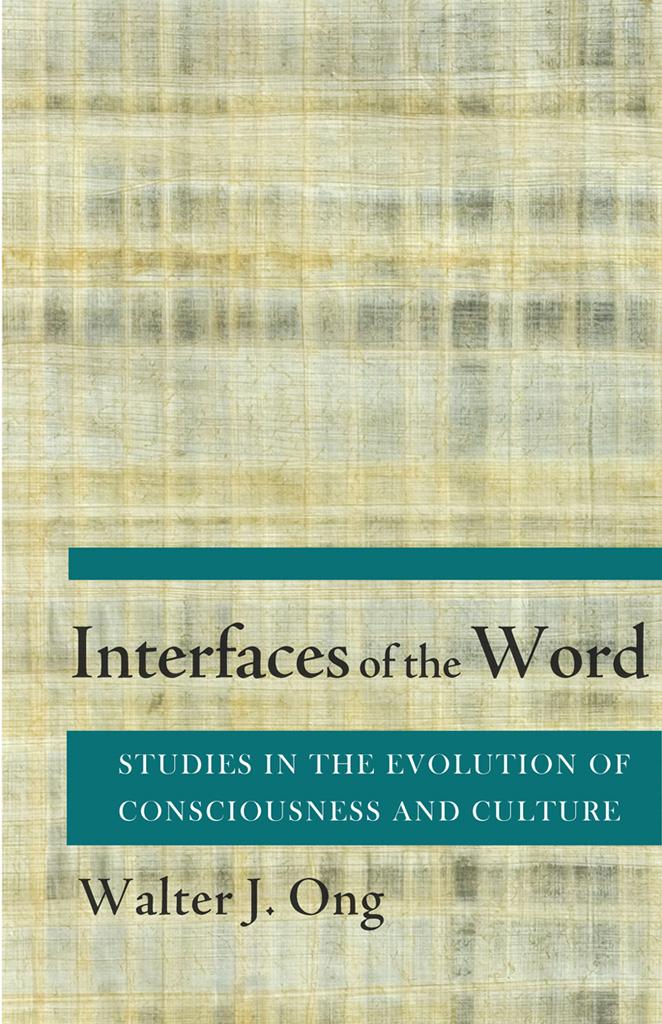
Drawing on a wide range of disciplines—linguistics, phenomenological analysis, cultural anthropology, media studies, and intellectual history—Walter J. Ong offers a reasoned and sophisticated view of human consciousness different in many respects from that of structuralism. The essays in Interfaces of the Word are grouped around the dialectically related themes of change or alienation and growth or integration. Among the subjects Ong covers are the origins of speech in mother tongues; the rise and final erosion of nonvernacular learned languages; and the fictionalizing of audiences that is enforced by writing. Other essays treat the idiom of African talking drums, the ways new media interface with the old, and the various connections between specific literary forms and shifts in media that register in the work of Shakespeare and Milton and in movements such as the New Criticism. Ong also discusses the paradoxically nonliterary character of the Bible and the concerted blurring of fiction and actuality that marked much drama and narrative toward the close of the twentieth century.
Pay easily by card, Klarna, Apple Pay or Google Pay. Not happy? You always have a 14-day money-back guarantee. Read more in our terms. If you have any questions, email us at hello@memmo.org.
Memmo makes studying easier – wherever you are in the world. We bring your course books and smart study tools together in one place: summaries, quizzes, podcasts and flashcards. Plus Ted, your study buddy who answers anything you wonder. Over 50,000 students already study here – built to help you learn faster and stress less.