
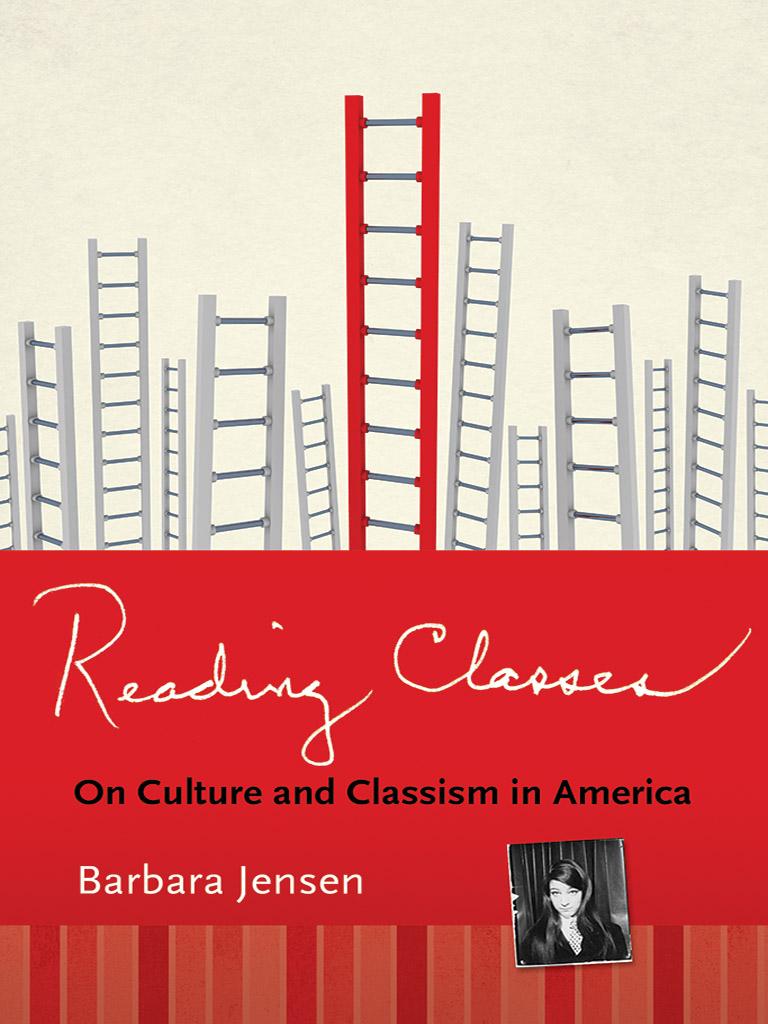
Discussions of class make many Americans uncomfortable. This accessible book makes class visible in everyday life. Solely identifying political and economic inequalities between classes offers an incomplete picture of class dynamics in America, and may not connect with people's lived experiences. In Reading Classes, Barbara Jensen explores the anguish caused by class in our society, identifying classism—or anti–working class prejudice—as a central factor in the reproduction of inequality in America. Giving voice to the experiences and inner lives of working-class people, Jensen—a community and counseling psychologist—provides an in-depth, psychologically informed examination of how class in America is created and re-created through culture, with an emphasis on how working- and middle-class cultures differ and conflict. This book is unique in its claim that working-class cultures have positive qualities that serve to keep members within them, and that can haunt those who leave them behind.
Through both autobiographical reflections on her dual citizenship in the working class and middle class and the life stories of students, clients, and relatives, Jensen brings into focus the clash between the realities of working-class life and middle-class expectations for working-class people. Focusing on education, she finds that at every point in their personal development and educational history, working-class children are misunderstood, ignored, or disrespected by middle-class teachers and administrators. Education, while often hailed as a way to "cross classes," brings with it its own set of conflicts and internal struggles. These problems can lead to a divided self, resulting in alienation and suffering for the upwardly mobile student. Jensen suggests how to increase awareness of the value of working-class cultures to a truly inclusive American society at personal, professional, and societal levels.
Pay easily by card, Klarna, Apple Pay or Google Pay. Not happy? You always have a 14-day money-back guarantee. Read more in our terms. If you have any questions, email us at hello@memmo.org.
Memmo makes studying easier – wherever you are in the world. We bring your course books and smart study tools together in one place: summaries, quizzes, podcasts and flashcards. Plus Ted, your study buddy who answers anything you wonder. Over 50,000 students already study here – built to help you learn faster and stress less.