
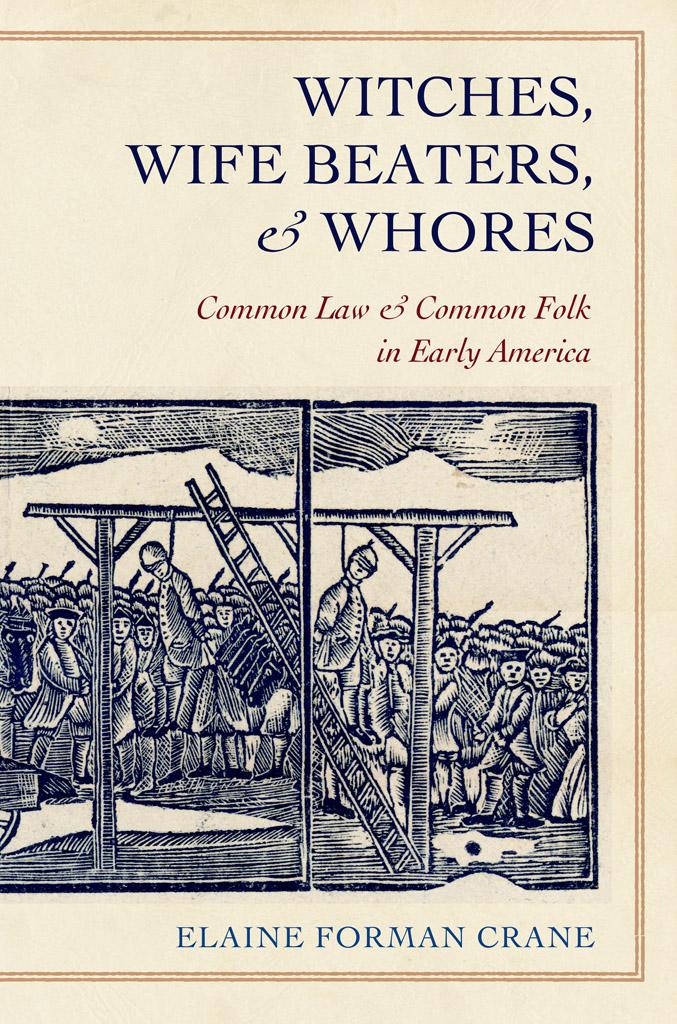
The early American legal system permeated the lives of colonists and reflected their sense of what was right and wrong, honorable and dishonorable, moral and immoral. In a compelling book full of the extraordinary stories of ordinary people, Elaine Forman Crane reveals the ways in which early Americans clashed with or conformed to the social norms established by the law. As trials throughout the country reveal, alleged malefactors such as witches, wife beaters, and whores, as well as debtors, rapists, and fornicators, were as much a part of the social landscape as farmers, merchants, and ministers. Ordinary people "made" law by establishing and enforcing informal rules of conduct. Codified by a handshake or over a mug of ale, such agreements became custom and custom became "law." Furthermore, by submitting to formal laws initiated from above, common folk legitimized a government that depended on popular consent to rule with authority.
In this book we meet Marretie Joris, a New Amsterdam entrepreneur who sues Gabriel de Haes for calling her a whore; peer cautiously at Christian Stevenson, a Bermudian witch as bad "as any in the world;" and learn that Hannah Dyre feared to be alone with her husband—and subsequently died after a beating. We travel with Comfort Taylor as she crosses Narragansett Bay with Cuff, an enslaved ferry captain, whom she accuses of attempted rape, and watch as Samuel Banister pulls the trigger of a gun that kills the sheriff's deputy who tried to evict Banister from his home. And finally, we consider the promiscuous Marylanders Thomas Harris and Ann Goldsborough, who parented four illegitimate children, ran afoul of inheritance laws, and resolved matters only with the assistance of a ghost. Through the six trials she skillfully reconstructs here, Crane offers a surprising new look at how early American society defined and punished aberrant behavior, even as it defined itself through its legal system.
Pay easily by card, Klarna, Apple Pay or Google Pay. Not happy? You always have a 14-day money-back guarantee. Read more in our terms. If you have any questions, email us at hello@memmo.org.
Memmo makes studying easier – wherever you are in the world. We bring your course books and smart study tools together in one place: summaries, quizzes, podcasts and flashcards. Plus Ted, your study buddy who answers anything you wonder. Over 50,000 students already study here – built to help you learn faster and stress less.