
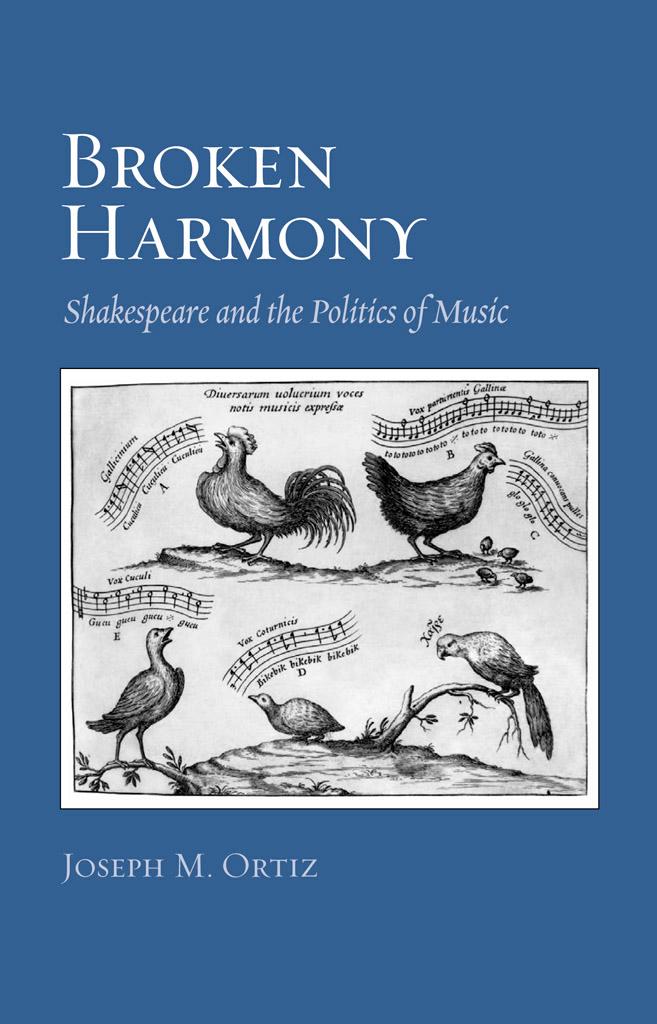
Music was a subject of considerable debate during the Renaissance. The notion that music could be interpreted in a meaningful way clashed regularly with evidence that music was in fact profoundly promiscuous in its application and effects. Subsequently, much writing in the period reflects a desire to ward off music's illegibility rather than come to terms with its actual effects. In Broken Harmony Joseph M. Ortiz revises our understanding of music's relationship to language in Renaissance England. In the process he shows the degree to which discussions of music were ideologically and politically charged.
Offering a historically nuanced account of the early modern debate over music, along with close readings of several of Shakespeare's plays (including Titus Andronicus, The Merchant of Venice, The Tempest, and The Winter's Tale) and Milton's A Maske, Ortiz challenges the consensus that music's affinity with poetry was widely accepted, or even desired, by Renaissance poets. Shakespeare more than any other early modern poet exposed the fault lines in the debate about music's function in art, repeatedly staging disruptive scenes of music that expose an underlying struggle between textual and sensuous authorities. Such musical interventions in textual experiences highlight the significance of sound as an aesthetic and sensory experience independent of any narrative function.
Pay easily by card, Klarna, Apple Pay or Google Pay. Not happy? You always have a 14-day money-back guarantee. Read more in our terms. If you have any questions, email us at hello@memmo.org.
Memmo makes studying easier – wherever you are in the world. We bring your course books and smart study tools together in one place: summaries, quizzes, podcasts and flashcards. Plus Ted, your study buddy who answers anything you wonder. Over 50,000 students already study here – built to help you learn faster and stress less.