
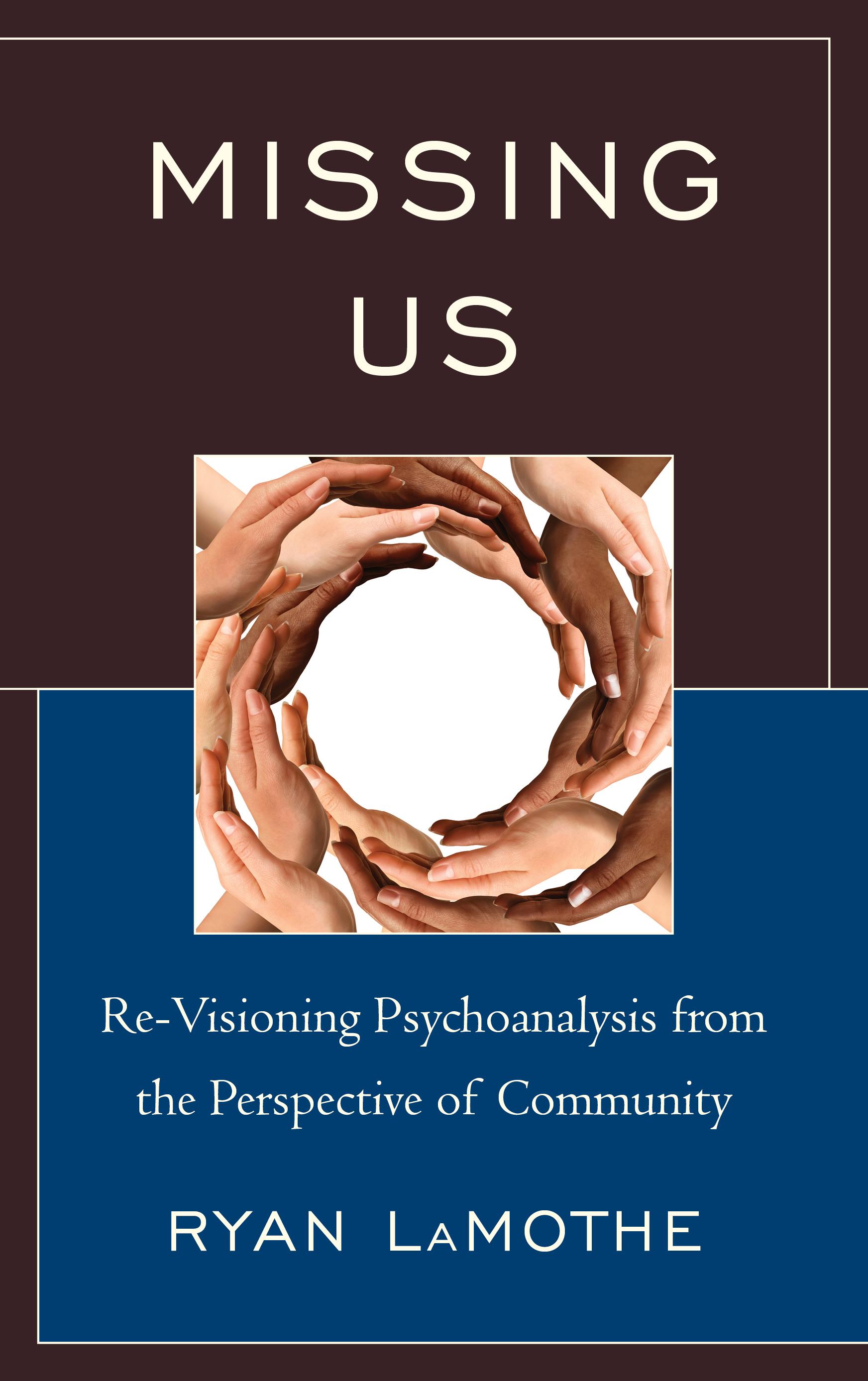
In Missing Us: Re-Visioning Psychoanalysis from the Perspective of Community, Ryan LaMothe questions the ways in which psychoanalytic and psychodynamic theorists and clinicians have historically relied principally on a two-person psychology to understand psychosocial development and practice. While this has many benefits, two-person perspectives often overlook a central need and struggle in human life, namely community. The concept of community and its cognate communion expand and deepen psychoanalytic theories of development, as well as reframe, in part, psychoanalytic concepts, processes, and aims.
In Missing Us, LaMothe, relying on the Scottish philosopher John Macmurray, carefully defines the concept of community, being sure to differentiate it from the notions of sociality and intersubjectivity. Using this definition and the concept of person, LaMothe reframes potential space, transference, and motivation. Given this unique perspective, LaMothe addresses the strengths, limitations, and challenges of psychoanalysis as a therapeutic ritual.
In Missing Us, LaMothe, relying on the Scottish philosopher John Macmurray, carefully defines the concept of community, being sure to differentiate it from the notions of sociality and intersubjectivity. Using this definition and the concept of person, LaMothe reframes potential space, transference, and motivation. Given this unique perspective, LaMothe addresses the strengths, limitations, and challenges of psychoanalysis as a therapeutic ritual.
Pay easily by card, Klarna, Apple Pay or Google Pay. Not happy? You always have a 14-day money-back guarantee. Read more in our terms. If you have any questions, email us at hello@memmo.org.
Memmo makes studying easier – wherever you are in the world. We bring your course books and smart study tools together in one place: summaries, quizzes, podcasts and flashcards. Plus Ted, your study buddy who answers anything you wonder. Over 50,000 students already study here – built to help you learn faster and stress less.