
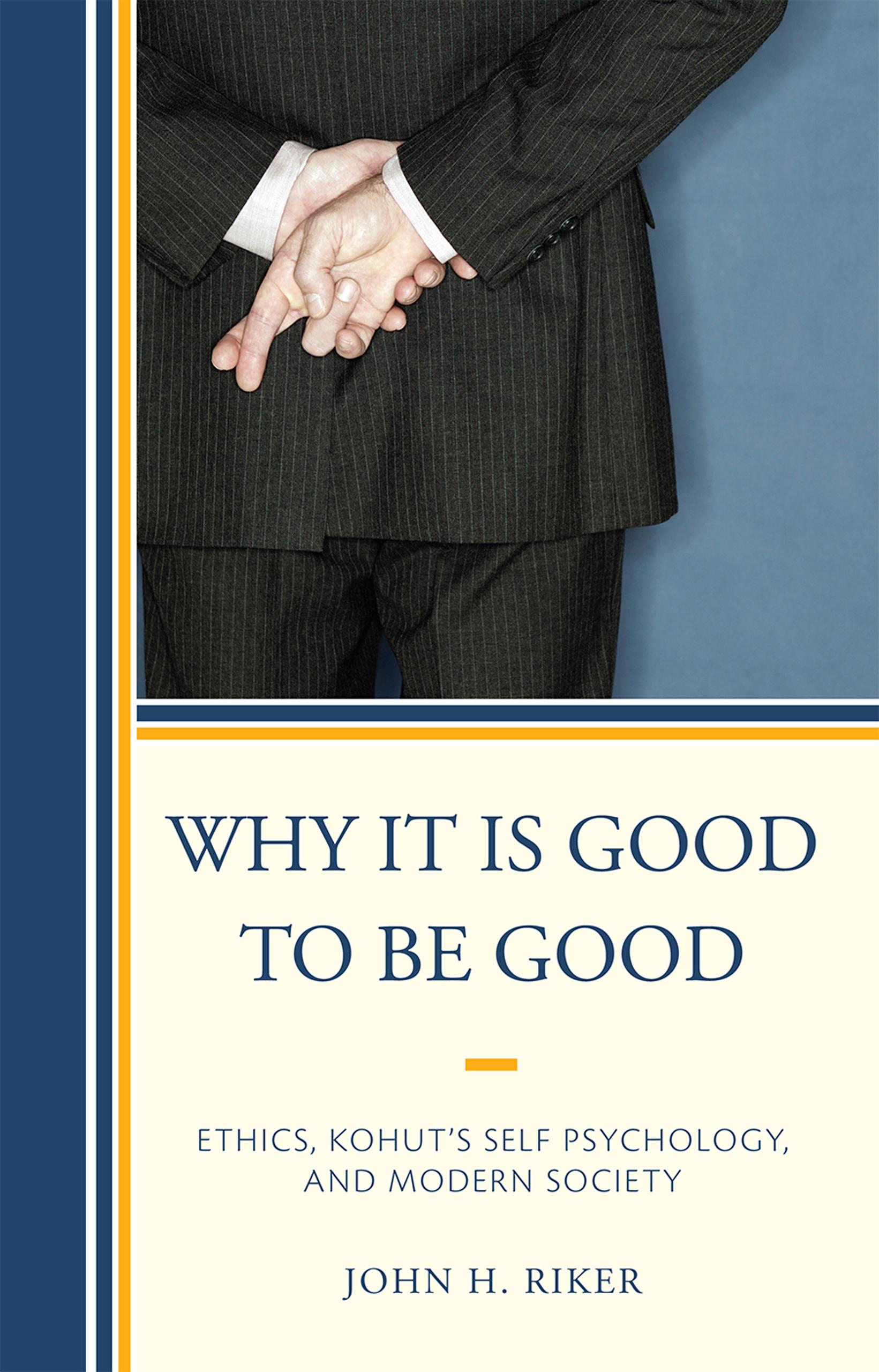
In Why It Is Good to be Good, John H. Riker argues that modernity, by undermining traditional religious and metaphysical grounds for moral belief, has left itself no way to explain why it is personally good to be a morally good person. Furthermore, modernity's regnant concept of the self as an independent agent organized around the optimal satisfaction of desires and involved in an intense economic competition with others intensifies the likelihood that modern persons will see morality as a set of limiting constraints that stand in the way of personal advantage and will tend to cheat when they believe there is little likelihood of getting caught. This cheating has begun to severely undermine modernity's economic and social institutions.
Riker proposes that Heinz Kohut's psychoanalytic understanding of the self can provide modernity with a naturalistic ground for saying why it is good to be good. Kohut sees the self as a dynamic, unconscious structure which, when coherent and actively engaged with the world, provides the basis for a heightened sense of lively flourishing. The key to the self's development and sustained coherence is the presence of empathically responsive others-persons Kohut terms selfobjects. Riker argues that the best way to sustain vitalized selfobject relations in adulthood is by becoming an ethical human being. It is persons who develop the Aristotelian moral virtues-empathy for others, a sense of fairness, and a resolute integrity-who are best able to engage in the reciprocal selfobject relations that are necessary to maintain self-cohesion and who are most likely to extend empathic ethical concern to those beyond their selfobject matrixes.
Riker also explores how Kohut's concept of the self incorporates a number of the most important insights about the self in the history of philosophy, constructs an original meta-psychology that differentiates the ego from the self, re-envisions ethical life on the basis of a psychoanalytically informed view of human nature, explores how pe
Riker proposes that Heinz Kohut's psychoanalytic understanding of the self can provide modernity with a naturalistic ground for saying why it is good to be good. Kohut sees the self as a dynamic, unconscious structure which, when coherent and actively engaged with the world, provides the basis for a heightened sense of lively flourishing. The key to the self's development and sustained coherence is the presence of empathically responsive others-persons Kohut terms selfobjects. Riker argues that the best way to sustain vitalized selfobject relations in adulthood is by becoming an ethical human being. It is persons who develop the Aristotelian moral virtues-empathy for others, a sense of fairness, and a resolute integrity-who are best able to engage in the reciprocal selfobject relations that are necessary to maintain self-cohesion and who are most likely to extend empathic ethical concern to those beyond their selfobject matrixes.
Riker also explores how Kohut's concept of the self incorporates a number of the most important insights about the self in the history of philosophy, constructs an original meta-psychology that differentiates the ego from the self, re-envisions ethical life on the basis of a psychoanalytically informed view of human nature, explores how pe
Pay easily by card, Klarna, Apple Pay or Google Pay. Not happy? You always have a 14-day money-back guarantee. Read more in our terms. If you have any questions, email us at hello@memmo.org.
Memmo makes studying easier – wherever you are in the world. We bring your course books and smart study tools together in one place: summaries, quizzes, podcasts and flashcards. Plus Ted, your study buddy who answers anything you wonder. Over 50,000 students already study here – built to help you learn faster and stress less.