
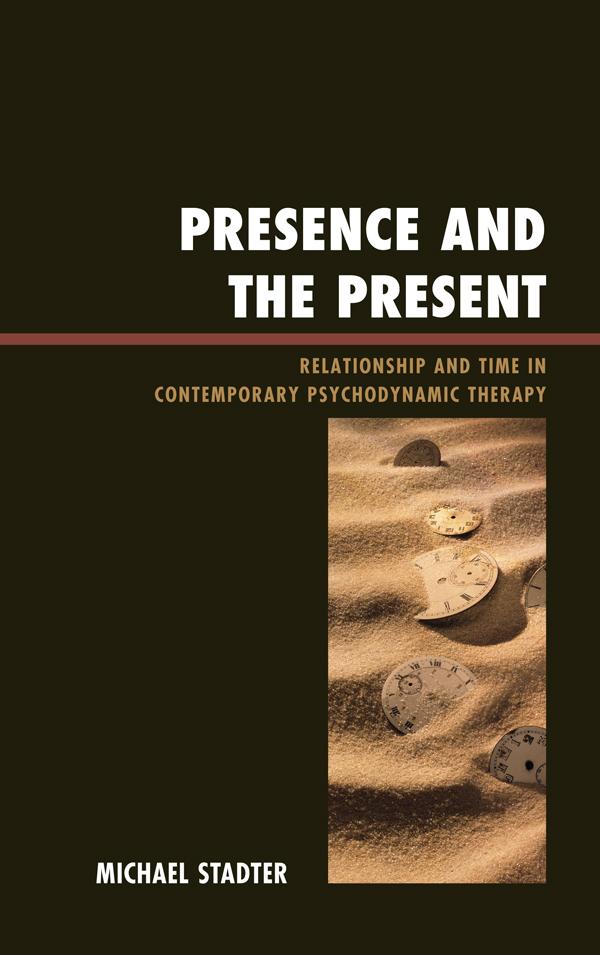
Presence and the Present: Relationship and Time in Contemporary Psychodynamic Therapy offers salient points learned from the author’s forty years of practice and teaching, and applies psychodynamic psychotherapy to the contemporary practice climate. Emphasizing the therapeutic relationship and the dimension of time, it grounds the discussion in clinical application. Including more than fifty vignettes and four extended case presentations, the author deconstructs successful interchanges as well as errors. Part I sets out central themes and components of this contemporary view of dynamic therapy while part II examines present-day applications. Part I begins with an overview of the core (the relationship) and the contours (characteristics) of therapy and some of the challenges therapists face today. The ten contours discussed are the frame, uniqueness, not knowing, different types of knowledge, mentalization, the therapist’s use of self, goals beyond symptom relief, integration with nondynamic approaches, integration with neuroscience and therapy outcome research, and, finally, the use of time and space. Following a discussion of these ten contours, the book summarizes evidence-based relationship elements in therapy and the robust empirical research demonstrating dynamic therapy’s effectiveness, while providing a theoretical overview for therapists not familiar with psychodynamic theory. The last two chapters of part I examine the complex relationships among time, life, and psychotherapy and continue the exploration of therapy duration, the present moment, transience, unending therapy, and termination. Part II of Presence and the Present begins with two chapters on the therapy of trauma. Chapters 8 and 9 discuss the phenomena of trauma and include practical recommendations and frequent therapist countertransferences. Chapter 10 focuses on the organization of self experience through bodily sensations and offers a nuanced model to understand physical elements of transferences and countertransferences. The final three chapters explore therapy with couples who are struggling with disturbed adult or adolescent children, integrate cognitive-behavioral interventions with the dynamic approach, and examine the frequent and key affect of shame in psychotherapy.
Pay easily by card, Klarna, Apple Pay or Google Pay. Not happy? You always have a 14-day money-back guarantee. Read more in our terms. If you have any questions, email us at hello@memmo.org.
Memmo makes studying easier – wherever you are in the world. We bring your course books and smart study tools together in one place: summaries, quizzes, podcasts and flashcards. Plus Ted, your study buddy who answers anything you wonder. Over 50,000 students already study here – built to help you learn faster and stress less.