
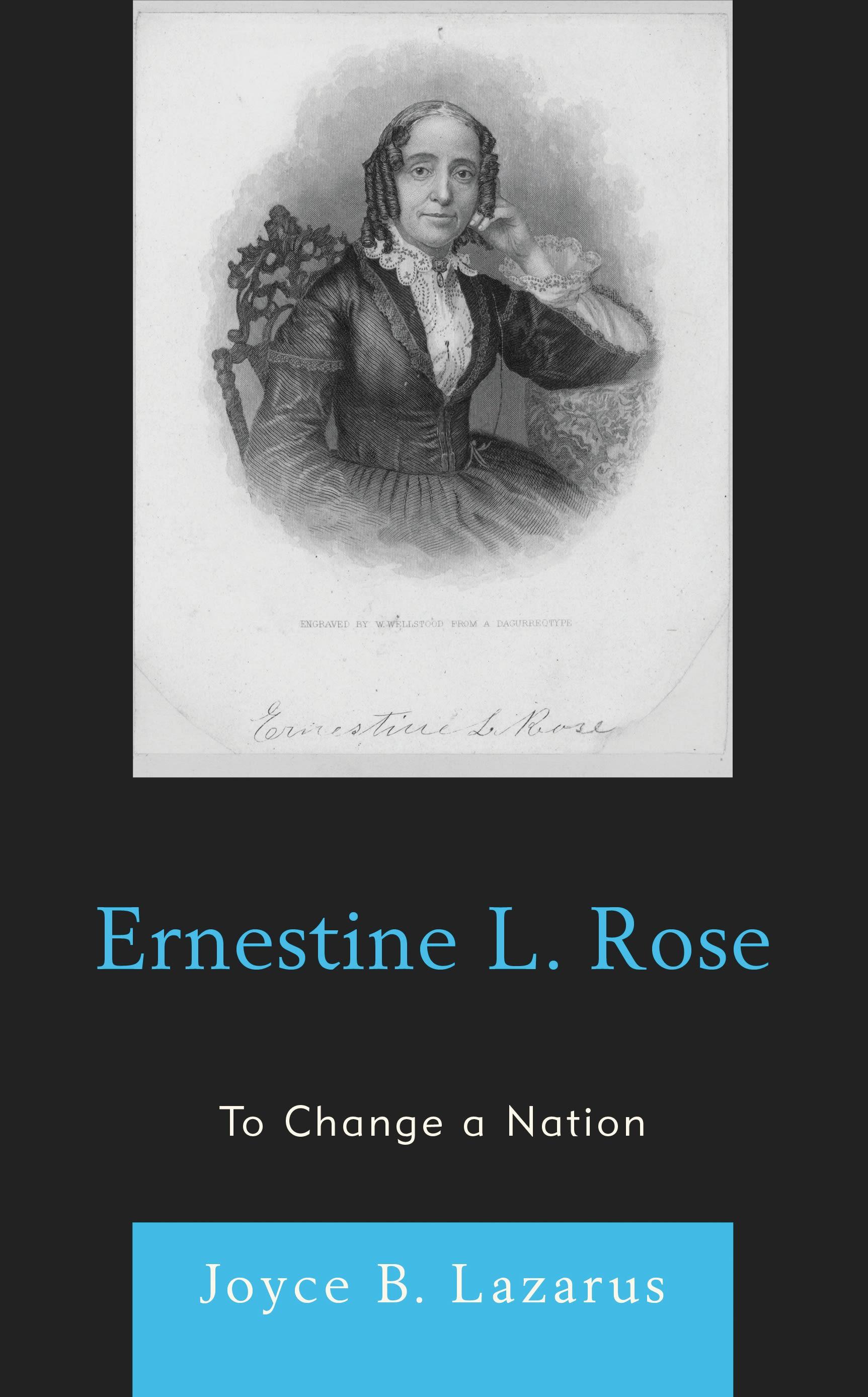
Overlooked by historians for over half a century following her death, Ernestine L. Rose (1810−1892) was one of the foremost orators and social reformers of her era. A fearless human rights activist, she fought for racial equality, women’s rights, freethought and religious freedom, and she can be considered a forerunner of twentieth-century activists in civil rights and the women’s movement. Rose was a pioneer in many movements, articulating the notion that all Americans are endowed with natural rights guaranteed by the Declaration of Independence and by the Constitution. Her passion was to see everyone?women and men, regardless of race, religion or ethnic origin?possessing the civil rights promised by American democracy.
Unlike other nineteenth-century female reformers such as Lucy Stone, Susan B. Anthony and Elizabeth Cady Stanton, Ernestine Rose was the only non-Christian, foreign-born woman. For this reason, she did not entirely fit in and she felt tensions within the women’s rights and abolitionist circles, as nativism and anti-Semitism worsened in the United States. Rose’s outspoken opinions put her at odds with the religious zeal of the American public as well as that of many reformers. A visionary leader, she crisscrossed two continents to fight for change, seeking to raise public awareness of international issues and of social movements in Europe and in the United States.
The topic of this book is highly relevant to current struggles for racial justice and for preserving and strengthening democracy in the United States. Rose’s words are as pertinent today as they were during her lifetime. This book offers a new understanding of Ernestine Rose’s important contributions to American democracy.
Unlike other nineteenth-century female reformers such as Lucy Stone, Susan B. Anthony and Elizabeth Cady Stanton, Ernestine Rose was the only non-Christian, foreign-born woman. For this reason, she did not entirely fit in and she felt tensions within the women’s rights and abolitionist circles, as nativism and anti-Semitism worsened in the United States. Rose’s outspoken opinions put her at odds with the religious zeal of the American public as well as that of many reformers. A visionary leader, she crisscrossed two continents to fight for change, seeking to raise public awareness of international issues and of social movements in Europe and in the United States.
The topic of this book is highly relevant to current struggles for racial justice and for preserving and strengthening democracy in the United States. Rose’s words are as pertinent today as they were during her lifetime. This book offers a new understanding of Ernestine Rose’s important contributions to American democracy.
Pay easily by card, Klarna, Apple Pay or Google Pay. Not happy? You always have a 14-day money-back guarantee. Read more in our terms. If you have any questions, email us at hello@memmo.org.
Memmo makes studying easier – wherever you are in the world. We bring your course books and smart study tools together in one place: summaries, quizzes, podcasts and flashcards. Plus Ted, your study buddy who answers anything you wonder. Over 50,000 students already study here – built to help you learn faster and stress less.