
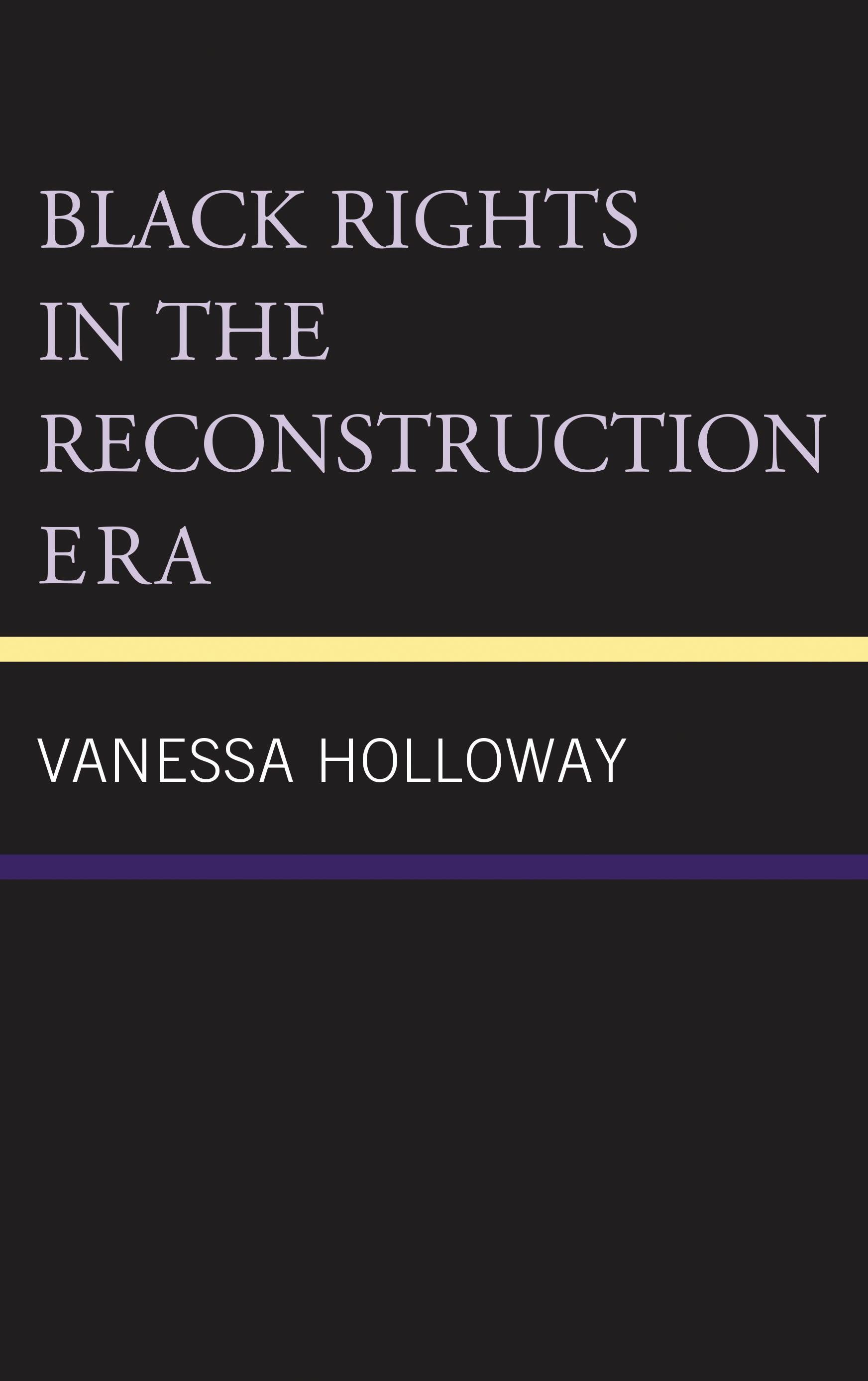
Most observers and historians rarely acknowledge the history of civil rights predating the twentieth-century. The book Black Rights in the Reconstruction Era pays significant scholarly attention to the intellectual ferment—legal and political—of the nineteenth-century by tracing the history of black Americans’ civil rights to the postbellum era. By revisiting its faulty foundational history, this book lends itself to show that, after emancipation, national and local struggles for racial equality had led to the encoding of racism in the political order in the American South and the proliferation of racism as an American institution.Vanessa Holloway draws upon a host of historical, legal, and philosophical studies as well as legislative histories to construct a coherent theory of the law’s relevance to the era, questioning how the nexus of race and politics should be interpreted during Reconstruction. Anchored in the Reconstruction Amendments, Supreme Court decisions and landmark statutes of the 1860s and 1870s—the Black Codes, the Freedmen’s Bureau, the Civil Rights Act of 1866, the Reconstruction Acts, the Enforcement Acts, and the Civil Rights Act of 1875—Black Rights in the Reconstruction Era offers a new perspective on the political history of law between the years 1865 and 1877. It is predominant in the ongoing debates on social justice and racial inequality.
Pay easily by card, Klarna, Apple Pay or Google Pay. Not happy? You always have a 14-day money-back guarantee. Read more in our terms. If you have any questions, email us at hello@memmo.org.
Memmo makes studying easier – wherever you are in the world. We bring your course books and smart study tools together in one place: summaries, quizzes, podcasts and flashcards. Plus Ted, your study buddy who answers anything you wonder. Over 50,000 students already study here – built to help you learn faster and stress less.