
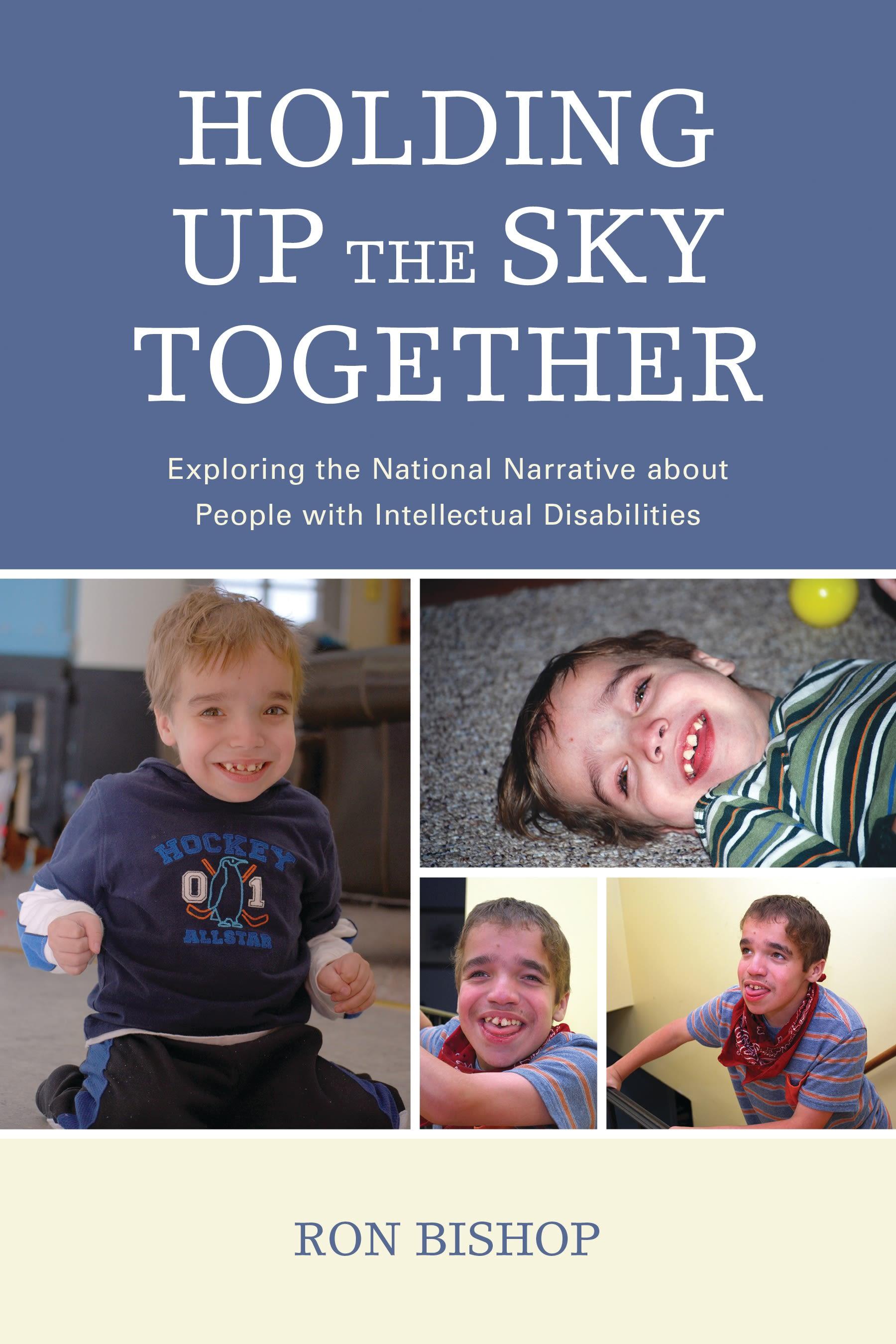
Even as kindness toward individuals with intellectual disabilities has increased, encountering an individual and his or her family whose lives revolve around the daily challenges that come with them is atypical, or is experienced and narrated as such, particularly by the media. Even when there is progress, making such a leap provides rhetorical cover, or at least a distraction, while intolerance regroups. And for some, it becomes less about showing love and compassion than about being able to pat oneself on the back when an interaction with a person like our son Neil is over.
But it’s why they don’t know, or are curious but reluctant to engage, or just flat out lack empathy, that compelled us to write this book. Contributing to their misimpressions and misanthropy are portrayals of individuals with intellectual disabilities in the mass media, scant though they are. We should always be skeptical of those in my line of work who argue that the onslaught of information we take in from a widened array of sources can magically change our behavior – the so-called “hypodermic needle” theory of media effects. But these messages do help us craft our realities and develop and share our own narratives about folks with intellectual disabilities.
Holding Up the Sky Together is admittedly a hybrid: part memoir, part academic analysis—a professor with more than 30 published articles and four books, all of which revolve around media analysis, looks inward. But our fervent hope is to inject a bit more realism into the national dialogue about intellectual disabilities. We are grateful for increased awareness and tolerance, for Special Olympics, and for shows like Born This Way. But there is so much more to be done.
But it’s why they don’t know, or are curious but reluctant to engage, or just flat out lack empathy, that compelled us to write this book. Contributing to their misimpressions and misanthropy are portrayals of individuals with intellectual disabilities in the mass media, scant though they are. We should always be skeptical of those in my line of work who argue that the onslaught of information we take in from a widened array of sources can magically change our behavior – the so-called “hypodermic needle” theory of media effects. But these messages do help us craft our realities and develop and share our own narratives about folks with intellectual disabilities.
Holding Up the Sky Together is admittedly a hybrid: part memoir, part academic analysis—a professor with more than 30 published articles and four books, all of which revolve around media analysis, looks inward. But our fervent hope is to inject a bit more realism into the national dialogue about intellectual disabilities. We are grateful for increased awareness and tolerance, for Special Olympics, and for shows like Born This Way. But there is so much more to be done.
Pay easily by card, Klarna, Apple Pay or Google Pay. Not happy? You always have a 14-day money-back guarantee. Read more in our terms. If you have any questions, email us at hello@memmo.org.
Memmo makes studying easier – wherever you are in the world. We bring your course books and smart study tools together in one place: summaries, quizzes, podcasts and flashcards. Plus Ted, your study buddy who answers anything you wonder. Over 75,000 students already study here – built to help you learn faster and stress less.