
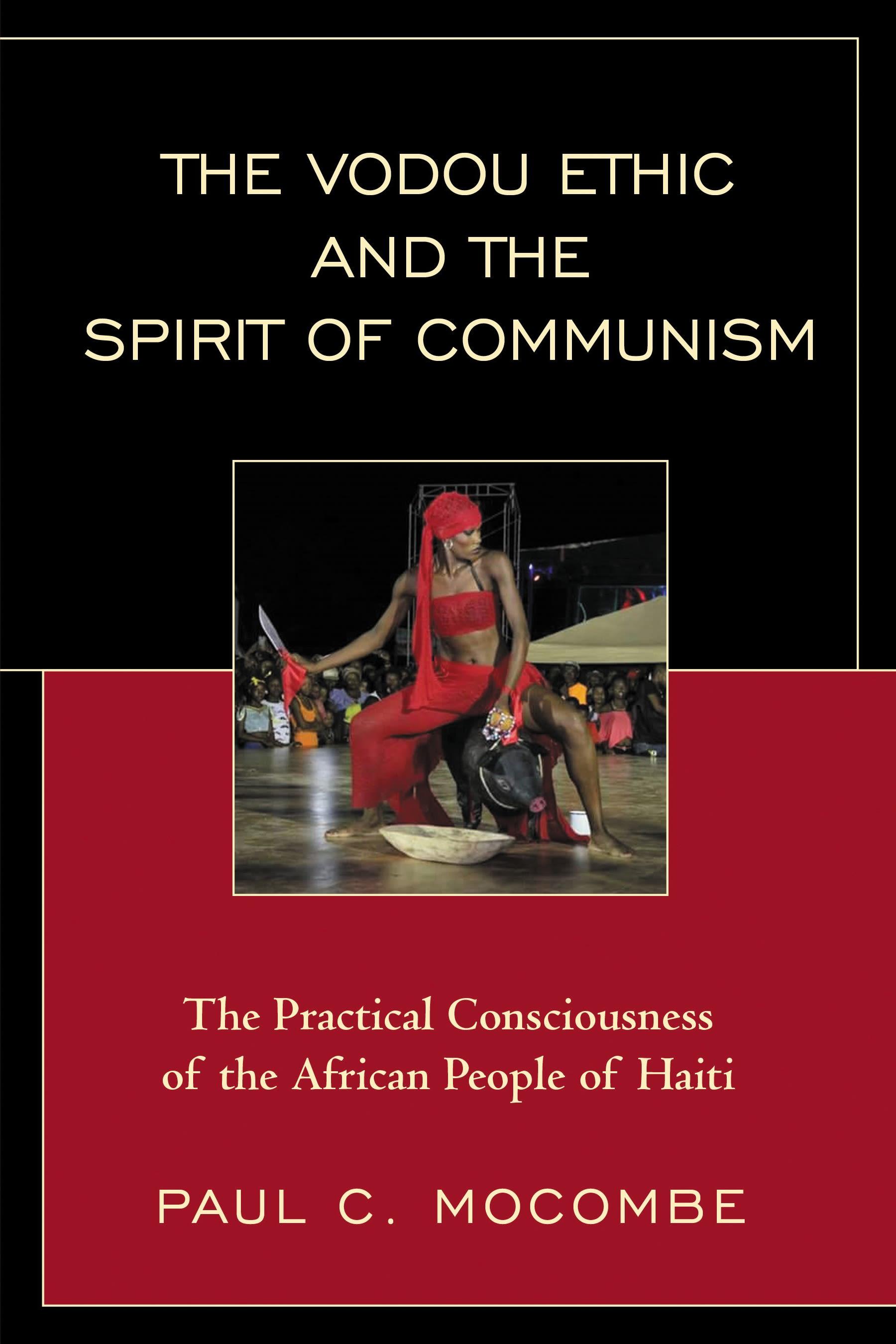
Using a variant of structuration theory, what Paul C. Mocombe calls phenomenological structuralism, this work explores and highlights how the African religion of Vodou and its ethic, i.e., syncretism, materialism, communal living or social collectivism, democracy, individuality, cosmopolitanism, spirit of social justice, xenophilia, balance, harmony, and gentleness, gave rise, under the leadership of oungan yo, manbo yo, gangan yo, and granmoun yo, to the Haitian spirit of communism and the “counter-plantation system” (Jean Casimir’s term) in the provinces and mountains of Haiti. What Mocombe calls the Vodou Ethic and the spirit of communism of the African people of Haiti would be juxtaposed against the Catholic/Protestant Ethic and the spirit of capitalism of the white, mulatto, gens de couleur, and petit-bourgeois free black classes of the island. This latter worldview, the Catholic/Protestant Ethic and the spirit of capitalism, Mocombe goes on to argue, exercised by the free bourgeois blacks and mulatto elites, Affranchis, on the island undermined the revolutionary and independence movement of Haiti commenced by subjects/agents, oungan yo, manbo yo, gangan yo/dokté fey, and granmoun yo, of the Vodou ethic and the spirit of communism, and made it the poorest, most racist, and tyrannical country in the Western Hemisphere.
Pay easily by card, Klarna, Apple Pay or Google Pay. Not happy? You always have a 14-day money-back guarantee. Read more in our terms. If you have any questions, email us at hello@memmo.org.
Memmo makes studying easier – wherever you are in the world. We bring your course books and smart study tools together in one place: summaries, quizzes, podcasts and flashcards. Plus Ted, your study buddy who answers anything you wonder. Over 50,000 students already study here – built to help you learn faster and stress less.