
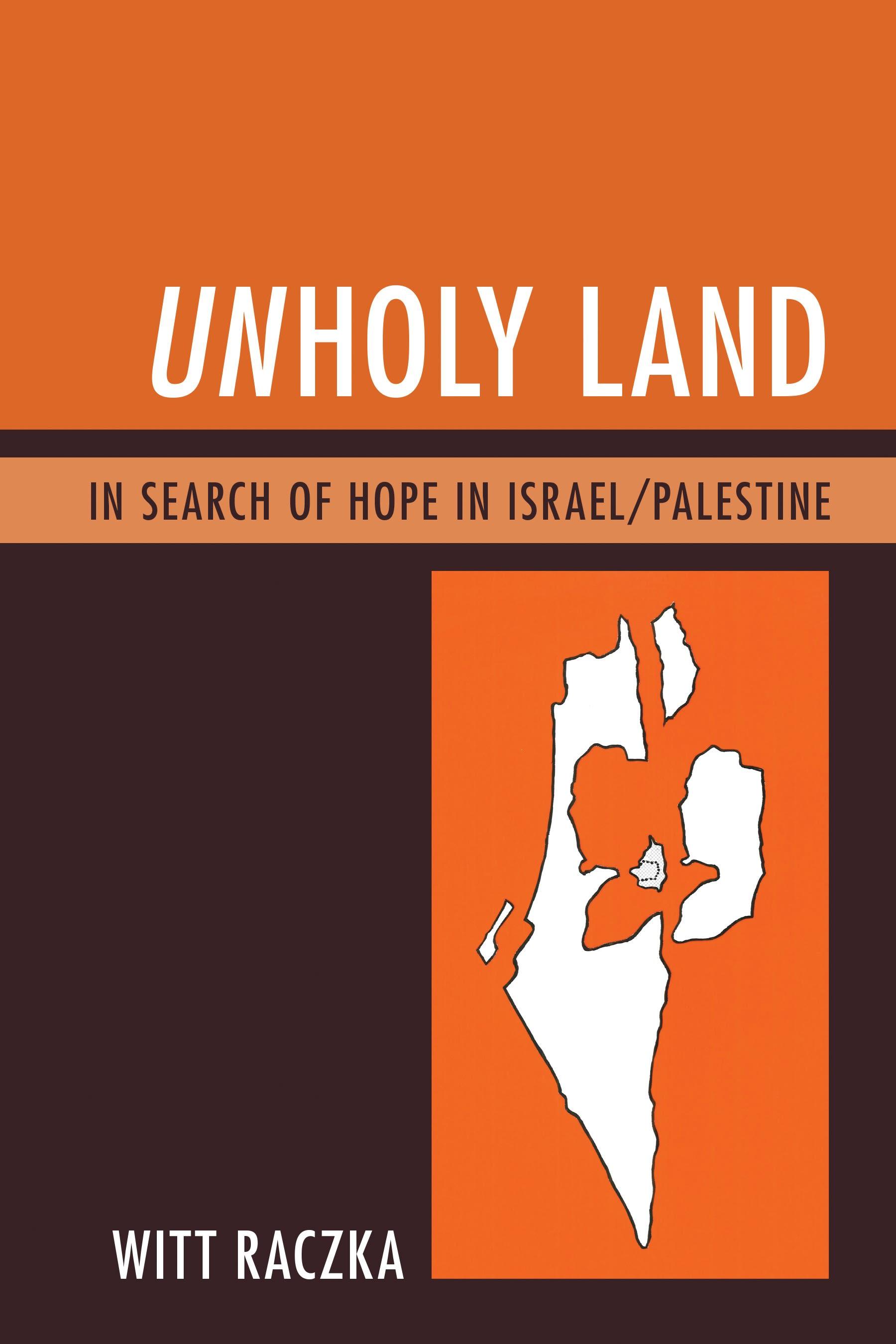
Traveling major highways and secondary roads, walking unpaved paths, the author recites contradictions of the land between the Mediterranean Sea and the Jordan River, the Holy Land. Here, religion uneasily confronts politics and democracy, sublime nature undergoes militarization, and hospitality and empathy mix with brutality, hatred and violence.
Everything becomes security: not just borders and relations with the neighbors, but also water and archaeological evidence, demography and voting Arabs. Control of holy sites, perception of illegal immigrants, separate highway networks and built-up hilltops are all viewed through the prism of threat and security. Threats proliferate, be they real or imaginary, spontaneous or politically-driven. Whether in Jerusalem, the “city of the world”, or in small towns, tensions are palpable between Israel’s radical Jews and its Arab residents. Even within the Jewish community itself, increasingly nationalistic, animosities between ultra-Orthodox and more secular inhabitants are on the rise. Christians also feel under attack, as do moderate Palestinians from their Islamized brethren. In the occupied West Bank, Palestinian villagers confront radical settlers, often protected by Israeli soldiers, while in the isolated Gaza, Hamas imposes ever stricter rules upon its people. Not surprisingly, the Holy Land has become aplenty with both mental and physical barriers, with walls, checkpoints, no-go and firing zones.
Will rage and fear, sorrow and despair eventually trump hope? Although glimmers of hope exist—new water technology, Tel Aviv’s culture of tolerance, more pressures from the international community—the author remains more pessimistic than ever, as reflected in the book’s title.
Everything becomes security: not just borders and relations with the neighbors, but also water and archaeological evidence, demography and voting Arabs. Control of holy sites, perception of illegal immigrants, separate highway networks and built-up hilltops are all viewed through the prism of threat and security. Threats proliferate, be they real or imaginary, spontaneous or politically-driven. Whether in Jerusalem, the “city of the world”, or in small towns, tensions are palpable between Israel’s radical Jews and its Arab residents. Even within the Jewish community itself, increasingly nationalistic, animosities between ultra-Orthodox and more secular inhabitants are on the rise. Christians also feel under attack, as do moderate Palestinians from their Islamized brethren. In the occupied West Bank, Palestinian villagers confront radical settlers, often protected by Israeli soldiers, while in the isolated Gaza, Hamas imposes ever stricter rules upon its people. Not surprisingly, the Holy Land has become aplenty with both mental and physical barriers, with walls, checkpoints, no-go and firing zones.
Will rage and fear, sorrow and despair eventually trump hope? Although glimmers of hope exist—new water technology, Tel Aviv’s culture of tolerance, more pressures from the international community—the author remains more pessimistic than ever, as reflected in the book’s title.
Pay easily by card, Klarna, Apple Pay or Google Pay. Not happy? You always have a 14-day money-back guarantee. Read more in our terms. If you have any questions, email us at hello@memmo.org.
Memmo makes studying easier – wherever you are in the world. We bring your course books and smart study tools together in one place: summaries, quizzes, podcasts and flashcards. Plus Ted, your study buddy who answers anything you wonder. Over 50,000 students already study here – built to help you learn faster and stress less.