
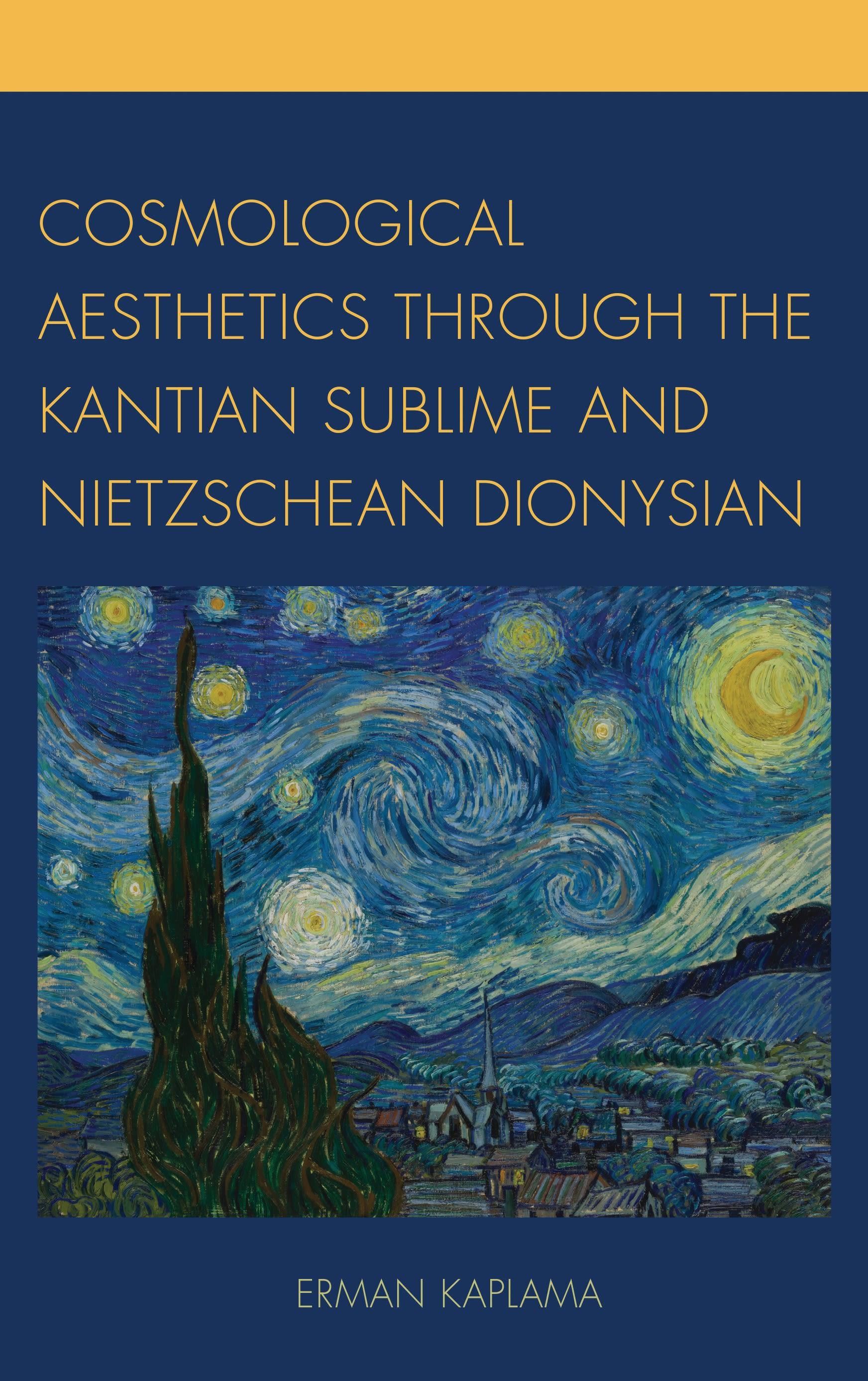
Erman Kaplama explores the principle of transition (Übergang) from metaphysics to physics developed by Kant in his unfinished magnum opus, Opus Postumum. Drawing on the Heraclitean logos and Kant’s notions of sense-intuition (Anschauung) and reflective judgment, Kaplama interprets transition as an aesthetic principle. He revises the idea of nature (phusis) as the principle of motion referring to Heraclitus’ cosmology as well as Heidegger’s and Nietzsche’s lectures on the pre-Socratics. Kaplama compares the Kantian sublime and Nietzschean Dionysian as aesthetic theories representing the transition from the sensible to supersensible and as cosmological theories that consider human nature (ethos) as an extension of nature. In light of such Nietzschean notions as the eternal recurrence and will to power, the Dionysian is shown to trigger the transition by which nature and art are redefined. Finally, Cosmological Aesthetics employs the principles of transition and motion to analyze Van Gogh’s Starry Night in an excursus.
Pay easily by card, Klarna, Apple Pay or Google Pay. Not happy? You always have a 14-day money-back guarantee. Read more in our terms. If you have any questions, email us at hello@memmo.org.
Memmo makes studying easier – wherever you are in the world. We bring your course books and smart study tools together in one place: summaries, quizzes, podcasts and flashcards. Plus Ted, your study buddy who answers anything you wonder. Over 50,000 students already study here – built to help you learn faster and stress less.