
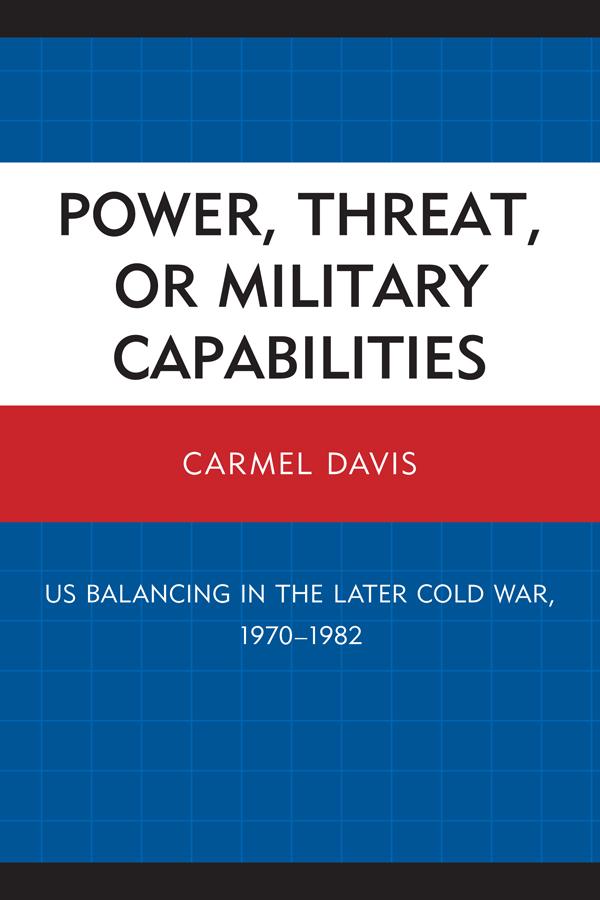
Power, Threat, or Military Capabilities assesses two mainstays of international relations, balance of power and balance of threat, using the case of US balancing against the Soviet Union in the later Cold War. It also proposes balance of military capabilities, which uses offense-defense theory to argue that countries balance against the ability of others to conquer or compel them.
Power, Threat, or Military Capabilities finds that the US was more powerful than the Soviet Union so US behavior is not explained by balance of power. The US did not perceive the Soviet Union as likely to initiate war or to run risks that might lead to war so US behavior is not explained by balance of threat. This book determines that the US was concerned about its ability to defend Europe and the Persian Gulf so US behavior is explained by balance of military capabilities.
Power, Threat, or Military Capabilities finds that the US was more powerful than the Soviet Union so US behavior is not explained by balance of power. The US did not perceive the Soviet Union as likely to initiate war or to run risks that might lead to war so US behavior is not explained by balance of threat. This book determines that the US was concerned about its ability to defend Europe and the Persian Gulf so US behavior is explained by balance of military capabilities.
Pages: 140
Category: Statsvetenskap & Politik
e-ISBN: 9780761855521
Shipping weight: 1.2 kg
Ships in: 1-2 days
Pay easily by card, Klarna, Apple Pay or Google Pay. Not happy? You always have a 14-day money-back guarantee. Read more in our terms. If you have any questions, email us at hello@memmo.org.
Memmo makes studying easier – wherever you are in the world. We bring your course books and smart study tools together in one place: summaries, quizzes, podcasts and flashcards. Plus Ted, your study buddy who answers anything you wonder. Over 50,000 students already study here – built to help you learn faster and stress less.