
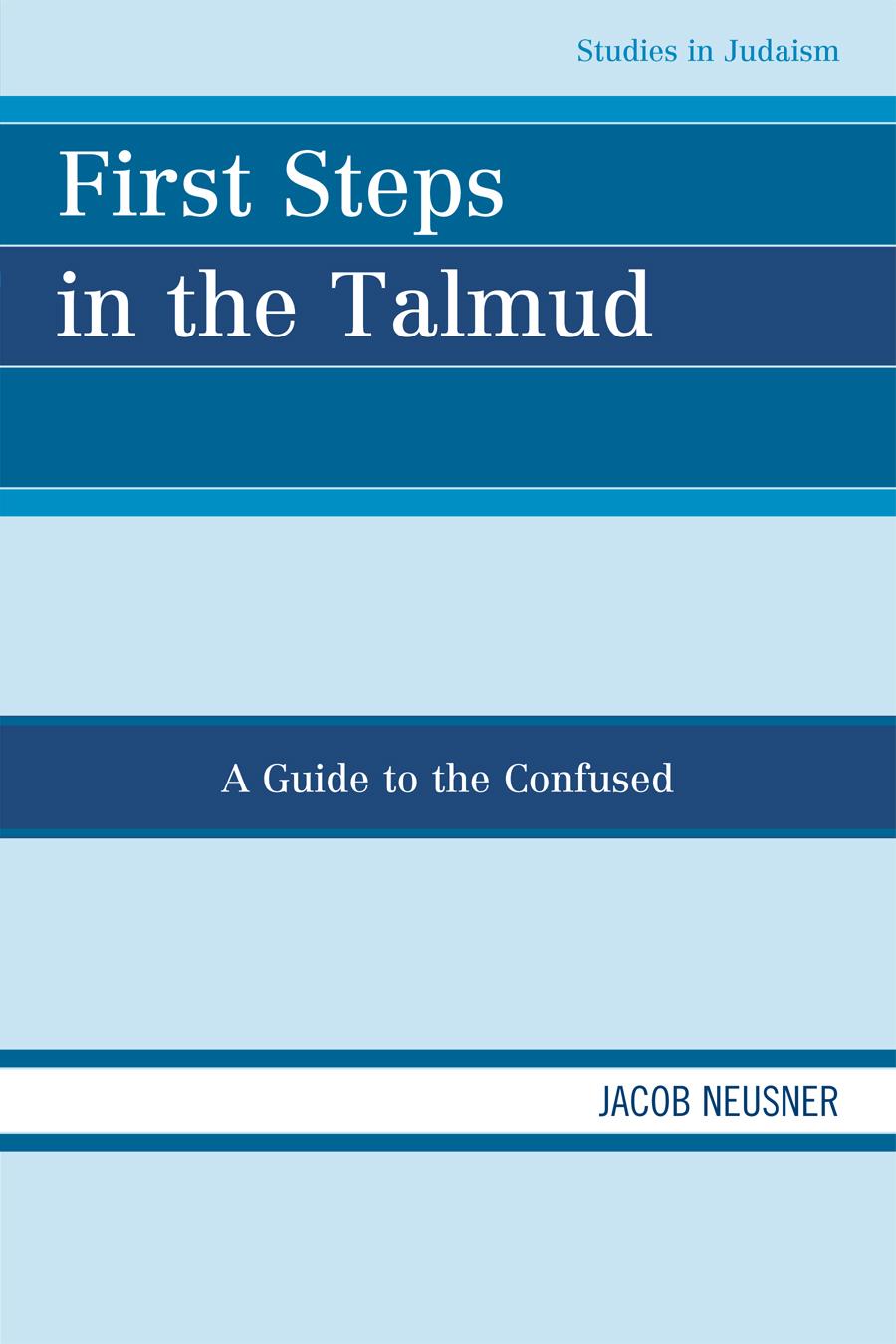
The Talmud is a confusing piece of writing. It begins no where and ends no where but it does not move in a circle. It is written in several languages and follows rules that in certain circumstances trigger the use of one language over others. Its components are diverse. To translating it requires elaborate complementary language. It cannot be translated verbatim into any language. So a translation is a commentary in the most decisive way. The Talmud, accordingly, cannot be merely read but only studied. It contains diverse programs of writing, some descriptive and some analytical. A large segment of the writing follows a clear pattern, but the document encompasses vast components of miscellaneous collections of bits and pieces, odds and ends. It is a mishmash and a mess. Yet it defines the program of study of the community of Judaism and governs the articulation of the norms and laws of Judaism, its theology and its hermeneutics, Above all else, the Talmud of Babylonia is comprised of contention and produces conflict and disagreement, with little effort at a resolution No wonder the Talmud confuses its audience. But that does not explain the power of the Talmud to define Judaism and shape its intellect. This book guides those puzzled by the Talmud and shows the system and order that animate the text.
Pay easily by card, Klarna, Apple Pay or Google Pay. Not happy? You always have a 14-day money-back guarantee. Read more in our terms. If you have any questions, email us at hello@memmo.org.
Memmo makes studying easier – wherever you are in the world. We bring your course books and smart study tools together in one place: summaries, quizzes, podcasts and flashcards. Plus Ted, your study buddy who answers anything you wonder. Over 50,000 students already study here – built to help you learn faster and stress less.