
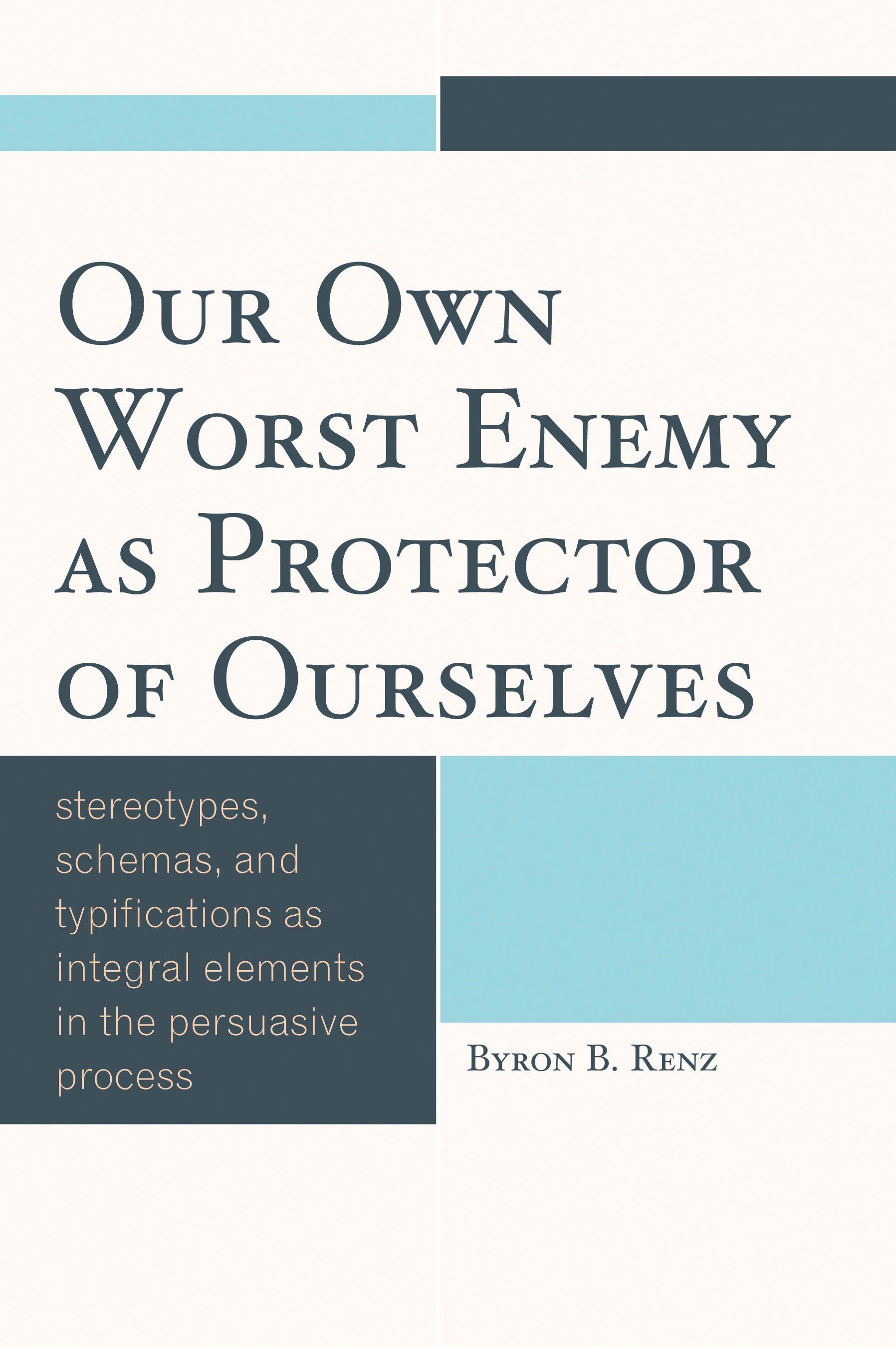
Much communication today argues a point. An argument, by definition, involves an attack and a counterattack not only using logic, but also incorporating non-logical feelings, attitudes, beliefs, and values. Much of the non-logical element in our argument taps the reservoir of unconscious understandings, feelings, expectations, and values that we have coded and stored in our unconscious minds in the form of stereotypes, schemas, and typifications.
Our internal packets of stored values and beliefs may constitute our own worst enemy as they militate against creative thought and forward-looking change. At the same time, they may provide solace for our inner being and provide a framework for developing persuasive campaigns to further our interests.
The book takes us through the persuasive process, particularly as it is used in terrorist persuasive settings and as it has been used in some of the major propaganda battles of the twentieth and twenty-first centuries.
Our internal packets of stored values and beliefs may constitute our own worst enemy as they militate against creative thought and forward-looking change. At the same time, they may provide solace for our inner being and provide a framework for developing persuasive campaigns to further our interests.
The book takes us through the persuasive process, particularly as it is used in terrorist persuasive settings and as it has been used in some of the major propaganda battles of the twentieth and twenty-first centuries.
Pay easily by card, Klarna, Apple Pay or Google Pay. Not happy? You always have a 14-day money-back guarantee. Read more in our terms. If you have any questions, email us at hello@memmo.org.
Memmo makes studying easier – wherever you are in the world. We bring your course books and smart study tools together in one place: summaries, quizzes, podcasts and flashcards. Plus Ted, your study buddy who answers anything you wonder. Over 50,000 students already study here – built to help you learn faster and stress less.