
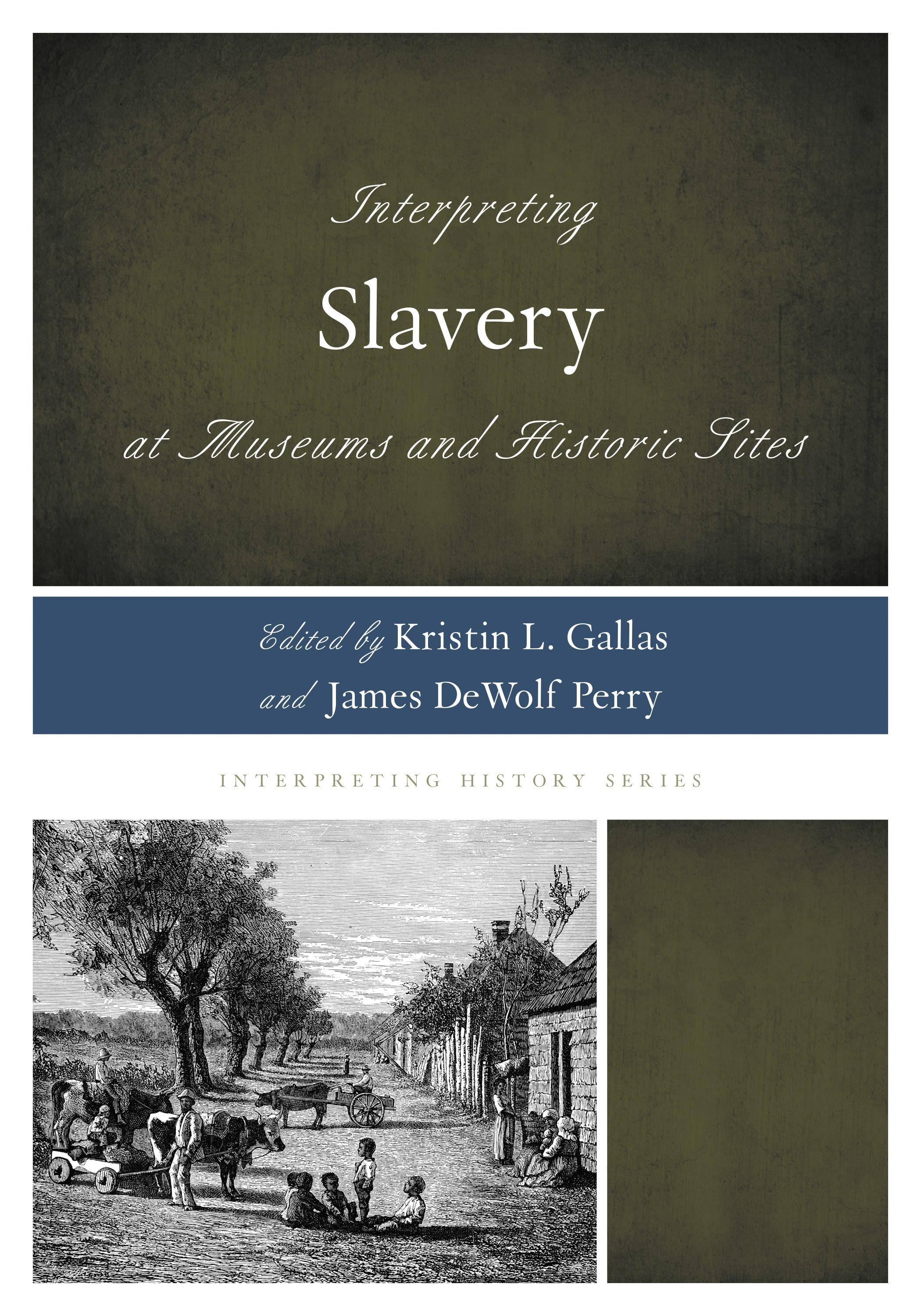
Interpreting Slavery at Museums and Historic Sites aims to move the field forward in its collective conversation about the interpretation of slavery—acknowledging the criticism of the past and acting in the present to develop an inclusive interpretation of slavery. Presenting the history of slavery in a comprehensive and conscientious manner is difficult and requires diligence and compassion—for the history itself, for those telling the story, and for those hearing the stories—but it’s a necessary part of our collective narrative about our past, present, and future.
This book features best practices for:
Interpreting slavery across the country and for many people. The history of slavery, while traditionally interpreted primarily on southern plantations, is increasingly recognized as relevant at historic sites across the nation. It is also more than just an African-American/European-American story—it is relevant to the history of citizens of Latino, Caribbean, African and indigenous descent, as well. It is also pertinent to those descended from immigrants who arrived after slavery, whose stories are deeply intertwined with the legacy of slavery and its aftermath.Developing support within an institution for the interpretation of slavery. Many institutions are reticent to approach such a potentially volatile subject, so this book examines how proponents at several sites, including Monticello and Mount Vernon, were able to make a strong case to their constituents. Training interpreters in not only a depth of knowledge of the subject but also the confidence to speak on this controversial issue in public and the compassion to handle such a sensitive historical issue.
The book will be accessible and of interest for professionals at all levels in the public history field, as well as students at the undergraduate and graduate levels in museum studies and public history programs.
This book features best practices for:
Interpreting slavery across the country and for many people. The history of slavery, while traditionally interpreted primarily on southern plantations, is increasingly recognized as relevant at historic sites across the nation. It is also more than just an African-American/European-American story—it is relevant to the history of citizens of Latino, Caribbean, African and indigenous descent, as well. It is also pertinent to those descended from immigrants who arrived after slavery, whose stories are deeply intertwined with the legacy of slavery and its aftermath.Developing support within an institution for the interpretation of slavery. Many institutions are reticent to approach such a potentially volatile subject, so this book examines how proponents at several sites, including Monticello and Mount Vernon, were able to make a strong case to their constituents. Training interpreters in not only a depth of knowledge of the subject but also the confidence to speak on this controversial issue in public and the compassion to handle such a sensitive historical issue.
The book will be accessible and of interest for professionals at all levels in the public history field, as well as students at the undergraduate and graduate levels in museum studies and public history programs.
Pay easily by card, Klarna, Apple Pay or Google Pay. Not happy? You always have a 14-day money-back guarantee. Read more in our terms. If you have any questions, email us at hello@memmo.org.
Memmo makes studying easier – wherever you are in the world. We bring your course books and smart study tools together in one place: summaries, quizzes, podcasts and flashcards. Plus Ted, your study buddy who answers anything you wonder. Over 50,000 students already study here – built to help you learn faster and stress less.