
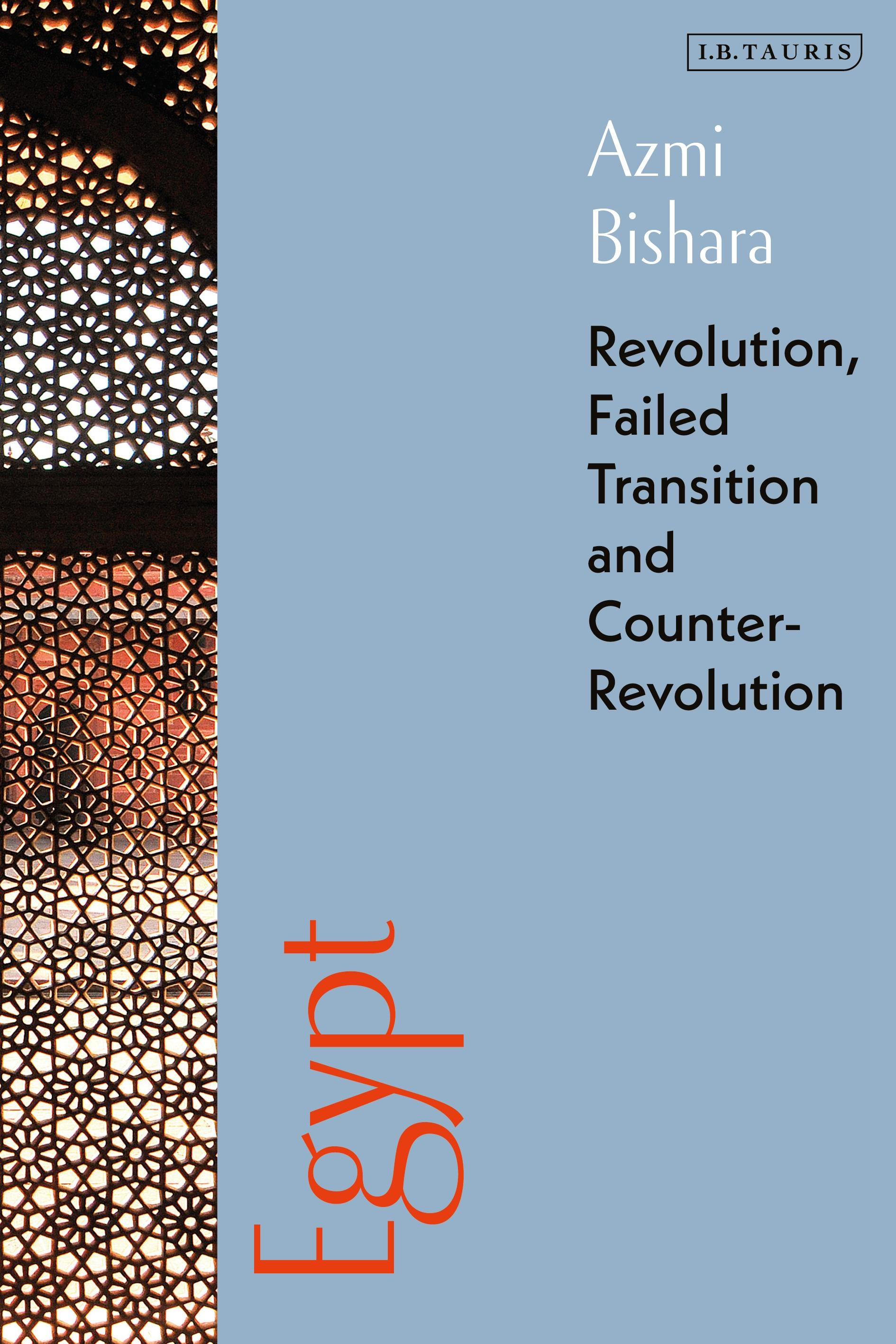
Azmi Bishara's seminal study of the 2011 Egyptian Revolution chronicles in granular detail the lead up to the momentous uprisings and the subsequent transition and coup. The book critically investigates the social and economic conditions that formed the backdrop to the revolution and the complex challenges posed by the transition from authoritarianism to democracy.
Part One, 'From July Coup to January Revolution', goes back to what is called the '1952 revolution' or the '1952 Coup d'état' and traces events until 2011 when Hosni Mubarak stepped down as the president of Egypt after weeks of protest. It highlights the relationship between the presidency and the army to show that, contrary to popular belief, the presidency grew gradually stronger at the expense of other institutions, especially the army, and reached its apogee under Mubarak. Part Two 'From Revolution to Coup d'Etat', covers the critical stages from when the military junta took over the governing of Egypt as the Supreme Council of the Armed Forces (SCAF), and the election of Morsi, up until the coup to overthrow his presidency. Using a democratic transition theory perspective, Azmi Bishara explains the failure of the democratic transition and how it has impacted on Arab revolutions ever since.
Written while the revolutions were taking place, this book conveys a sense of immediacy and urgency as Bishara makes wide-ranging assessments with many of his forecasts corroborated in later years. The book is renowned for its use of primary source material - including interviews, statistics and public opinion polls – thus preserving the memory of the revolution and remaining one of the most comprehensive reference books on the subject to date.
Part One, 'From July Coup to January Revolution', goes back to what is called the '1952 revolution' or the '1952 Coup d'état' and traces events until 2011 when Hosni Mubarak stepped down as the president of Egypt after weeks of protest. It highlights the relationship between the presidency and the army to show that, contrary to popular belief, the presidency grew gradually stronger at the expense of other institutions, especially the army, and reached its apogee under Mubarak. Part Two 'From Revolution to Coup d'Etat', covers the critical stages from when the military junta took over the governing of Egypt as the Supreme Council of the Armed Forces (SCAF), and the election of Morsi, up until the coup to overthrow his presidency. Using a democratic transition theory perspective, Azmi Bishara explains the failure of the democratic transition and how it has impacted on Arab revolutions ever since.
Written while the revolutions were taking place, this book conveys a sense of immediacy and urgency as Bishara makes wide-ranging assessments with many of his forecasts corroborated in later years. The book is renowned for its use of primary source material - including interviews, statistics and public opinion polls – thus preserving the memory of the revolution and remaining one of the most comprehensive reference books on the subject to date.
Pay easily by card, Klarna, Apple Pay or Google Pay. Not happy? You always have a 14-day money-back guarantee. Read more in our terms. If you have any questions, email us at hello@memmo.org.
Memmo makes studying easier – wherever you are in the world. We bring your course books and smart study tools together in one place: summaries, quizzes, podcasts and flashcards. Plus Ted, your study buddy who answers anything you wonder. Over 50,000 students already study here – built to help you learn faster and stress less.