
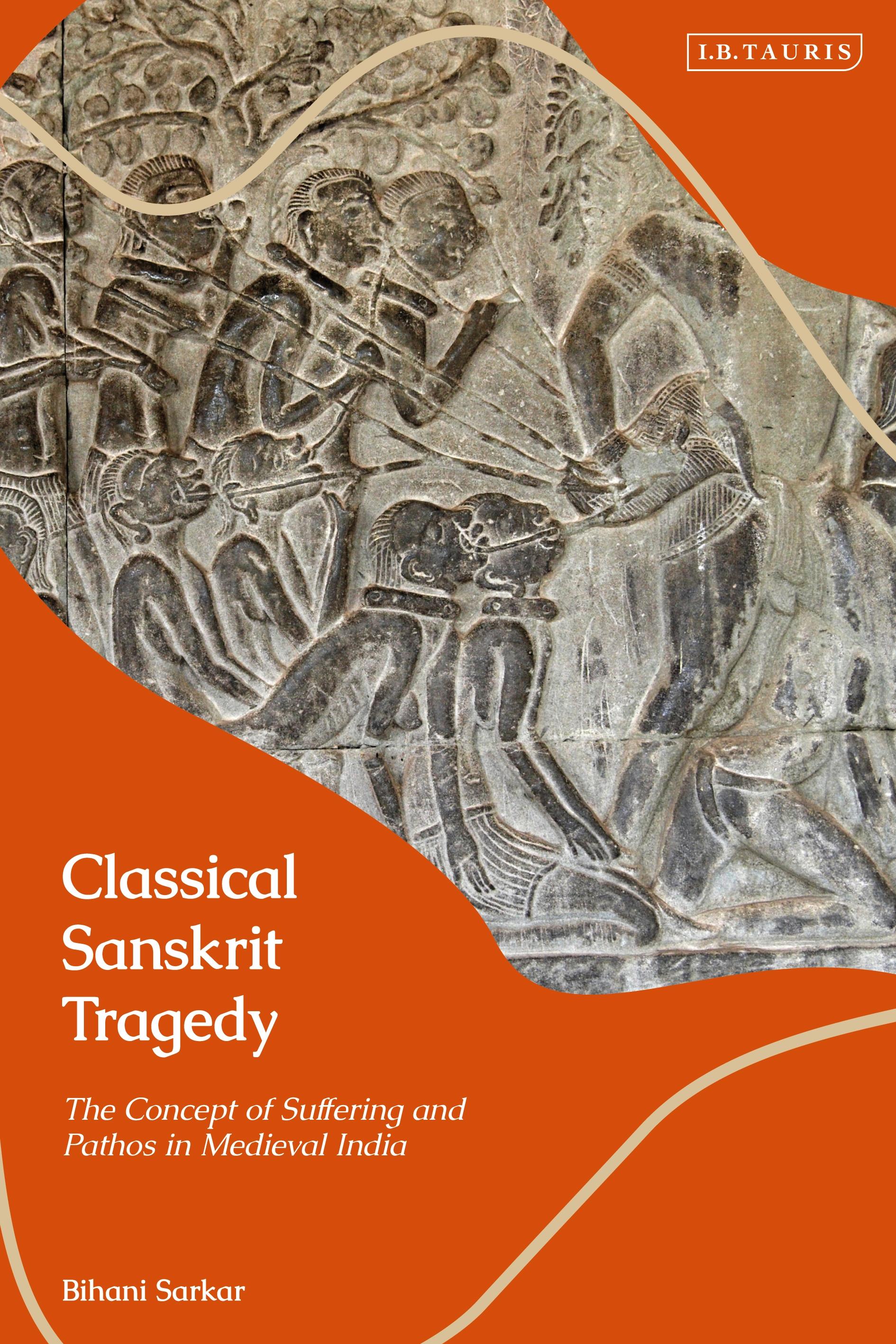
It is often assumed that classical Sanskrit poetry and drama lack a concern with the tragic. However, as Bihani Sarkar makes clear in this book, this is far from the case. In the first study of tragedy in classical Sanskrit literature, Sarkar draws on a wide range of Sanskrit dramas, poems and treatises – much of them translated for the first time into English – to provide a complete history of the tragic in Indian literature from the second to the fourth centuries.
Looking at Kalidasa, the most celebrated writer of Sanskrit poetry and drama (kavya), this book argues that constructions of absence and grief are central to Kalidasa's compositions and that these 'tragic middles' are much more sophisticated than previously understood. For Kalidasa, tragic middles are modes of thinking, in which he confronts theological and philosophical issues. Through a close literary analysis of the tragic middle in five of his works, the Abhijñanasakuntala, the Raghuva?sa, the Kumarasambhava, the Vikramorvasiya and the Meghaduta, Sarkar demonstrates the importance of tragedy for classical Indian poetry and drama in the early centuries of the common era. These depictions from the Indian literary sphere, by their particular function and interest in the phenomenology of grief, challenge and reshape in a wholly new way our received understanding of tragedy.
Looking at Kalidasa, the most celebrated writer of Sanskrit poetry and drama (kavya), this book argues that constructions of absence and grief are central to Kalidasa's compositions and that these 'tragic middles' are much more sophisticated than previously understood. For Kalidasa, tragic middles are modes of thinking, in which he confronts theological and philosophical issues. Through a close literary analysis of the tragic middle in five of his works, the Abhijñanasakuntala, the Raghuva?sa, the Kumarasambhava, the Vikramorvasiya and the Meghaduta, Sarkar demonstrates the importance of tragedy for classical Indian poetry and drama in the early centuries of the common era. These depictions from the Indian literary sphere, by their particular function and interest in the phenomenology of grief, challenge and reshape in a wholly new way our received understanding of tragedy.
Pay easily by card, Klarna, Apple Pay or Google Pay. Not happy? You always have a 14-day money-back guarantee. Read more in our terms. If you have any questions, email us at hello@memmo.org.
Memmo makes studying easier – wherever you are in the world. We bring your course books and smart study tools together in one place: summaries, quizzes, podcasts and flashcards. Plus Ted, your study buddy who answers anything you wonder. Over 75,000 students already study here – built to help you learn faster and stress less.