
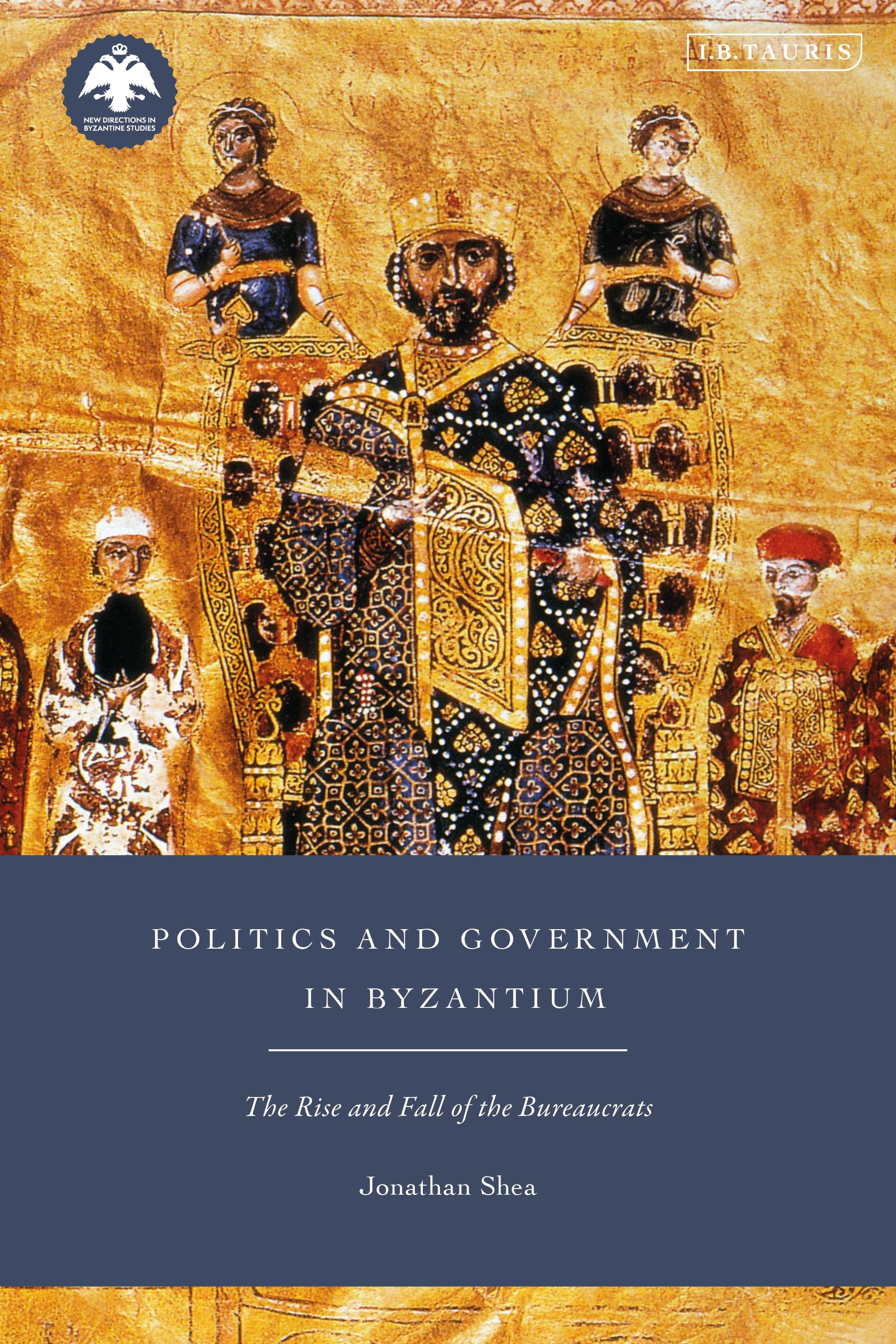
The eleventh century marked a turning point in the history of the Byzantine Empire. At its start Byzantium was the paramount power in the Mediterranean world, by turns feared, respected and admired. By the century's close the empire had lost half of its territory and had managed only a partial recovery under the leadership of the Komnenos family. How did a powerful and famously wealthy empire collapse so quickly?
The contemporary accounts of this turbulent 'long' century (taken here as c. 950–1100) attribute the empire's decline to the emperors' reckless and self-serving favouring of civilian bureaucrats and, while these sources are today widely acknowledged as biased and unreliable, modern assessments of the century have hitherto failed to suggest any tangible alternatives. To circumvent this dearth of archival material, Jonathan Shea has meticulously analysed 2,200 unpublished seals from the period (more than a third of the known total extant today) to uncover exactly whom the emperors were favouring and promoting, as well as developing a nuanced and revealing picture of the makeup of the much-chastised civilian bureaucracy. The sigillographic evidence is throughout measured against the written material to give a fresh account of this key transitional century and a rare insight into Byzantine politics.
The contemporary accounts of this turbulent 'long' century (taken here as c. 950–1100) attribute the empire's decline to the emperors' reckless and self-serving favouring of civilian bureaucrats and, while these sources are today widely acknowledged as biased and unreliable, modern assessments of the century have hitherto failed to suggest any tangible alternatives. To circumvent this dearth of archival material, Jonathan Shea has meticulously analysed 2,200 unpublished seals from the period (more than a third of the known total extant today) to uncover exactly whom the emperors were favouring and promoting, as well as developing a nuanced and revealing picture of the makeup of the much-chastised civilian bureaucracy. The sigillographic evidence is throughout measured against the written material to give a fresh account of this key transitional century and a rare insight into Byzantine politics.
Pay easily by card, Klarna, Apple Pay or Google Pay. Not happy? You always have a 14-day money-back guarantee. Read more in our terms. If you have any questions, email us at hello@memmo.org.
Memmo makes studying easier – wherever you are in the world. We bring your course books and smart study tools together in one place: summaries, quizzes, podcasts and flashcards. Plus Ted, your study buddy who answers anything you wonder. Over 50,000 students already study here – built to help you learn faster and stress less.