
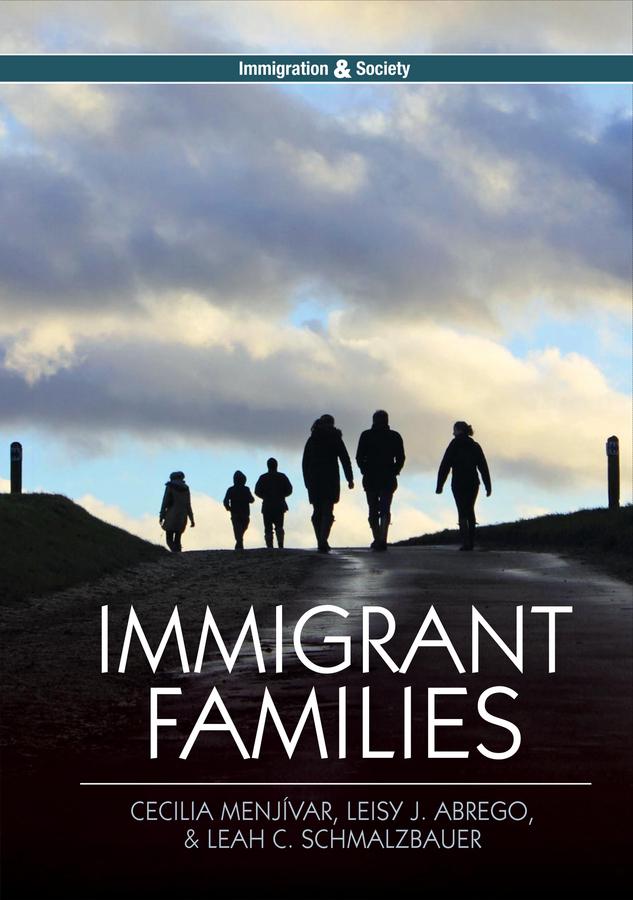
Immigrant Families aims to capture the richness, complexity, and diversity that characterize contemporary immigrant families in the United States. In doing so, it reaffirms that the vast majority of people do not migrate as isolated individuals, but are members of families.
There is no quintessential immigrant experience, as immigrants and their families arrive with different levels of economic, social, and cultural resources, and must navigate various social structures that shape how they fare. Immigrant Families highlights the hierarchies and inequities between and within immigrant families created by key axes of inequality such as legal status, social class, gender, and generation. Drawing on ethnographic, demographic, and historical scholarship, the authors highlight the transnational context in which many contemporary immigrant families live, exploring how families navigate care, resources, expectations, and aspirations across borders. Ultimately, the book analyzes how dynamics at the individual, family, and community levels shape the life chances and wellbeing of immigrants and their families.
As the United States turns its attention to immigration as a critical social issue, Immigrant Families encourages students, scholars, and policy makers to center family in their discussions, thereby prioritizing the human and relational element of human mobility.
There is no quintessential immigrant experience, as immigrants and their families arrive with different levels of economic, social, and cultural resources, and must navigate various social structures that shape how they fare. Immigrant Families highlights the hierarchies and inequities between and within immigrant families created by key axes of inequality such as legal status, social class, gender, and generation. Drawing on ethnographic, demographic, and historical scholarship, the authors highlight the transnational context in which many contemporary immigrant families live, exploring how families navigate care, resources, expectations, and aspirations across borders. Ultimately, the book analyzes how dynamics at the individual, family, and community levels shape the life chances and wellbeing of immigrants and their families.
As the United States turns its attention to immigration as a critical social issue, Immigrant Families encourages students, scholars, and policy makers to center family in their discussions, thereby prioritizing the human and relational element of human mobility.
Pay easily by card, Klarna, Apple Pay or Google Pay. Not happy? You always have a 14-day money-back guarantee. Read more in our terms. If you have any questions, email us at hello@memmo.org.
Memmo makes studying easier – wherever you are in the world. We bring your course books and smart study tools together in one place: summaries, quizzes, podcasts and flashcards. Plus Ted, your study buddy who answers anything you wonder. Over 50,000 students already study here – built to help you learn faster and stress less.
You might also like
Buy the book0