
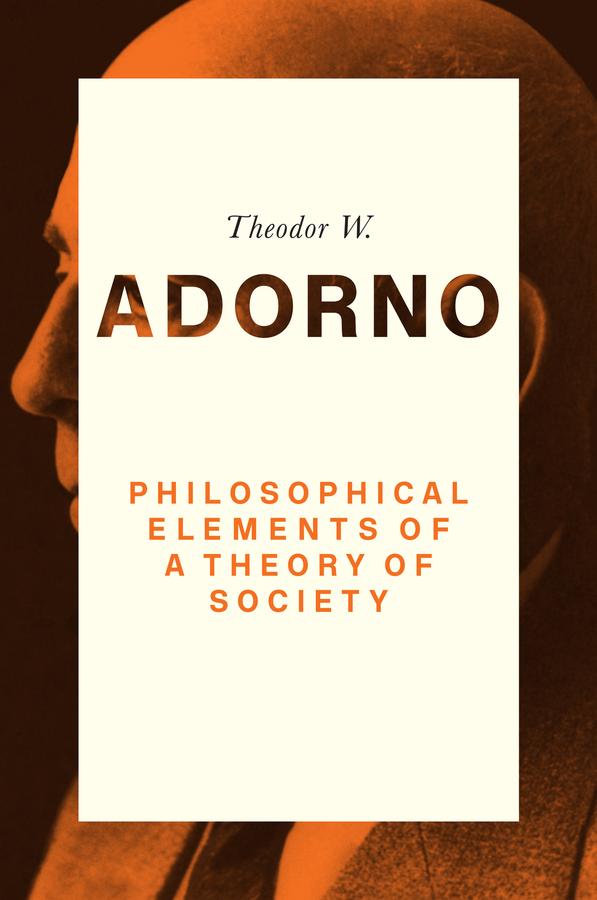
As an exile in America during the War, Theodor Adorno grew acquainted with the fundamentals of empirical social research, something which would shape the work he undertook in the early 1950s as co-director of the Frankfurt Institute for Social Research. Yet he also became increasingly aware of the ‘fetishism of method’ in sociology, and saw the serious limitations of theoretical work based solely on empirical findings.
In this lecture course given in 1964, Adorno develops a critique of both sociology and philosophy, emphasizing that theoretical work requires a specific mediation between the two disciplines. Adorno advocates a philosophical approach to social theory that challenges the drive towards uniformity and a lack of ambiguity, highlighting instead the fruitfulness of experience, in all its messy complexity, for critical social analysis. At the same time, he shows how philosophy must also realise that it requires sociology if it is to avoid falling for the old idealistic illusion that the totality of real conditions can be grasped through thought alone.
Masterfully bringing together philosophical and empirical approaches to an understanding of society, these lectures from one of the most important social thinkers of the 20th century will be of great interest to students and scholars in philosophy, sociology and the social sciences generally.
In this lecture course given in 1964, Adorno develops a critique of both sociology and philosophy, emphasizing that theoretical work requires a specific mediation between the two disciplines. Adorno advocates a philosophical approach to social theory that challenges the drive towards uniformity and a lack of ambiguity, highlighting instead the fruitfulness of experience, in all its messy complexity, for critical social analysis. At the same time, he shows how philosophy must also realise that it requires sociology if it is to avoid falling for the old idealistic illusion that the totality of real conditions can be grasped through thought alone.
Masterfully bringing together philosophical and empirical approaches to an understanding of society, these lectures from one of the most important social thinkers of the 20th century will be of great interest to students and scholars in philosophy, sociology and the social sciences generally.
Pages: 192
Category: Vetenskapsteori och forskningsmetod
e-ISBN: 9780745694917
Shipping weight: 1.2 kg
Ships in: 1-2 days
Pay easily by card, Klarna, Apple Pay or Google Pay. Not happy? You always have a 14-day money-back guarantee. Read more in our terms. If you have any questions, email us at hello@memmo.org.
Memmo makes studying easier – wherever you are in the world. We bring your course books and smart study tools together in one place: summaries, quizzes, podcasts and flashcards. Plus Ted, your study buddy who answers anything you wonder. Over 50,000 students already study here – built to help you learn faster and stress less.
You might also like
Buy the book0