
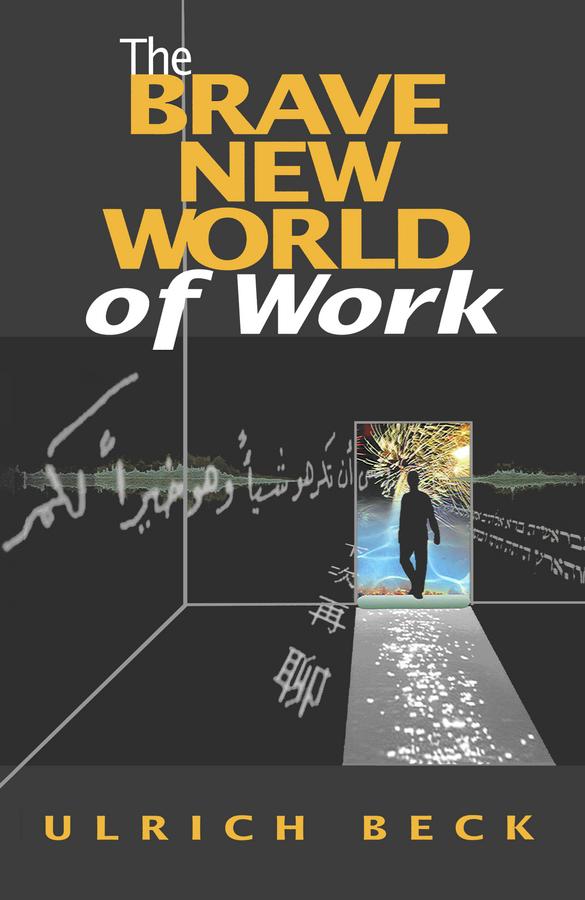
Beck's alternative vision is centred on the concept of active citizens democratically organized in local, and increasingly also regional or transnational, networks. Against the threat of social exclusion, everyone can and must have a right to be included in a new definition and distribution of work. This will involve constant movement between formal employment (with a major reduction in working hours) and forms of self-organized artistic, cultural and political 'civil labour', providing equal access to comprehensive social protection. The aim must be to turn insecurity around, so that it becomes a positive and enriching discontinuity of life.
Drawing on his earlier work on risk and reflexive modernization, The Brave New World of Work is also closely linked to his studies on globalization and individualization. These processes are part of the same challenge upon which a politics of modernity must now base itself. Not only the future of work, but also the very survival of democracy and the welfare state will depend on the development of a newly committed and 'multi-active' transnational citizenship.
This book will be of great interest to second- and third-year students in sociology, politics, geography and the social sciences generally. It will also appeal to a broader audience interested in the issues and debates surrounding the changing nature of work.
Pay easily by card, Klarna, Apple Pay or Google Pay. Not happy? You always have a 14-day money-back guarantee. Read more in our terms. If you have any questions, email us at hello@memmo.org.
Memmo makes studying easier – wherever you are in the world. We bring your course books and smart study tools together in one place: summaries, quizzes, podcasts and flashcards. Plus Ted, your study buddy who answers anything you wonder. Over 50,000 students already study here – built to help you learn faster and stress less.