
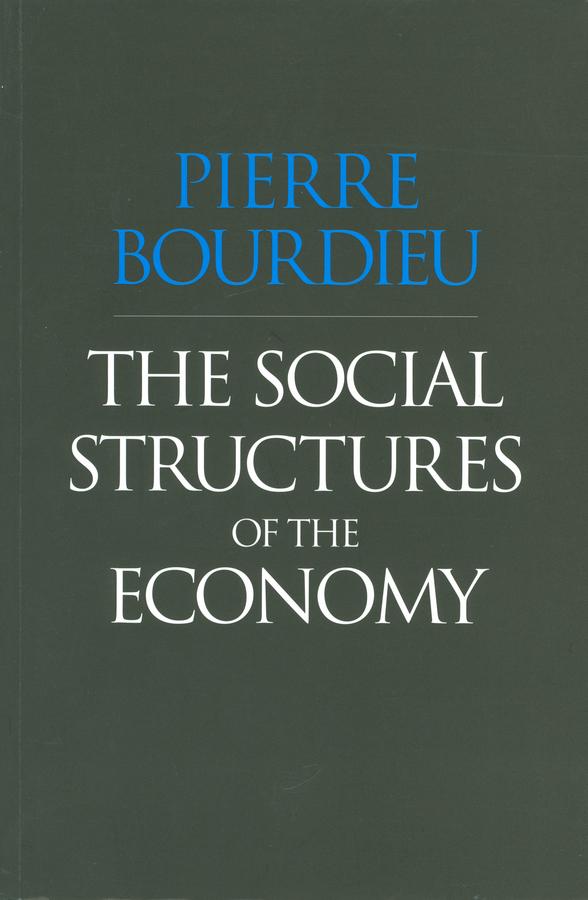
As Bourdieu shows, the market is constructed by the state, which can decide, for example, whether to promote private housing or collective provision. And the individuals involved in the transaction are immersed in symbolic constructions which constitute, in a strong sense, the value of houses, neighbourhoods and towns.
The abstract and illusory nature of the assumptions of orthodox economic theory has been criticised by some economists, but Bourdieu argues that we must go further. Supply, demand, the market and even the buyer and seller are products of a process of social construction, and so-called ‘economic' processes can be adequately described only by calling on sociological methods. Instead of seeing the two disciplines in antagonistic terms, it is time to recognize that sociology and economics are in fact part of a single discipline, the object of which is the analysis of social facts, of which economic transactions are in the end merely one aspect.
This brilliant study by the most original sociologist of post-war France will be essential reading for students and scholars of sociology, economics, anthropology and related disciplines.
Pay easily by card, Klarna, Apple Pay or Google Pay. Not happy? You always have a 14-day money-back guarantee. Read more in our terms. If you have any questions, email us at hello@memmo.org.
Memmo makes studying easier – wherever you are in the world. We bring your course books and smart study tools together in one place: summaries, quizzes, podcasts and flashcards. Plus Ted, your study buddy who answers anything you wonder. Over 50,000 students already study here – built to help you learn faster and stress less.