
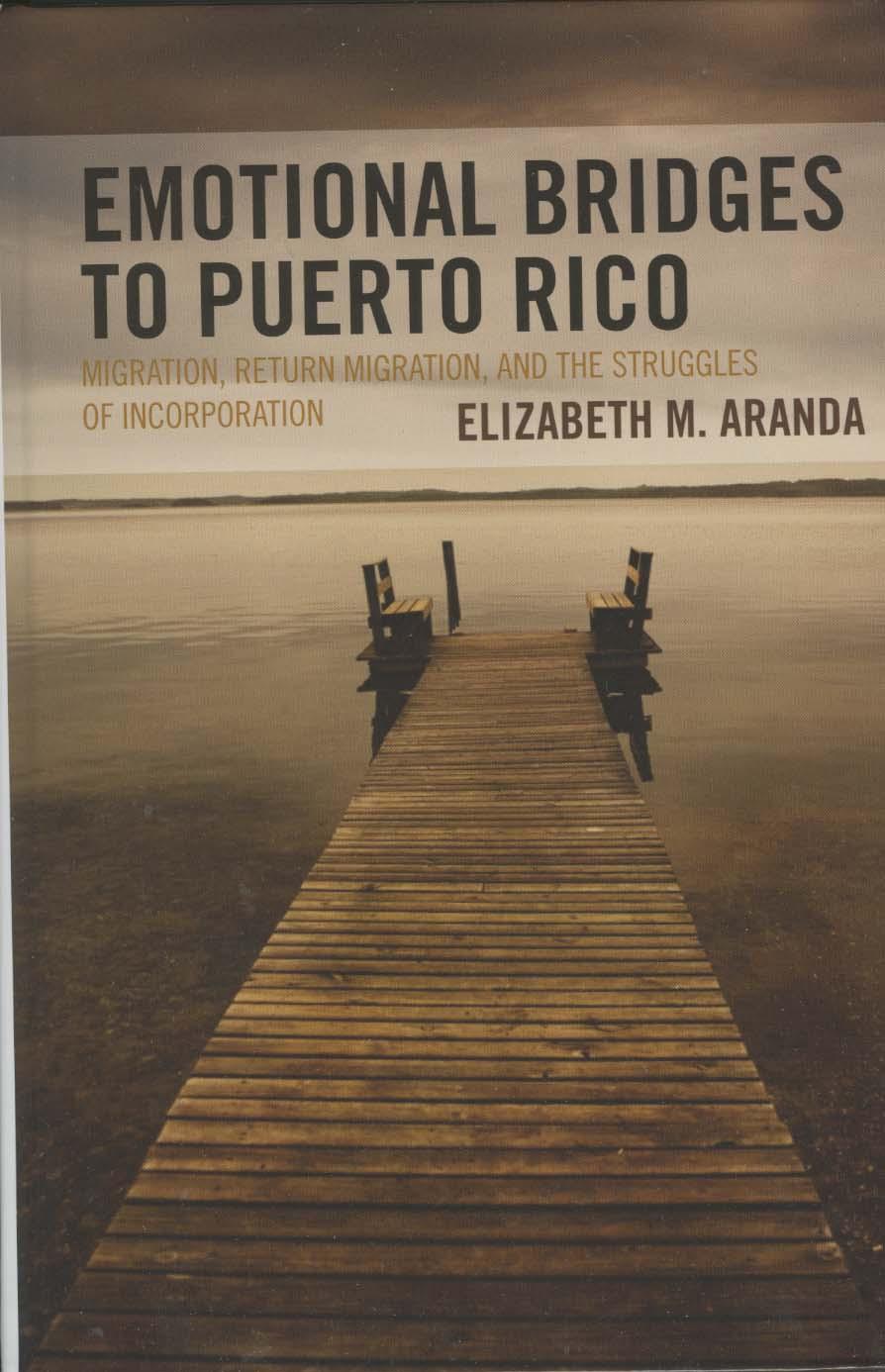
Emotional Bridges to Puerto Rico examines the experiences of incorporation among two groups of middle-class Puerto Ricans: one that currently lives in the U.S. mainland and one that has resettled in Puerto Rico. The analysis focuses on their subjective interpretations of incorporation and the conditions under which they decide to move back and forth between the mainland and island. Findings reveal that migration to the mainland results in educational, occupational and economic gains in the U.S., which also help return migrants re-enter Island labor markets. U.S. settlement brings its own set of struggles. Puerto Ricans see themselves as members of transnational families, yet the struggles of leading dual lives result in settlement decisions that reflect desires to live locally with roots in one place instead of feeling split between the two. Experiences with U.S. racism complicate these decisions, given Puerto Ricans' struggles with racial identity and exclusion in spite of their economic, occupational, and residential integration into mainland society. This study illustrates the conditions under which various patterns of attachments to place-or emotional anchoring-develop, and how these feelings impact future Puerto Rican settlement.
Pay easily by card, Klarna, Apple Pay or Google Pay. Not happy? You always have a 14-day money-back guarantee. Read more in our terms. If you have any questions, email us at hello@memmo.org.
Memmo makes studying easier – wherever you are in the world. We bring your course books and smart study tools together in one place: summaries, quizzes, podcasts and flashcards. Plus Ted, your study buddy who answers anything you wonder. Over 50,000 students already study here – built to help you learn faster and stress less.