
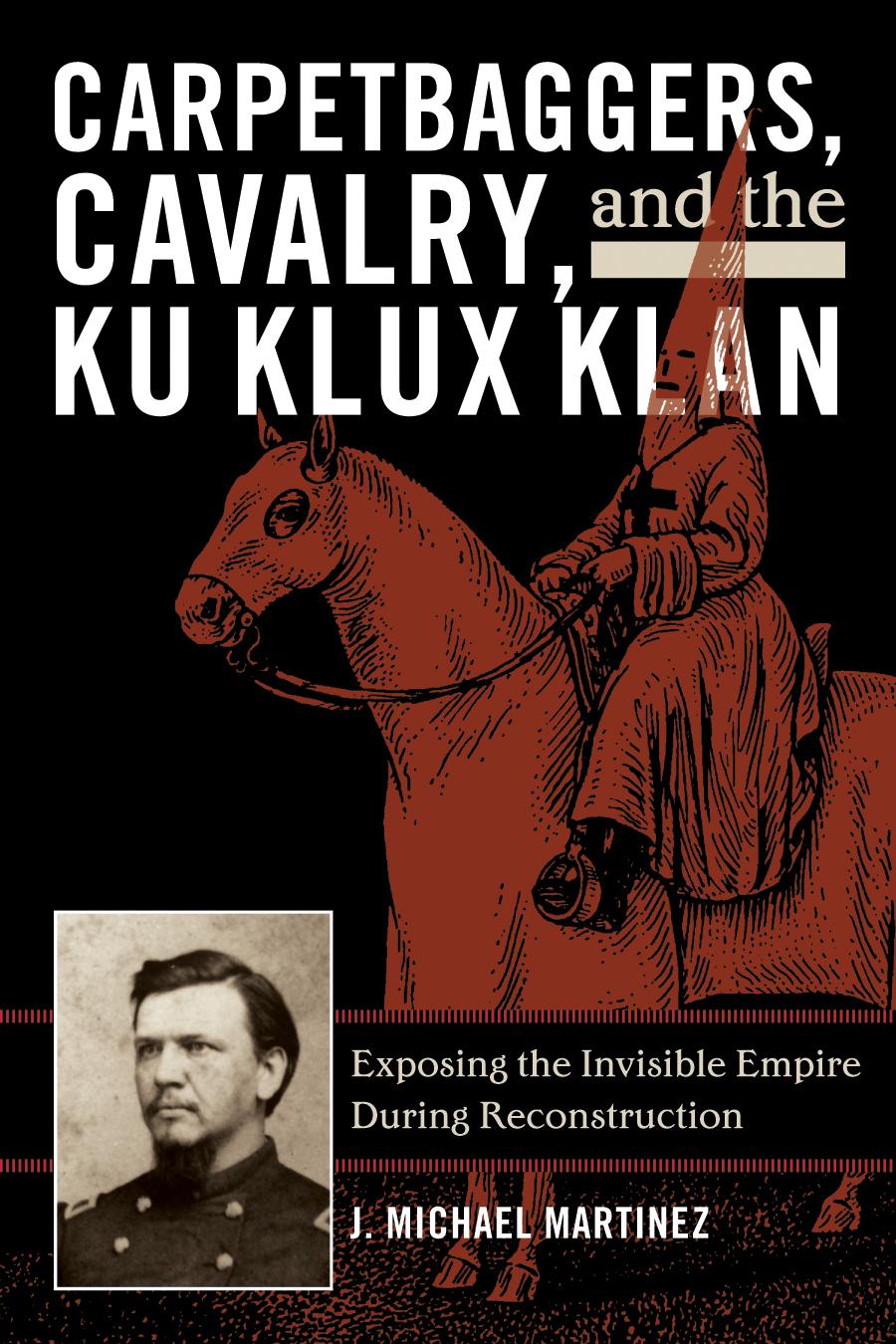
In some places, the Ku Klux Klan (KKK) was a social fraternity whose members enjoyed sophomoric hijinks and homemade liquor. In other areas, the KKK was a paramilitary group intent on keeping former slaves away from white women and Republicans away from ballot boxes. South Carolina saw the worst Klan violence and, in 1871, President Grant sent federal troops under the command of Major Lewis Merrill to restore law and order. Merrill did not eradicate the Klan, but they arguably did more than any other person or entity to expose the identity of the Invisible Empire as a group of hooded, brutish, homegrown terrorists. In compiling evidence to prosecute the leading Klansmen and by restoring at least a semblance of order to South Carolina, Merrill and his men demonstrated that the portrayal of the KKK as a chivalric organization was at best a myth, and at worst a lie.
This is the story of the rise and fall of the Reconstruction-era Klan, focusing especially on Major Merrill and the Seventh Cavalry's efforts to expose the secrets of the Ku Klux Klan to the light of day.
This is the story of the rise and fall of the Reconstruction-era Klan, focusing especially on Major Merrill and the Seventh Cavalry's efforts to expose the secrets of the Ku Klux Klan to the light of day.
Pay easily by card, Klarna, Apple Pay or Google Pay. Not happy? You always have a 14-day money-back guarantee. Read more in our terms. If you have any questions, email us at hello@memmo.org.
Memmo makes studying easier – wherever you are in the world. We bring your course books and smart study tools together in one place: summaries, quizzes, podcasts and flashcards. Plus Ted, your study buddy who answers anything you wonder. Over 50,000 students already study here – built to help you learn faster and stress less.