
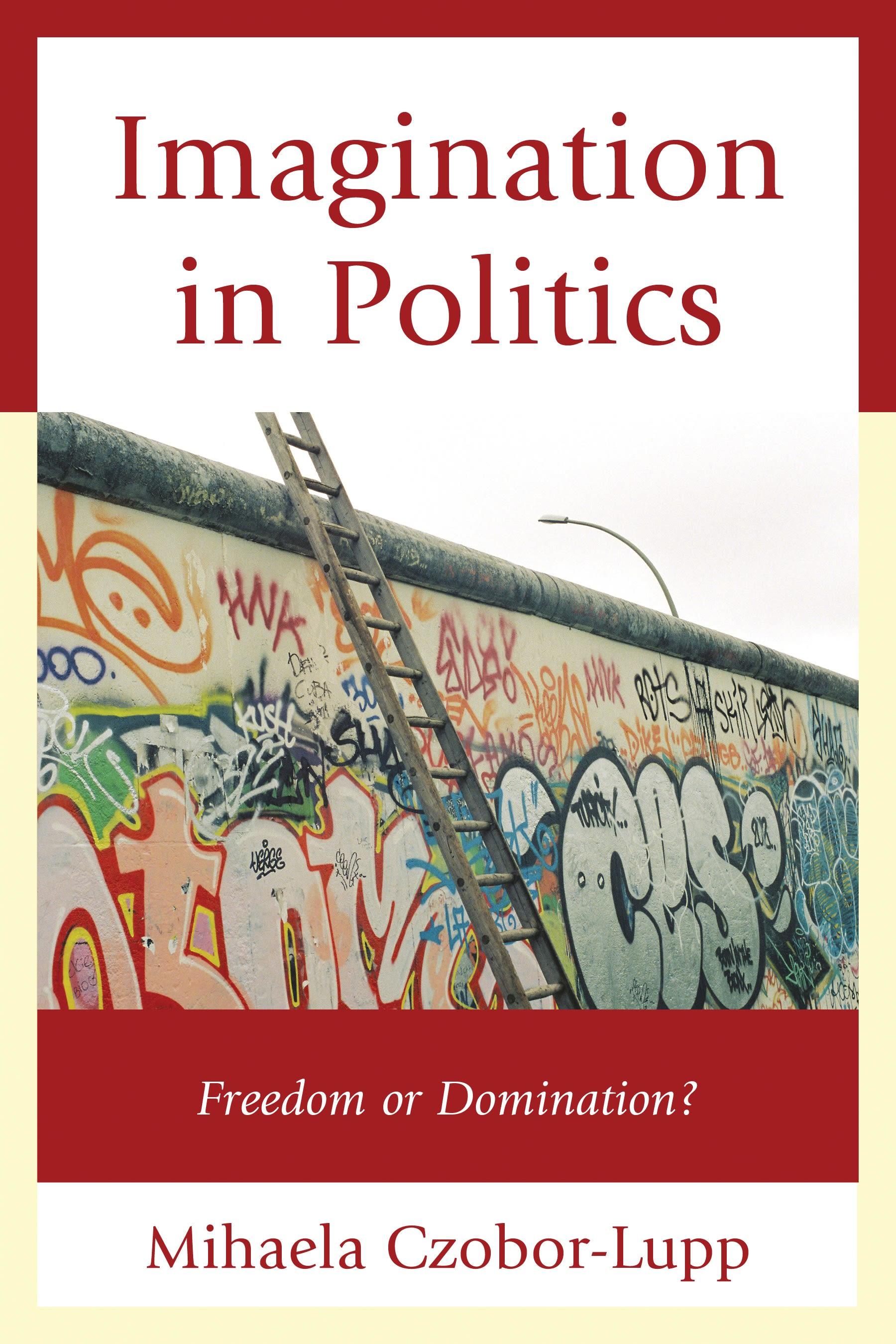
Imagination is a complex and ambiguous culture-making power, which, while central to politics, is a rather marginal concept in contemporary political theory. By drawing on works of modern and contemporary Continental political philosophers, this book addresses how imagination can be both a source of freedom and domination in liberal-democratic politics, and argues for a benign public employment of images and narratives in a global world of diverse cultures. The challenge is not to keep contemporary politics clear of images, but to better distinguish between benign and malign uses of creativity in the public realm.
This distinction is important because the language employed by the participants in the complex cultural dialogue that characterizes modern plural societies is constituted by metaphors and myths, which form their perceptions and sensibilities. The embedment of communicative practices in a society’s imaginary brings an ambivalent psychological and emotional potential into democratic politics. Modern liberal-democracies can shift the public employment of imagination either in a direction that increases the autonomous capacity of individuals to engage culture and language in a creative and interactive manner in the construction of their identities, or in a direction that increases fascination with images and myths and, consequently, the escapist desire to pull these out of the living dialogue with others.
Turning the public work of creativity in the first direction requires a conscious change in the modern social imaginary. This can be achieved through the aesthetic cultivation of an ethical productive imagination: both analogical and explorative, both empathic and reflective. While capable of creatively giving utopian impetus to politics, this imagination would also stir the individuals’ responsiveness to the particularity of others and to their capacity to be equal and free partners in the making of a common world. An important avenue in achieving this objective in modern liberal-democracies will be provided by the capacity of literary works to open up public spaces of dialogue. There the renewal of the metaphors and myths that frame individual and collective identities in a society can have transformative effects that increase the individuals’ ability for cross cultural understanding.
This distinction is important because the language employed by the participants in the complex cultural dialogue that characterizes modern plural societies is constituted by metaphors and myths, which form their perceptions and sensibilities. The embedment of communicative practices in a society’s imaginary brings an ambivalent psychological and emotional potential into democratic politics. Modern liberal-democracies can shift the public employment of imagination either in a direction that increases the autonomous capacity of individuals to engage culture and language in a creative and interactive manner in the construction of their identities, or in a direction that increases fascination with images and myths and, consequently, the escapist desire to pull these out of the living dialogue with others.
Turning the public work of creativity in the first direction requires a conscious change in the modern social imaginary. This can be achieved through the aesthetic cultivation of an ethical productive imagination: both analogical and explorative, both empathic and reflective. While capable of creatively giving utopian impetus to politics, this imagination would also stir the individuals’ responsiveness to the particularity of others and to their capacity to be equal and free partners in the making of a common world. An important avenue in achieving this objective in modern liberal-democracies will be provided by the capacity of literary works to open up public spaces of dialogue. There the renewal of the metaphors and myths that frame individual and collective identities in a society can have transformative effects that increase the individuals’ ability for cross cultural understanding.
Pay easily by card, Klarna, Apple Pay or Google Pay. Not happy? You always have a 14-day money-back guarantee. Read more in our terms. If you have any questions, email us at hello@memmo.org.
Memmo makes studying easier – wherever you are in the world. We bring your course books and smart study tools together in one place: summaries, quizzes, podcasts and flashcards. Plus Ted, your study buddy who answers anything you wonder. Over 50,000 students already study here – built to help you learn faster and stress less.