
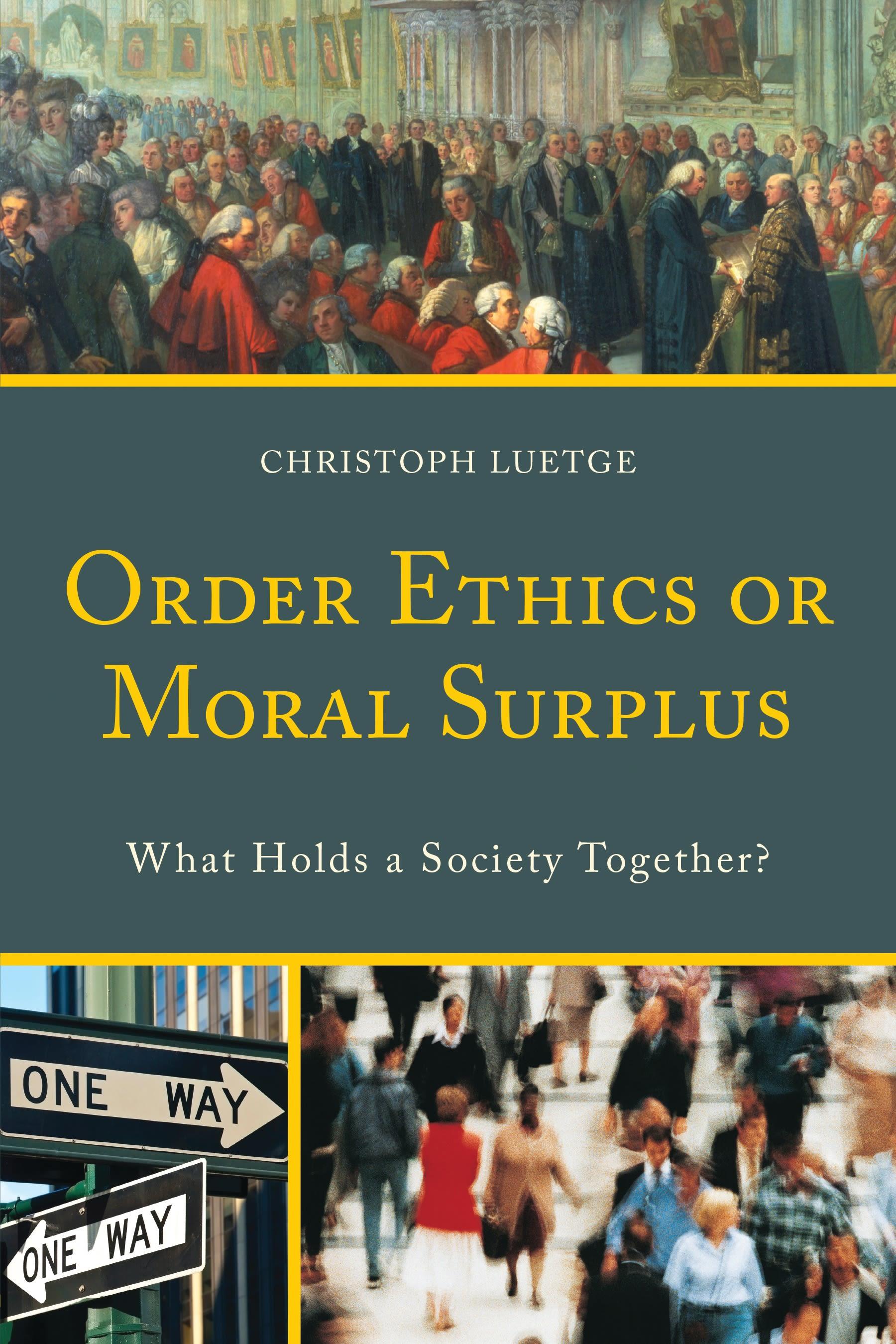
Christoph Luetge takes on a fundamental problem of contemporary political philosophy and ethics. He questions the often implicit assumption of many contemporary political philosophers according to which a society needs its citizens to adopt some shared basic qualities, views or capabilities (here termed a moral surplus). Luetge examines the respective theories of, among others, Habermas, Rawls, Gauthier, Buchanan, and Binmore with a focus on their respective moral surpluses. He finds that each moral surplus is either not necessary for the stability of societies or cannot remain stable when faced with opposing incentives. Binmore’s idea of empathy is the only one that is, at least partly, not confronted with this dilemma. Luetge provides an alternative view termed order ethics, which weakens the necessary assumptions for modern societies and basically only relies on mutual advantages as the fundamental basis of society.
Pay easily by card, Klarna, Apple Pay or Google Pay. Not happy? You always have a 14-day money-back guarantee. Read more in our terms. If you have any questions, email us at hello@memmo.org.
Memmo makes studying easier – wherever you are in the world. We bring your course books and smart study tools together in one place: summaries, quizzes, podcasts and flashcards. Plus Ted, your study buddy who answers anything you wonder. Over 50,000 students already study here – built to help you learn faster and stress less.