
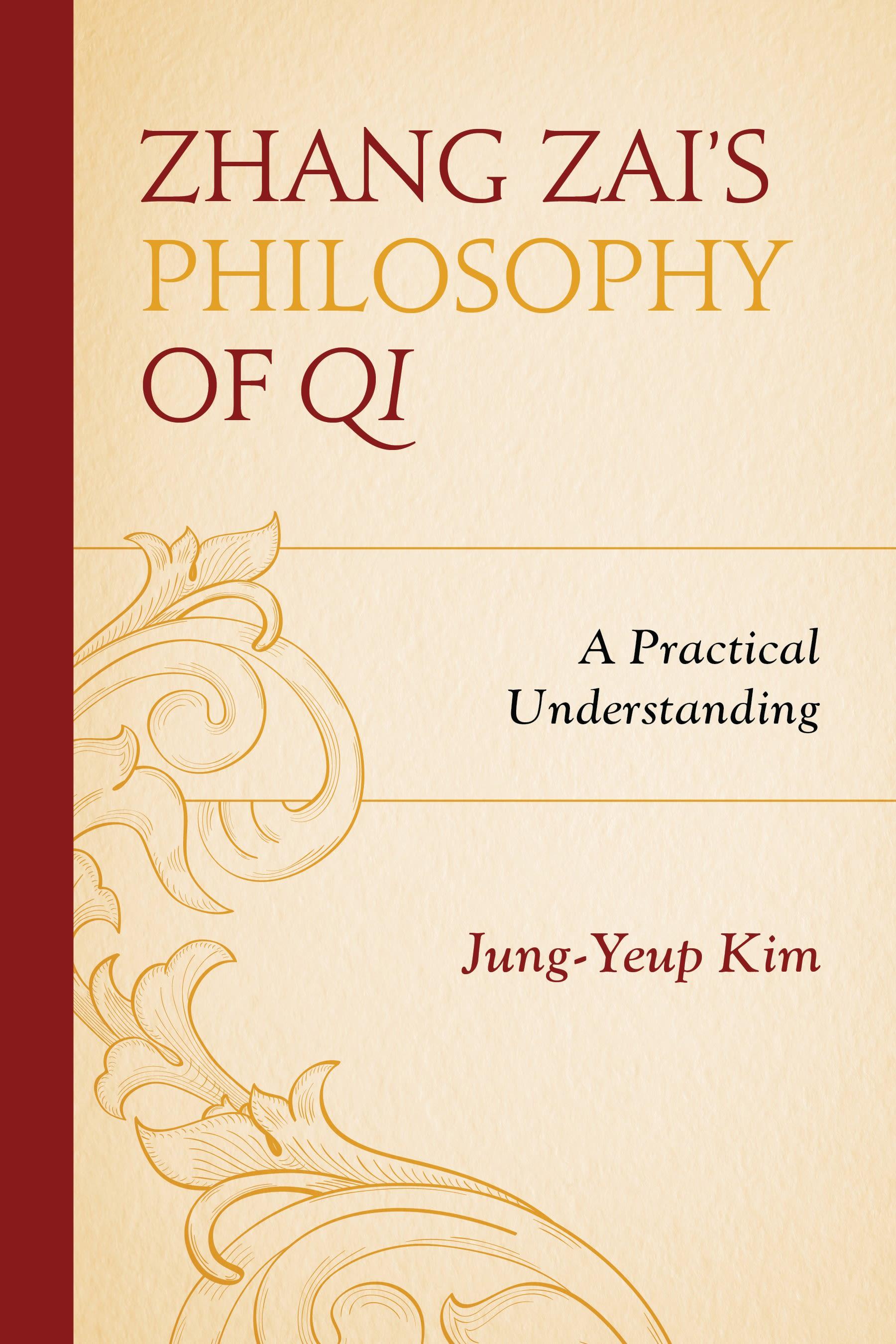
Qi ? (“vital energy”) is one of the most important concepts in Chinese philosophy and culture, and neo-Confucian Zhang Zai (1020-1077) plays a pivotal role in developing the notion. An investigation of his philosophy of qi is not confined to his particularity, but sheds light upon the notion of qi as it is understood within Chinese and East Asian thought in general. Yet, his position has not been given a thorough philosophical analysis in contemporary times. The purpose of this book is to provide a thorough and proper understanding of Zhang Zai’s philosophy of qi. Zhang Zai’s Philosophy of Qi: A Practical Understanding focuses on the practical argument underlying Zhang Zai’s development of qi that emphasizes the endeavor to create meaningful coherence amongst our differences through mutual communication and transformation. In addition to this, the book compares and engages Zhang Zai’s philosophy of qi with John Dewey’s philosophy of aesthetic experience in order to make Zhang Zai’s position more plausible and relevant to the contemporary Western audience.
Pay easily by card, Klarna, Apple Pay or Google Pay. Not happy? You always have a 14-day money-back guarantee. Read more in our terms. If you have any questions, email us at hello@memmo.org.
Memmo makes studying easier – wherever you are in the world. We bring your course books and smart study tools together in one place: summaries, quizzes, podcasts and flashcards. Plus Ted, your study buddy who answers anything you wonder. Over 50,000 students already study here – built to help you learn faster and stress less.