
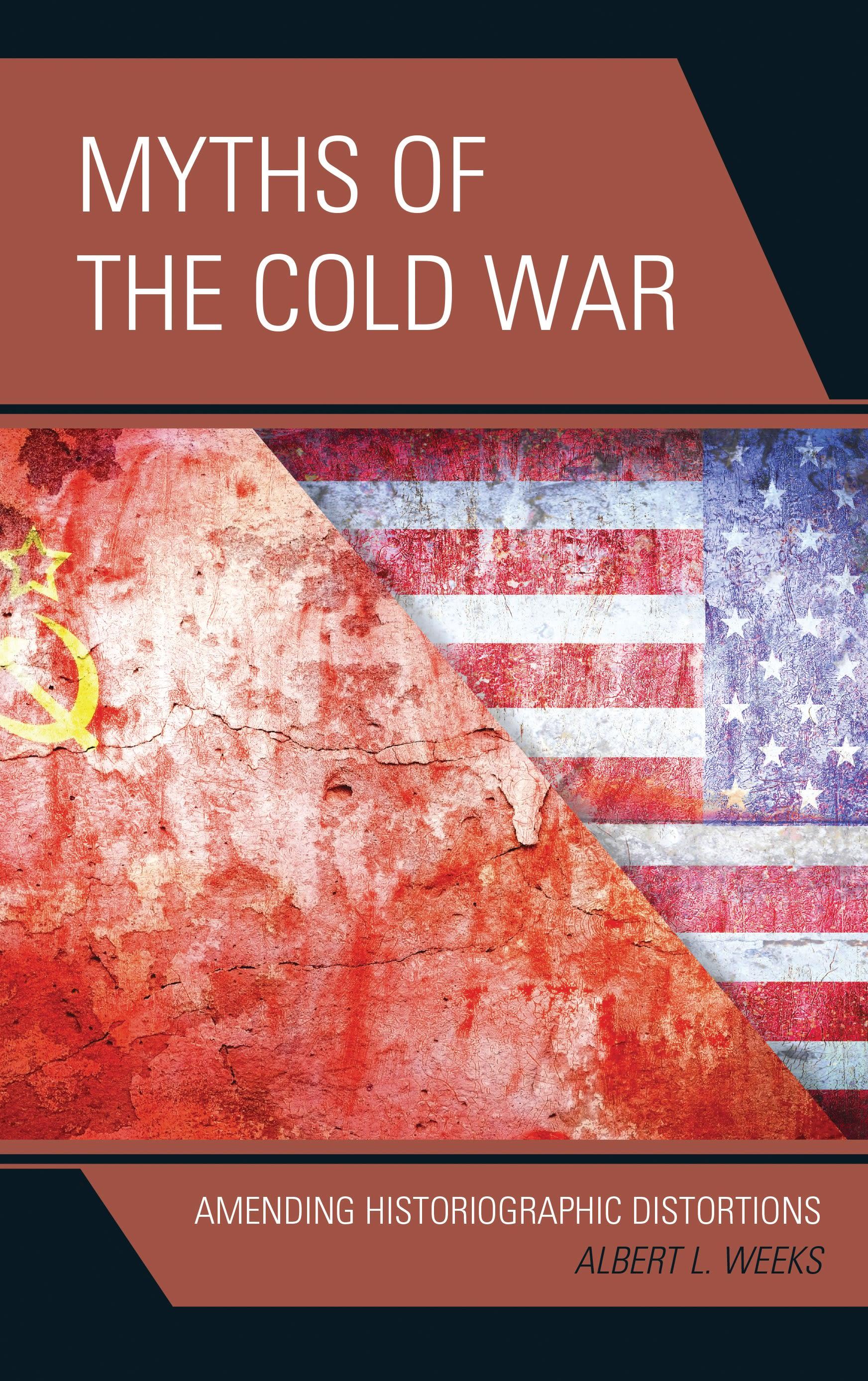
Myths of the Cold War: Amending Historiographic Distortions provides a corrective for the distortions and omissions of many previous domestic and foreign (including Russian) studies of the Cold War, especially those published since 2000. The “present interest” motivation in Weeks's analysis is gaining a clear understanding of the bi-polar, $4 trillion, nuclear-war-threatening standoff that lasted over 40 years after World War II until the demise of the Soviet Union in 1991.
Without such knowledge and understanding of this dangerous conflict, any future encounter of the cold-war type with another nation-state is liable to be construed in confusing ways just as the U.S.-Soviet Cold War was. The consequence of such misunderstanding in the historiographic sense as well as in policy-making at the highest level is that the populations of the contending powers will have distorted conceptions of the reasons for the confrontation. The result of this, in turn, is skewed tendentiousness that masks concrete, underlying causes of intense inter-state contention.
Practical benefits thus flow from an unprejudiced analysis of the past Cold War with Communist Russia. This understanding can help prevent a future conflict, such as one with Communist China, which some reputed sinologists are currently predicting, as well as one with post-Soviet Russia. Conversely, if a new cold war is imposed on the West, a clearer understanding of the post-World War II archetypical Cold War will be edifying.
Without such knowledge and understanding of this dangerous conflict, any future encounter of the cold-war type with another nation-state is liable to be construed in confusing ways just as the U.S.-Soviet Cold War was. The consequence of such misunderstanding in the historiographic sense as well as in policy-making at the highest level is that the populations of the contending powers will have distorted conceptions of the reasons for the confrontation. The result of this, in turn, is skewed tendentiousness that masks concrete, underlying causes of intense inter-state contention.
Practical benefits thus flow from an unprejudiced analysis of the past Cold War with Communist Russia. This understanding can help prevent a future conflict, such as one with Communist China, which some reputed sinologists are currently predicting, as well as one with post-Soviet Russia. Conversely, if a new cold war is imposed on the West, a clearer understanding of the post-World War II archetypical Cold War will be edifying.
Pay easily by card, Klarna, Apple Pay or Google Pay. Not happy? You always have a 14-day money-back guarantee. Read more in our terms. If you have any questions, email us at hello@memmo.org.
Memmo makes studying easier – wherever you are in the world. We bring your course books and smart study tools together in one place: summaries, quizzes, podcasts and flashcards. Plus Ted, your study buddy who answers anything you wonder. Over 50,000 students already study here – built to help you learn faster and stress less.