
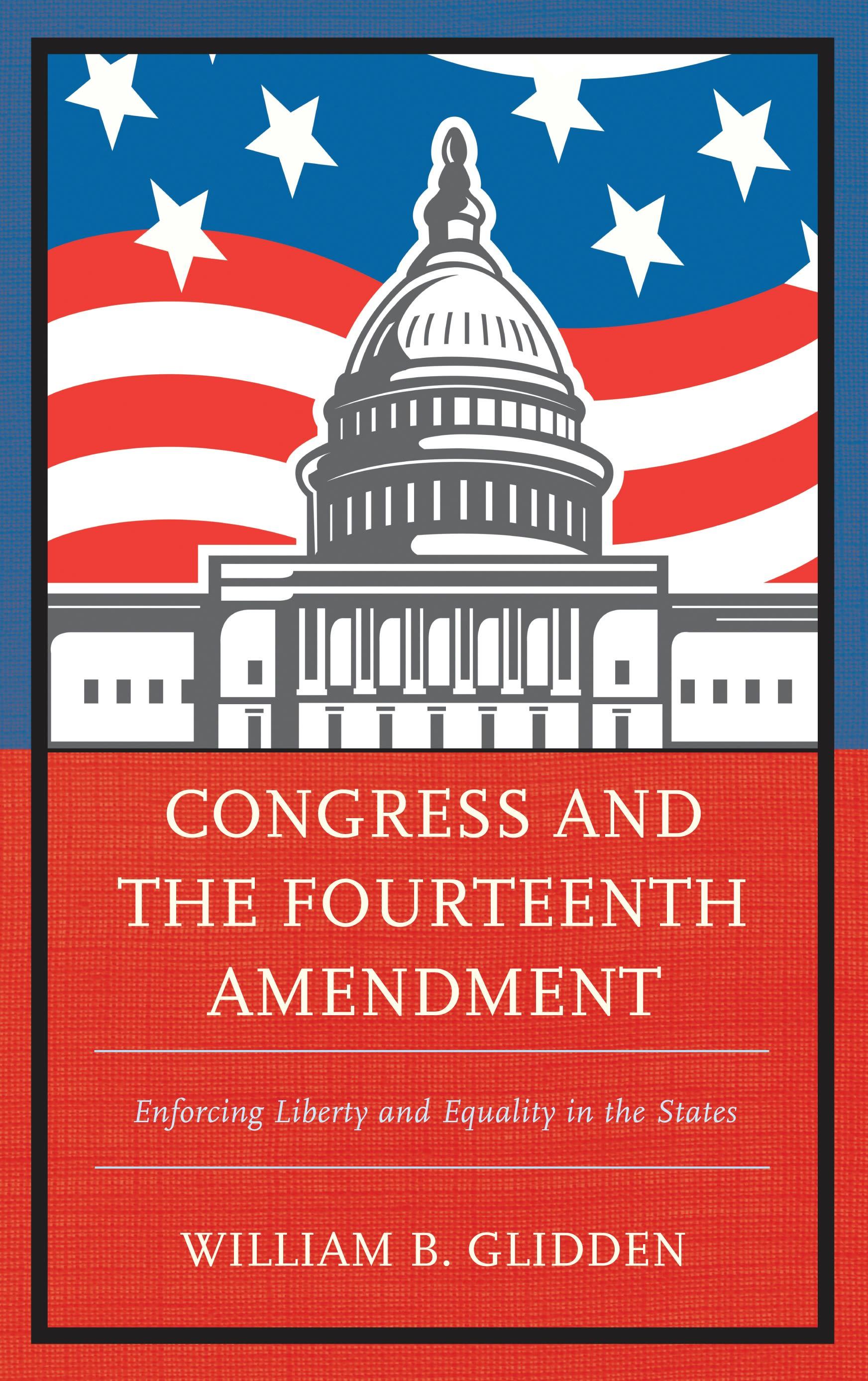
The discrepancy between the fourteenth amendment’s true meaning as originally understood, and the Supreme Court’s interpretation of its meaning over time, has been dramatic and unfortunate. The amendment was intended to be a constitutional rule for the promotion and protection of people’s rights, administered by the states as front-line regulators of life, liberty, and property, to be overseen by Congress and supported by federal legislation as necessary. In this book, William B. Glidden makes the case that instead, the amendment has operated as a judge-dominated, negative rights-against-government regime, supervised by the Supreme Court. Whenever Congress has enacted legislation to protect life, liberty, or property rights of people in the states, the laws were often overturned, narrowly construed, or forced to rely on the power of Congress to regulate interstate commerce, under the Supreme Court’s constraining interpretations. Glidden proposes that Congress must recover for itself or be restored to its proper role as the designated federal enforcement agency for the fourteenth amendment.
Pay easily by card, Klarna, Apple Pay or Google Pay. Not happy? You always have a 14-day money-back guarantee. Read more in our terms. If you have any questions, email us at hello@memmo.org.
Memmo makes studying easier – wherever you are in the world. We bring your course books and smart study tools together in one place: summaries, quizzes, podcasts and flashcards. Plus Ted, your study buddy who answers anything you wonder. Over 50,000 students already study here – built to help you learn faster and stress less.