
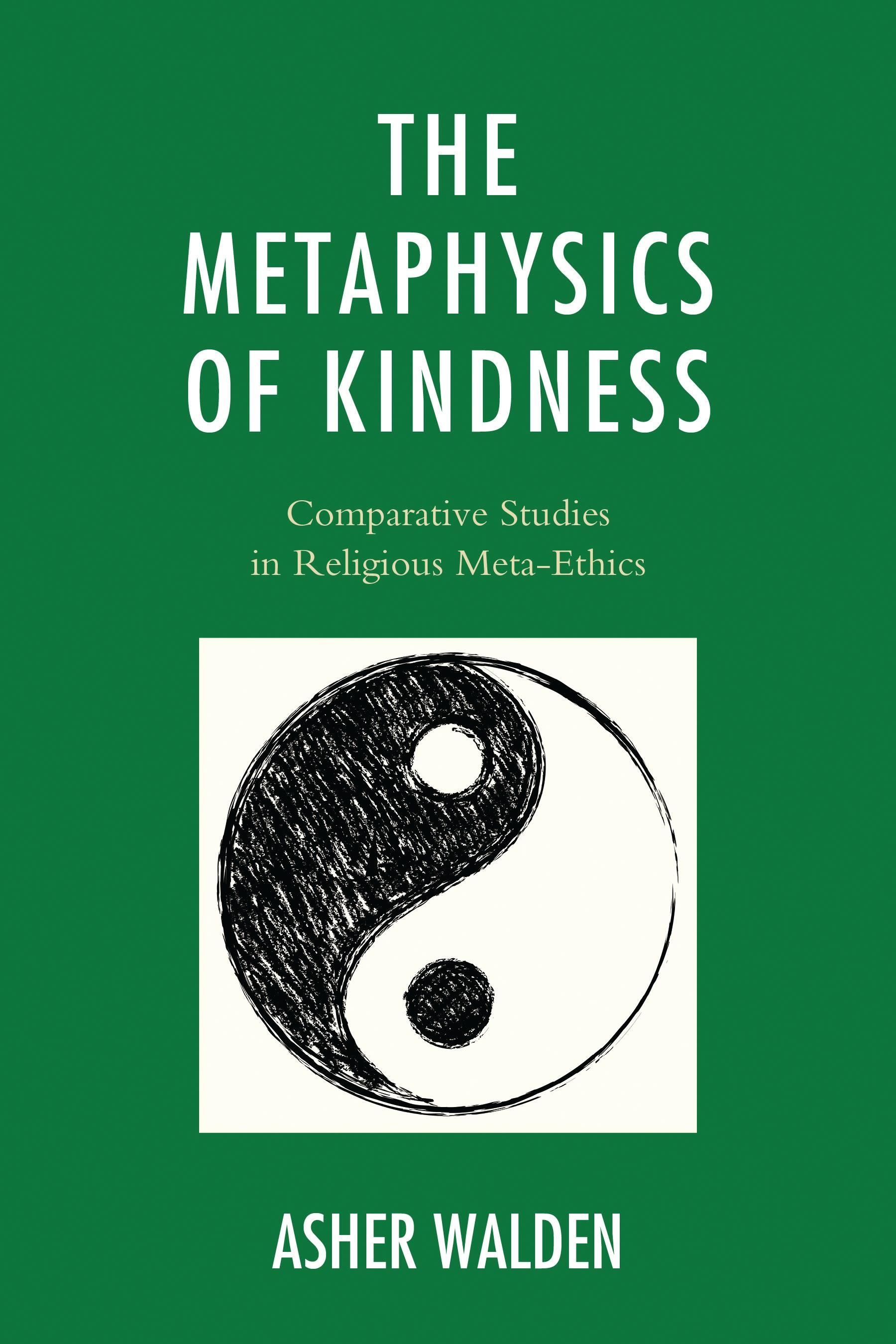
Religious world-views reserve a central and prominent place for human moral action, yet they must also contend with the reality of human moral failings. Is it possible to anchor moral knowledge and practice in the framework of a moral universe? If so, how do you explain why things go wrong? Must the religions appeal to faith alone, or can they develop a rational framework for their moral visions?
The Metaphysics of Kindness: Comparative Studies in Religious Meta-ethics explores the attempted solutions of four pivotal philosophers from very different traditions: the Neo-Confucian Zhu Xi, the German Idealist Arthur Schopenhauer, the Mahayana Buddhist Santideva, and the progenitor of the Kyoto School, Nishida Kitaro. Each position is investigated sympathetically and independently, yet there is an underlying commonality weaving the different studies together: compassion. Each philosopher treats compassion not only as one virtue among others, but as a kind of meta-virtue, the one that is in some respect the logical and/or psychological basis for all the other virtues. It is also a trait that is both at the heart of human nature, and also somehow at the heart of nature itself.
The Metaphysics of Kindness: Comparative Studies in Religious Meta-ethics explores the attempted solutions of four pivotal philosophers from very different traditions: the Neo-Confucian Zhu Xi, the German Idealist Arthur Schopenhauer, the Mahayana Buddhist Santideva, and the progenitor of the Kyoto School, Nishida Kitaro. Each position is investigated sympathetically and independently, yet there is an underlying commonality weaving the different studies together: compassion. Each philosopher treats compassion not only as one virtue among others, but as a kind of meta-virtue, the one that is in some respect the logical and/or psychological basis for all the other virtues. It is also a trait that is both at the heart of human nature, and also somehow at the heart of nature itself.
Pay easily by card, Klarna, Apple Pay or Google Pay. Not happy? You always have a 14-day money-back guarantee. Read more in our terms. If you have any questions, email us at hello@memmo.org.
Memmo makes studying easier – wherever you are in the world. We bring your course books and smart study tools together in one place: summaries, quizzes, podcasts and flashcards. Plus Ted, your study buddy who answers anything you wonder. Over 50,000 students already study here – built to help you learn faster and stress less.