
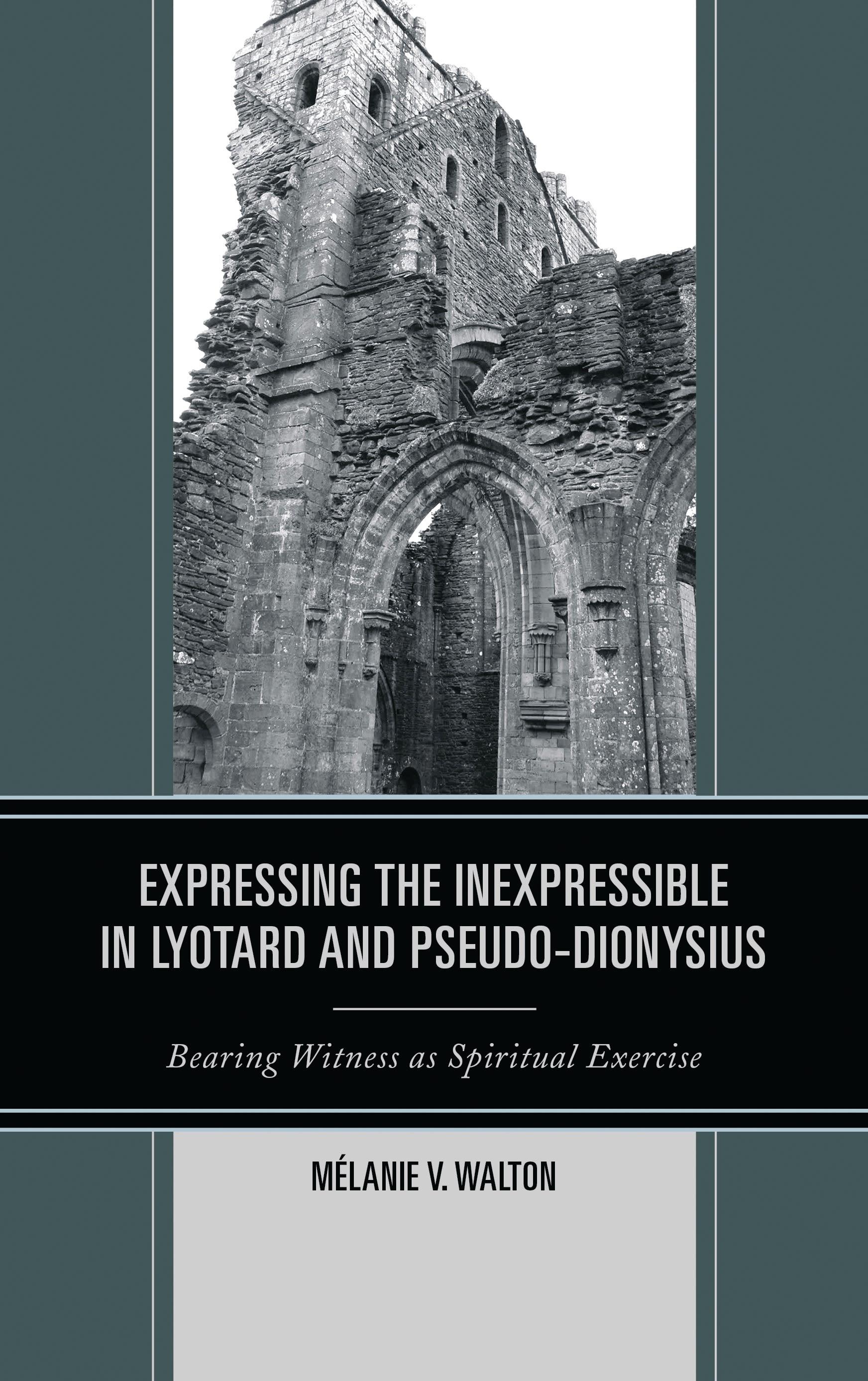
Testimony demands the witness to demonstrate her knowledge—that knowledge that she must have by the fact of being a witness to something, even if this something exceeds the possibility of expression by any means amenable to verification. Expressing the Inexpressible in Lyotard and Pseudo-Dionysius: Bearing Witness as Spiritual Exercise rigorously studies the inexpressible expression provoked by two illustrative examples: the silenced testimony of the Holocaust survivor, in Jean-François Lyotard’s The Differend, and the religious faithful, in Pseudo-Dionysius’ The Divine Names. Though coming from vastly different philosophical moments, the methods used by Lyotard and Dionysius prove to dissolve the apparent heterogeneity of postmodernism and Neoplatonist Christian mysticism and open radical new lines of dialogue. Mélanie Victoria Walton critically evaluates each thinker and tradition, rethinks witnessing, testimony, sublimity, and apophaticism, and then engages them together to forge a new reading of silence and eros. The resulting insights will be especially valuable to students and scholars of Continental philosophy, philosophy of religion, theology and religious studies, medieval studies, and Holocaust studies.
Pay easily by card, Klarna, Apple Pay or Google Pay. Not happy? You always have a 14-day money-back guarantee. Read more in our terms. If you have any questions, email us at hello@memmo.org.
Memmo makes studying easier – wherever you are in the world. We bring your course books and smart study tools together in one place: summaries, quizzes, podcasts and flashcards. Plus Ted, your study buddy who answers anything you wonder. Over 50,000 students already study here – built to help you learn faster and stress less.