
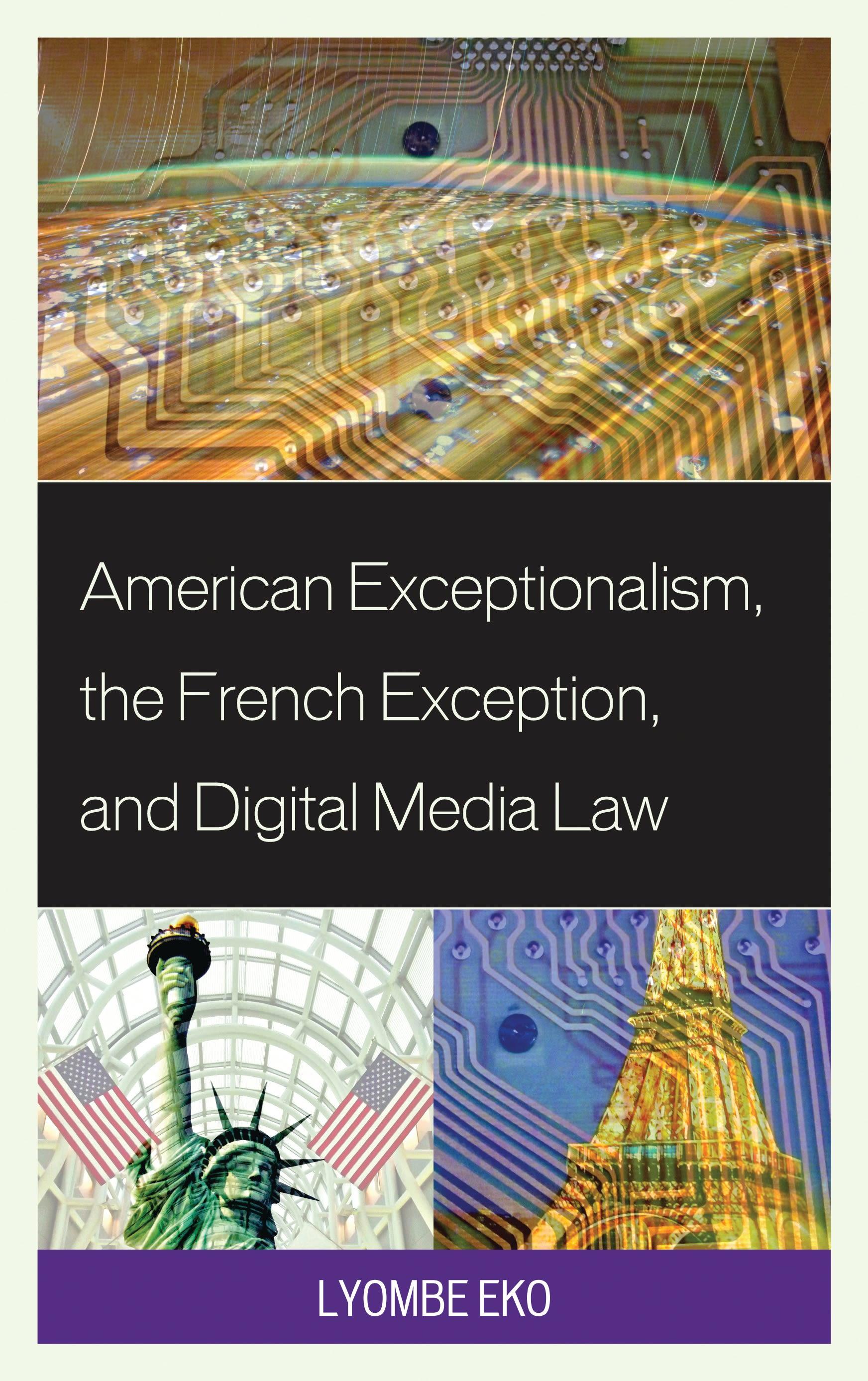
This volume explores the sameness and difference between the United States and France in the matters of freedom of expression on the Internet. The United States and France are liberal democracies that are part of the Western family of nations. However, despite their many similarities, they have a number of cultural and ideological differences. The United States is generally France’s ally in time of war and its cultural nemesis in time of peace. One of the reasons for this unusual relationship is that the United States and France are self-described “exceptional” countries. The United States and France are therefore two Western countries separated by different exceptionalist logics. Lyombe Eko uses this concept of exceptionalism as a theoretical framework for the analysis of American and French resolution of problems of human rights and freedom of expression in the traditional media and on the Internet. This book therefore analyzes how each county applies rules and regulations designed to manage a number of issues of media communication in real space, to the realities and specificities of cyberspace, within the framework of their respective exceptionalist logics. The fundamental question addressed concerns what happens when rules and regulations designed to regulate the media in clearly defined, national and regional geographic spaces, are suddenly confronted with the new realities and multi-communication platforms of the interconnected virtual sphere of cyberspace.
Pay easily by card, Klarna, Apple Pay or Google Pay. Not happy? You always have a 14-day money-back guarantee. Read more in our terms. If you have any questions, email us at hello@memmo.org.
Memmo makes studying easier – wherever you are in the world. We bring your course books and smart study tools together in one place: summaries, quizzes, podcasts and flashcards. Plus Ted, your study buddy who answers anything you wonder. Over 50,000 students already study here – built to help you learn faster and stress less.