
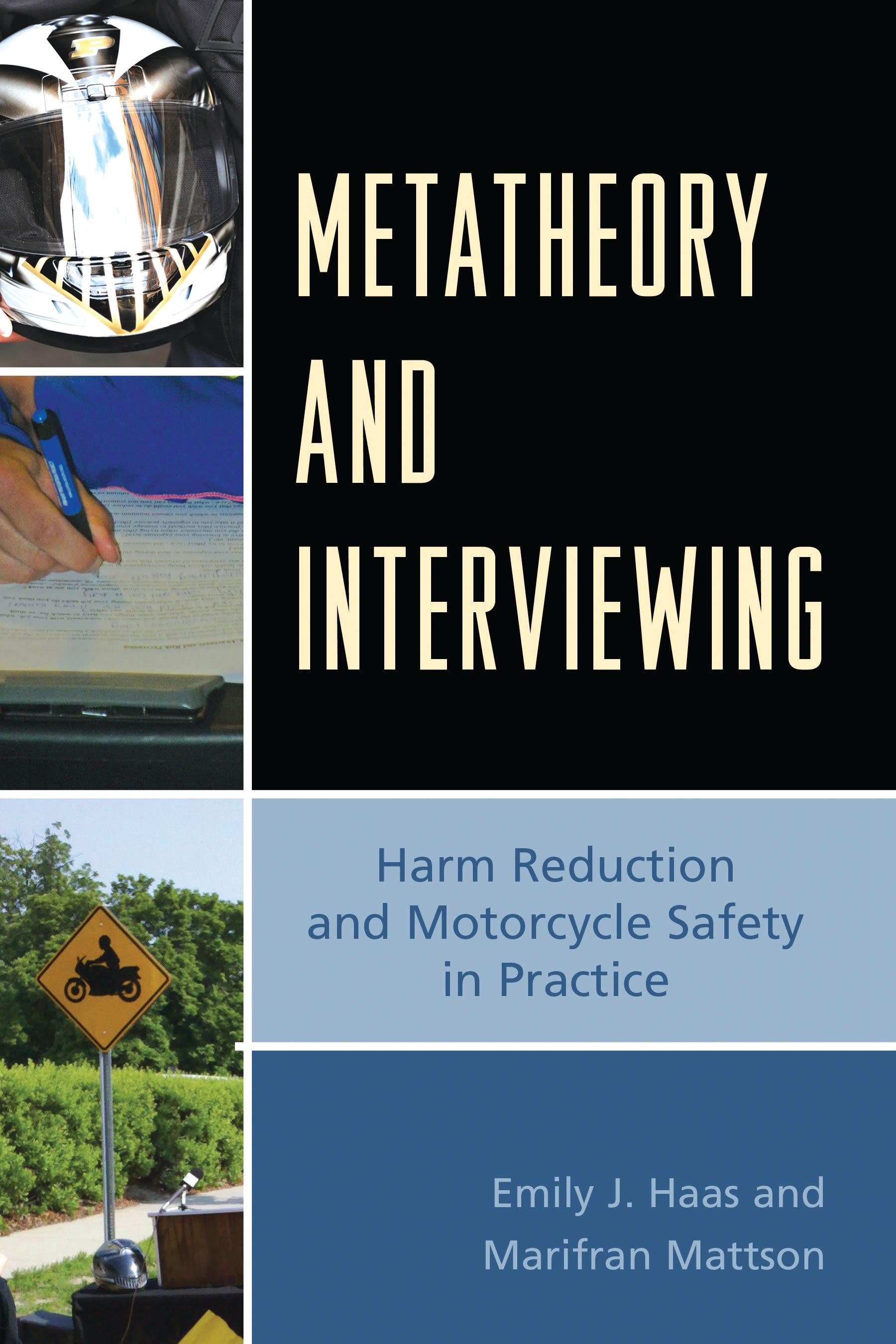
Metatheory and Interviewing: Harm Reduction and Motorcycle Safety in Practice
describes and applies a unique approach for advancing harm reduction theory. Emily J. Haas and Marifran Mattson argue that using harm reduction as a metatheory to guide qualitative interviews strengthens the use and acceptance of harm reduction and the application of constructs within health theories. Through analysis of in-depth interviews with respective participants—at-risk motorcyclists—which are informed by harm reduction metatheory, the authors examine how this unique approach to interviewing can be used to link metatheory, theory, methodology, and ultimately application and translation of research results. Metatheory and Interviewing culminates with a discussion of how the way we conduct and analyze interviews facilitates a deeper, more intimate conversation with research participants by encouraging them to incorporate the same, overarching harm reduction framework to provide feedback about changing specific health behaviors. Scholars of health communication and research will understand the critical role of a humanistic attitude and pragmatic communication with participants, as well as the importance of further extrapolating these strategies to their broader target audience.
describes and applies a unique approach for advancing harm reduction theory. Emily J. Haas and Marifran Mattson argue that using harm reduction as a metatheory to guide qualitative interviews strengthens the use and acceptance of harm reduction and the application of constructs within health theories. Through analysis of in-depth interviews with respective participants—at-risk motorcyclists—which are informed by harm reduction metatheory, the authors examine how this unique approach to interviewing can be used to link metatheory, theory, methodology, and ultimately application and translation of research results. Metatheory and Interviewing culminates with a discussion of how the way we conduct and analyze interviews facilitates a deeper, more intimate conversation with research participants by encouraging them to incorporate the same, overarching harm reduction framework to provide feedback about changing specific health behaviors. Scholars of health communication and research will understand the critical role of a humanistic attitude and pragmatic communication with participants, as well as the importance of further extrapolating these strategies to their broader target audience.
Pages: 294
Category: Vetenskapsteori och forskningsmetod
e-ISBN: 9780739180570
Shipping weight: 1.2 kg
Ships in: 1-2 days
Pay easily by card, Klarna, Apple Pay or Google Pay. Not happy? You always have a 14-day money-back guarantee. Read more in our terms. If you have any questions, email us at hello@memmo.org.
Memmo makes studying easier – wherever you are in the world. We bring your course books and smart study tools together in one place: summaries, quizzes, podcasts and flashcards. Plus Ted, your study buddy who answers anything you wonder. Over 50,000 students already study here – built to help you learn faster and stress less.