
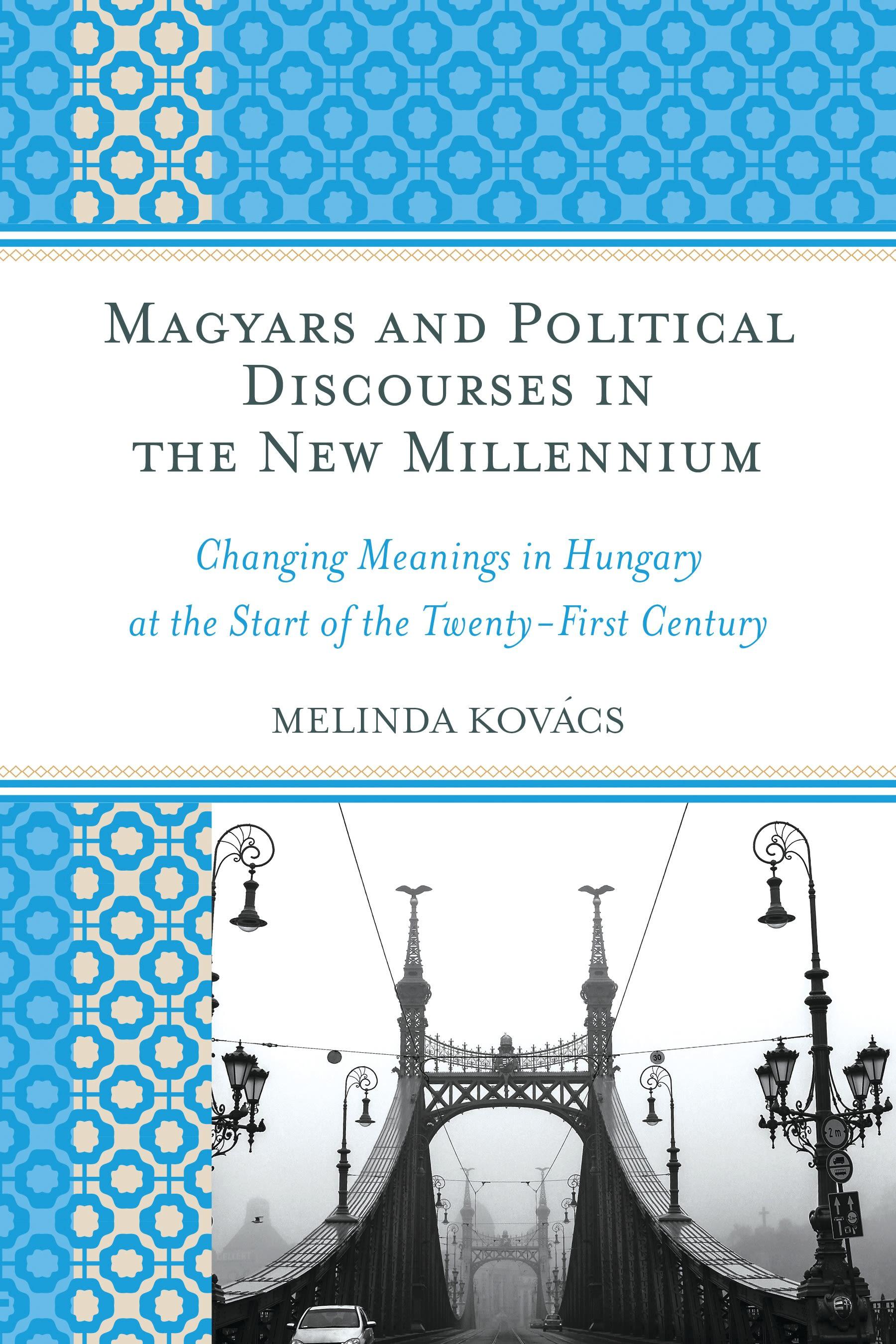
In this book, Melinda Kovács analyzes various areas of Hungarian political discourse: newspapers, party websites, informational books on the EU, and government-produced brochures sent to all households in Hungary. The inquiry is supported by an understanding of politics as achieving and negotiating change in discourse, which is not to be equated with simple language use. In addition to language, discourse also encompasses the meanings shared by members of a political community, along with the conventions of what is possible or plausible in politics. In the case of Hungary at the start of the twenty-first century, it is quite plausible to promote ethno-nationalism and it is quite possible to understand Hungarian political community in terms of historical references different from or devoid of communism and post-communism. An exploration of discourses generated between 1999 and 2013 reveals that while political developments in recent years have been a cause for legitimate concern, Hungarian political discourse has been making these developments plausible.
Pay easily by card, Klarna, Apple Pay or Google Pay. Not happy? You always have a 14-day money-back guarantee. Read more in our terms. If you have any questions, email us at hello@memmo.org.
Memmo makes studying easier – wherever you are in the world. We bring your course books and smart study tools together in one place: summaries, quizzes, podcasts and flashcards. Plus Ted, your study buddy who answers anything you wonder. Over 50,000 students already study here – built to help you learn faster and stress less.