
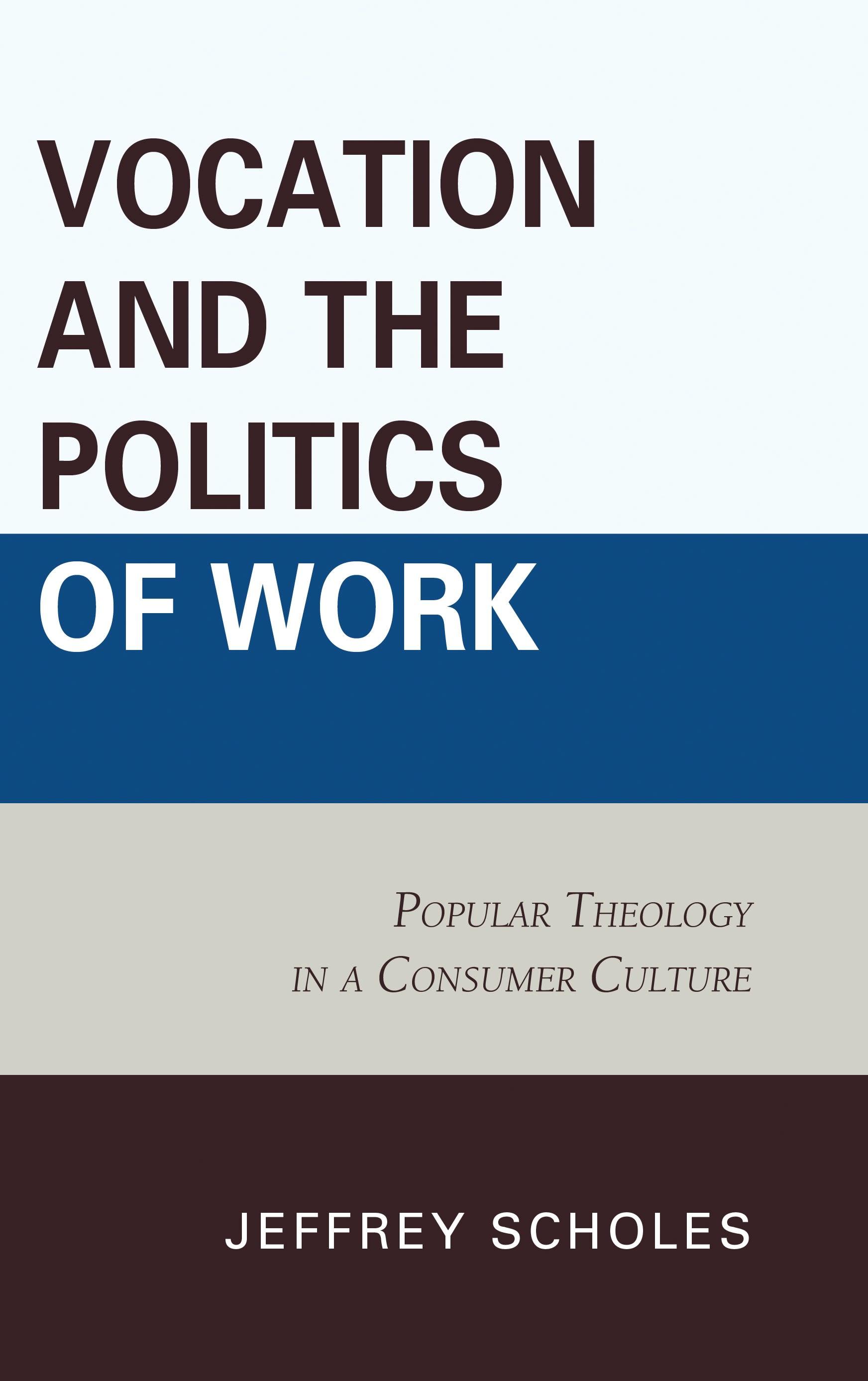
Since Martin Luther, vocations or callings have had a close relationship with daily work. It is a give-and-take relationship in which the meaning of a vocation typically negotiates with the kinds of work available (and vice-versa) at any given time. While “vocation language” still has currency in Western culture, today’s predominant meaning of vocation has little to do with the actual work performed on a job.
Jeffrey Scholes contends that recent theological treatments of the Protestant concept of vocation, both academic and popular, often unwittingly collude with consumer culture to circulate a concept of vocation that is detached from the material conditions of work. The result is a consumer-friendly vocation that is rendered impotent to inform and, if necessary, challenge the political norms of the workplace. For example, he classifies Rick Warren’s concept of “purpose” in his best-selling book, The Purpose-Driven Life, as a functional equivalent of vocation that acts in this way. Other popular uses of vocation along with insights culled from traditional theology and consumer culture studies help Scholes reveal the current state of vocations in the West. Using recent scholarship in the field of political theology, he argues that resisting commodification is a possibility and a prerequisite for a “political vocation,” if it is at all able to engage the norms that regulate and undermine the pursuit of justice in many modern workplaces.
Jeffrey Scholes contends that recent theological treatments of the Protestant concept of vocation, both academic and popular, often unwittingly collude with consumer culture to circulate a concept of vocation that is detached from the material conditions of work. The result is a consumer-friendly vocation that is rendered impotent to inform and, if necessary, challenge the political norms of the workplace. For example, he classifies Rick Warren’s concept of “purpose” in his best-selling book, The Purpose-Driven Life, as a functional equivalent of vocation that acts in this way. Other popular uses of vocation along with insights culled from traditional theology and consumer culture studies help Scholes reveal the current state of vocations in the West. Using recent scholarship in the field of political theology, he argues that resisting commodification is a possibility and a prerequisite for a “political vocation,” if it is at all able to engage the norms that regulate and undermine the pursuit of justice in many modern workplaces.
Pages: 222
Category: Religion & Teologi
e-ISBN: 9780739178911
Shipping weight: 1.2 kg
Ships in: 1-2 days
Pay easily by card, Klarna, Apple Pay or Google Pay. Not happy? You always have a 14-day money-back guarantee. Read more in our terms. If you have any questions, email us at hello@memmo.org.
Memmo makes studying easier – wherever you are in the world. We bring your course books and smart study tools together in one place: summaries, quizzes, podcasts and flashcards. Plus Ted, your study buddy who answers anything you wonder. Over 50,000 students already study here – built to help you learn faster and stress less.