
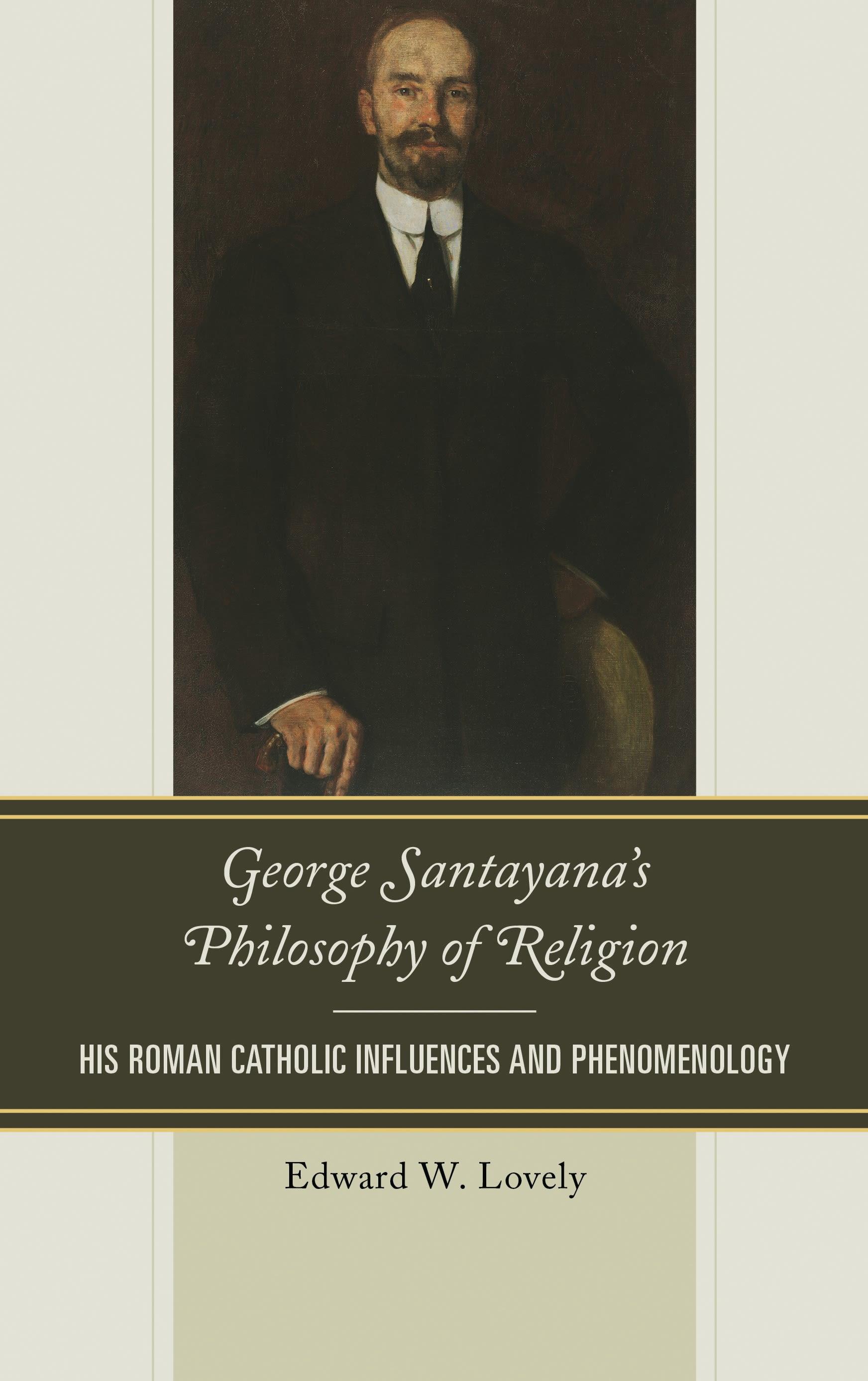
George Santayana (1862-1952) of Spanish descent, and generally claimed to be in the canon of American philosophers, was substantially influenced by his Roman Catholic origins in his philosophical disposition toward the value of tradition, religious symbols and dogma. His philosophical project sustained a respectful attitude toward the spiritual value of orthodox religion while the thrust of his philosophy was naturalistic and materialistic throughout. There is a perception by some scholars that Santayana’s philosophy evolved from a humanistic perspective to a more spiritual one in his later years. It is the position of this thesis that his philosophy, at the “core” depicting a harmonious striving toward individual happiness, remained essentially consistent from his earliest publication of Interpretations of Poetry and Religion and The Life of Reason through his later works of Scepticism and Animal Faith, Realms of Being, Dominations and Powers and The Idea of Christ in the Gospels. Santayana’s philosophical approach is both phenomenological and social constructionist in its methodology, significantly preempting the methodology of social constructionist theology and a post-modern interpretation of religion. His idiosyncratic phenomenological approach is compared with a “benchmark” methodology of Edmund Husserl, the generally accepted founder of the phenomenological method. There are also important similarities between Santayana’s phenomenological approach and those of Charles Sanders Peirce and Alfred North Whitehead. The basis for the comparison of the phenomenological methodology of Santayana and Husserl is their mutually similar fundamental theory of intuited essence. Santayana’s contribution to religious studies is not only philosophical but also theological where he has utilized Christian theological language in transposing and interpolating his philosophy of religion to the Christian drama of the salvational Christ. Santayana’s essay “Ultimate Religion” reflects his perspective of a disillusioned but still spiritual vision incorporating the piety, discipline, and spirituality; of a life of reason. Within the framework of this “model” Santayana’s philosophy of religion is developed and explored. Finally, the relevance of Santayana’s philosophy of religion to contemporary religious studies and selected religious issues is addressed with a delineation and discussion of some important aspects of his philosophical vision.
Pay easily by card, Klarna, Apple Pay or Google Pay. Not happy? You always have a 14-day money-back guarantee. Read more in our terms. If you have any questions, email us at hello@memmo.org.
Memmo makes studying easier – wherever you are in the world. We bring your course books and smart study tools together in one place: summaries, quizzes, podcasts and flashcards. Plus Ted, your study buddy who answers anything you wonder. Over 50,000 students already study here – built to help you learn faster and stress less.