
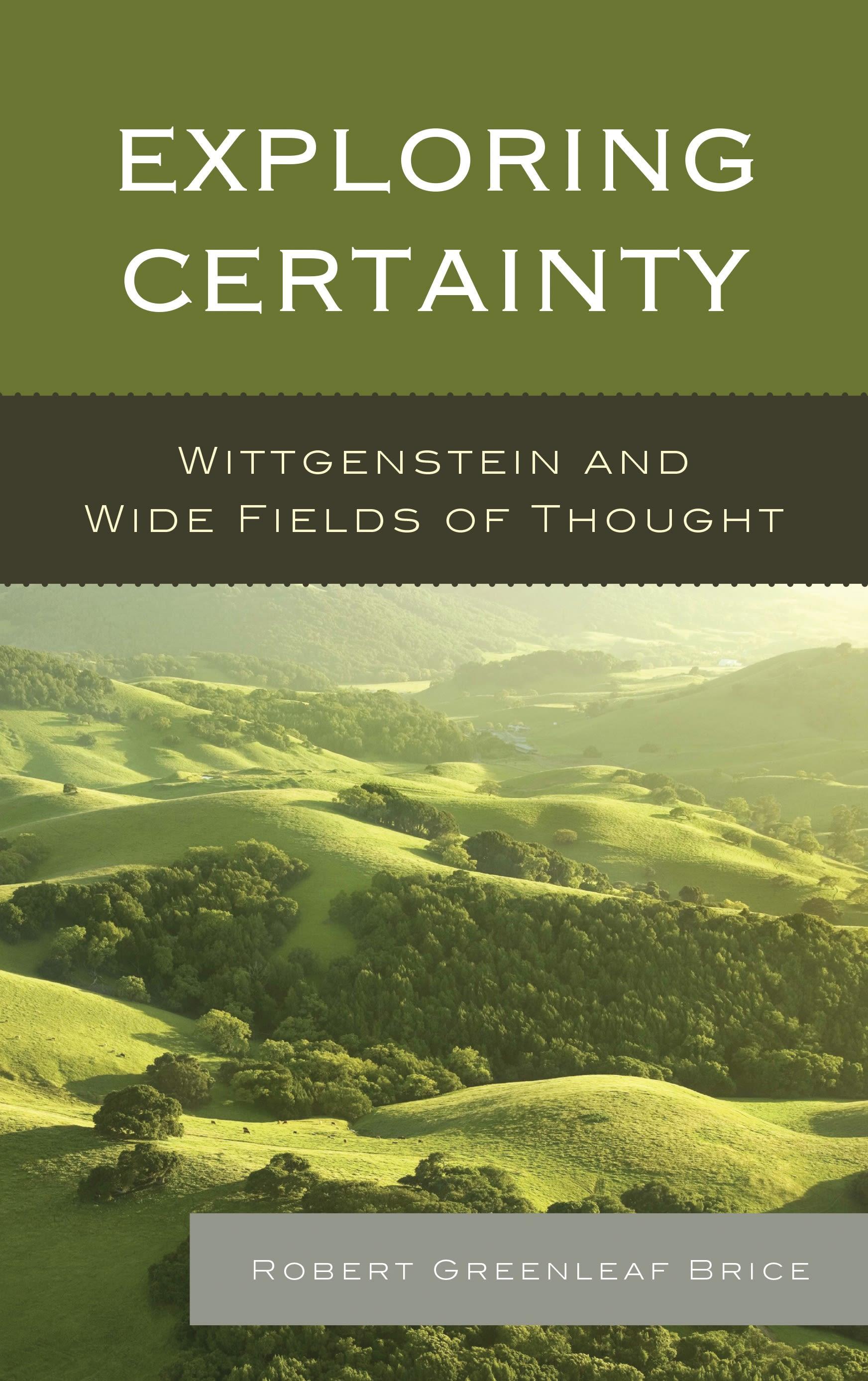
Ludwig Wittgenstein’s On Certainty explores a myriad of new and important ideas regarding our notions of belief, knowledge, skepticism, and certainty. During the course of his exploration, Wittgenstein makes a fascinating new discovery about certitude, namely, that it is categorically distinct from knowledge. As his investigation advances, he recognizes that certainty must be non-propositional and non-ratiocinated; borne out not in the things we say, but in our actions, our deeds. Many philosophers working outside of epistemology recognized Wittgenstein's insights and determined that his work's abrupt end might serve as an excellent launching point for still further philosophical expeditions. In Exploring Certainty: Wittgenstein and Wide Fields of Thought, Robert Greenleaf Bricesurveys some of this rich topography. Wittgenstein's writings serve as a point of departure for Brice's own ideas about certainty. He shows how Wittgenstein's rough and unpolished notion of certitude might be smoothed out and refined in a way to benefit studies of morality, aesthetics, cognitive science, philosophy of mathematics. Brice's work opens new avenues of thought for scholars and students of the Wittgensteinian tradition, while introducing original philosophies concerning issues central to human knowledge and cognition.
Pay easily by card, Klarna, Apple Pay or Google Pay. Not happy? You always have a 14-day money-back guarantee. Read more in our terms. If you have any questions, email us at hello@memmo.org.
Memmo makes studying easier – wherever you are in the world. We bring your course books and smart study tools together in one place: summaries, quizzes, podcasts and flashcards. Plus Ted, your study buddy who answers anything you wonder. Over 50,000 students already study here – built to help you learn faster and stress less.