
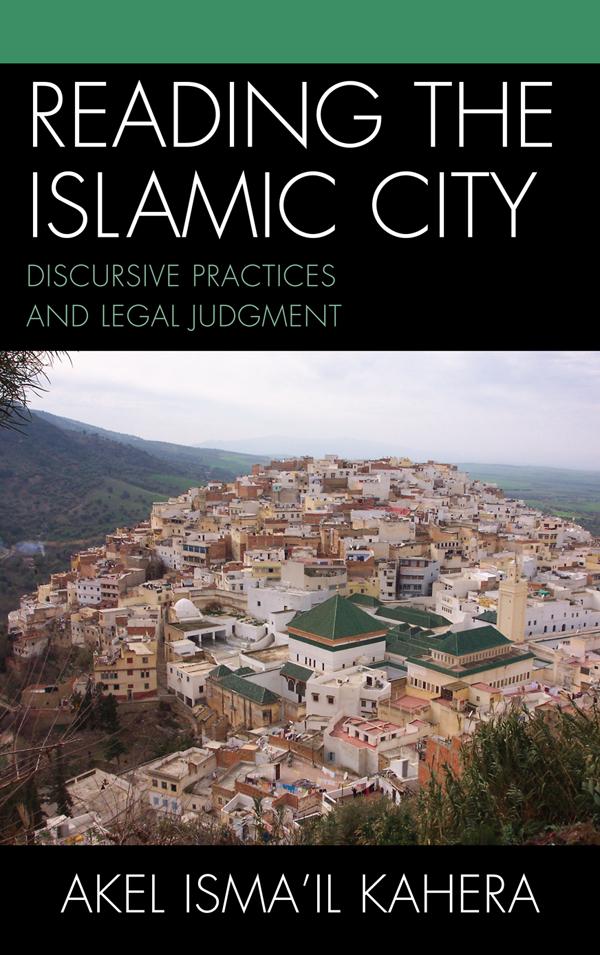
Reading the Islamic City offers insights into the implications the practices of the Maliki school of Islamic law have for the inhabitants of the Islamic city, the madinah. The problematic term madinah fundamentally indicates a phenomenon of building, dwelling, and urban settlement patterns that evolved after the 7th century CE in the Maghrib (North Africa) and al-Andalusia (Spain). Madinah involves multiple contexts that have socio-religious functions and symbolic connotations related to the faith and practice of Islam, and can be viewed in terms of a number of critiques such as everyday lives, boundaries, utopias, and dystopias. The book considers Foucault’s power/knowledge matrix as it applies to an erudite cadre of scholars and legal judgments in the realm of architecture and urbanism. It acknowledges the specificity of power/knowledge insofar as it provides a dominant framework to tackle property rights, custom, noise, privacy, and a host of other subjects. Scholars of urban studies, religion, history, and geography will greatly benefit from this vivid analysis of the relevance of the juridico-discursive practice of Maliki Law in a set of productive or formative discourses in the Islamic city.
Pay easily by card, Klarna, Apple Pay or Google Pay. Not happy? You always have a 14-day money-back guarantee. Read more in our terms. If you have any questions, email us at hello@memmo.org.
Memmo makes studying easier – wherever you are in the world. We bring your course books and smart study tools together in one place: summaries, quizzes, podcasts and flashcards. Plus Ted, your study buddy who answers anything you wonder. Over 50,000 students already study here – built to help you learn faster and stress less.