
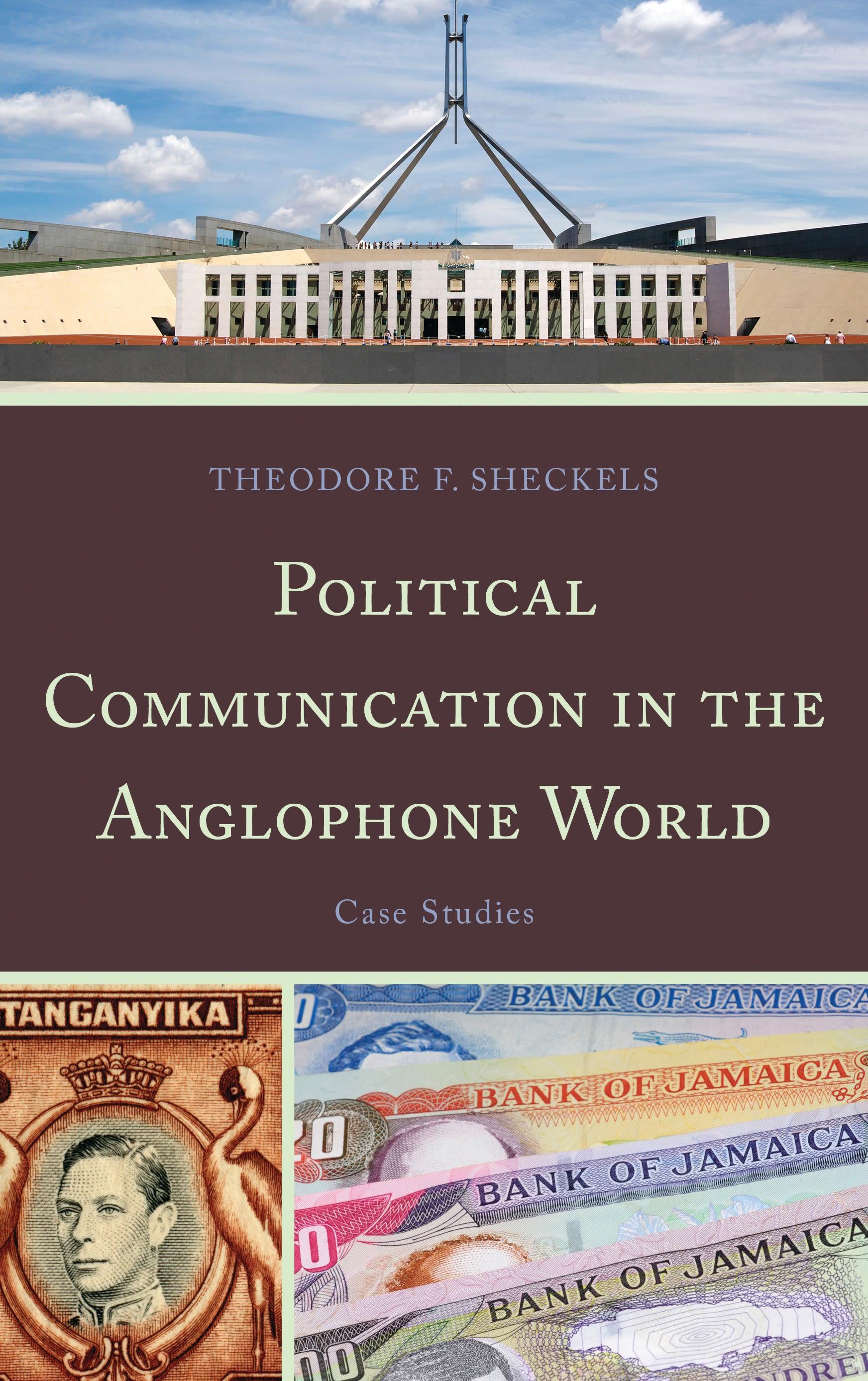
Political Communication in the Anglophone World: Case Studies, by Theodore F. Sheckels, extends political communication scholarship—primarily rhetorical scholarship—into the extensive English language arena outside the United States and the United Kingdom. While wrestling with the extent to which insights derived from and approaches used in political communication research focused on the United States can be used in other nations with different government structures, different media operations, and different political cultures, Sheckels provides insight into a variety of political communication topics ranging from the role gender plays in campaign politics to the politics involved as one speaks upon the occasion of leaving high office.
This book explores how Canadian Prime Minister Pierre Elliott Trudeau used moments of media attention to push his foreign and domestic policy agenda, as well as another Canadian Prime Minister, Kim Campbell, and the difficulties she faced because of her gender. Sheckels also examines Jamaica’s Michael Manley and his shift from advocating socialism to later supporting free markets, and reggae artist Bob Marley and his musical shift from concern for Kingston’s poor to embracing pan-Africanism. Popular media images of Africa are also considered, as the book investigates Mwai Kibaki’s attempts to unify Kenya, Nelson Mandela’s presidential rhetoric, and Thabo Mbeki’s “I am an African Address.” Finally, Sheckels goes to Australia to consider Gough Whitlam’s unprecedented dismissal as prime minister, and Kevin Rudd’s farewell speech after being replaced by his own party members.
Asking new questions and using novel rhetorical approaches, Political Communication in the Anglophone World illuminates how communication proceeds, whether the medium be speech, song, website, or pirouette.
This book explores how Canadian Prime Minister Pierre Elliott Trudeau used moments of media attention to push his foreign and domestic policy agenda, as well as another Canadian Prime Minister, Kim Campbell, and the difficulties she faced because of her gender. Sheckels also examines Jamaica’s Michael Manley and his shift from advocating socialism to later supporting free markets, and reggae artist Bob Marley and his musical shift from concern for Kingston’s poor to embracing pan-Africanism. Popular media images of Africa are also considered, as the book investigates Mwai Kibaki’s attempts to unify Kenya, Nelson Mandela’s presidential rhetoric, and Thabo Mbeki’s “I am an African Address.” Finally, Sheckels goes to Australia to consider Gough Whitlam’s unprecedented dismissal as prime minister, and Kevin Rudd’s farewell speech after being replaced by his own party members.
Asking new questions and using novel rhetorical approaches, Political Communication in the Anglophone World illuminates how communication proceeds, whether the medium be speech, song, website, or pirouette.
Pay easily by card, Klarna, Apple Pay or Google Pay. Not happy? You always have a 14-day money-back guarantee. Read more in our terms. If you have any questions, email us at hello@memmo.org.
Memmo makes studying easier – wherever you are in the world. We bring your course books and smart study tools together in one place: summaries, quizzes, podcasts and flashcards. Plus Ted, your study buddy who answers anything you wonder. Over 50,000 students already study here – built to help you learn faster and stress less.