
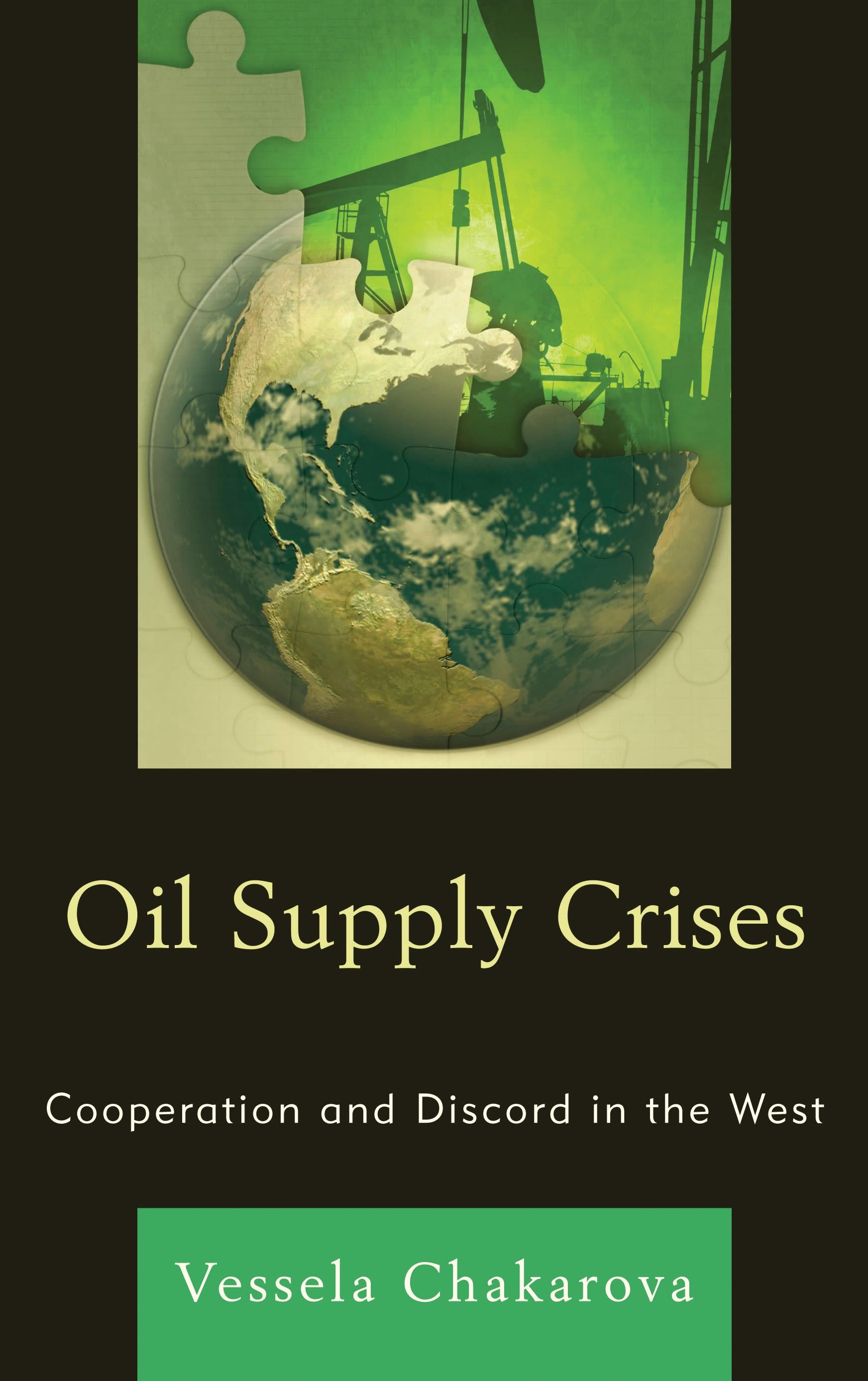
Oil Supply Crises: Cooperation and Discord in the West, by Vessela Chakarova, offers the most comprehensive, up-to-date analysis of consumer countries’ policies and reactions to oil supply shortages. In addition to being a valuable source of information on oil market dynamics, it provides a deep theoretical understanding of one of the most critical issues in international relations: inter-state cooperation.
This volume employs a structured, focused comparison to study European consumer countries’ cooperation in times of oil supply shortages. There have been fifteen such crises since the Second World War, three of which with dramatic consequences for the world economy. This analysis evaluates European cooperative efforts in seven of these cases, starting with the Abadan crisis in 1951. The cases are selected on the basis of their magnitude and economic impact. In particular, the study looks at intergovernmental negotiations within existing international bodies prior to, during, and immediately after the crisis. This study suggests that institutions are more likely to facilitate interstate cooperation in the presence of a strong leader—a role, which in the case of oil was assumed by the United States until the early 1970s. Cooperation in the oil issue-area has been the subject of only a few studies, none of which provides a systematic and comprehensive analysis. They are also limited in their scope and findings. Oil Supply Crises fills a significant gap in the literature on oil supply shortages and cooperation.
This volume employs a structured, focused comparison to study European consumer countries’ cooperation in times of oil supply shortages. There have been fifteen such crises since the Second World War, three of which with dramatic consequences for the world economy. This analysis evaluates European cooperative efforts in seven of these cases, starting with the Abadan crisis in 1951. The cases are selected on the basis of their magnitude and economic impact. In particular, the study looks at intergovernmental negotiations within existing international bodies prior to, during, and immediately after the crisis. This study suggests that institutions are more likely to facilitate interstate cooperation in the presence of a strong leader—a role, which in the case of oil was assumed by the United States until the early 1970s. Cooperation in the oil issue-area has been the subject of only a few studies, none of which provides a systematic and comprehensive analysis. They are also limited in their scope and findings. Oil Supply Crises fills a significant gap in the literature on oil supply shortages and cooperation.
Pages: 162
Category: Statsvetenskap & Politik
e-ISBN: 9780739169766
Shipping weight: 1.2 kg
Ships in: 1-2 days
Pay easily by card, Klarna, Apple Pay or Google Pay. Not happy? You always have a 14-day money-back guarantee. Read more in our terms. If you have any questions, email us at hello@memmo.org.
Memmo makes studying easier – wherever you are in the world. We bring your course books and smart study tools together in one place: summaries, quizzes, podcasts and flashcards. Plus Ted, your study buddy who answers anything you wonder. Over 50,000 students already study here – built to help you learn faster and stress less.