
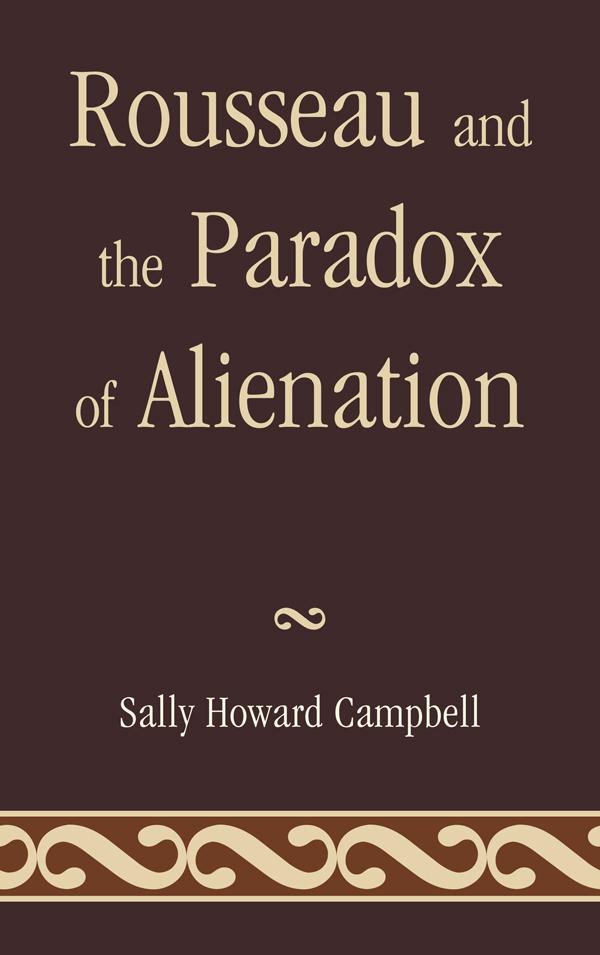
In the writings of Jean-Jacques Rousseau, Sally Howard Campbell finds the bridge between the now-dominant psycho-social conception of alienation and the legal-political conception that prevailed prior to Rousseau. She discusses Rousseau’s transformation of the concept of alienation and how it laid much of the groundwork for Marx’s later, more explicit discussions of man’s alienation. Using Discourse on the Origin and Foundations of Inequality, Campbell shows how Rousseau depicts the development of man’s awareness of himself as a conscious and moral being, illustrating man’s journey from a natural state of self-sufficiency to one of dependence and alienation. Paradoxically, she describes Rousseau’s belief that a state of wholeness can only be achieved through a man’s total alienation of himself to the community, free from the alienating effects of civil society. She concludes that, like Marx, Rousseau believed that alienation can only be transcended through the merging of the individual and the community.
Pay easily by card, Klarna, Apple Pay or Google Pay. Not happy? You always have a 14-day money-back guarantee. Read more in our terms. If you have any questions, email us at hello@memmo.org.
Memmo makes studying easier – wherever you are in the world. We bring your course books and smart study tools together in one place: summaries, quizzes, podcasts and flashcards. Plus Ted, your study buddy who answers anything you wonder. Over 50,000 students already study here – built to help you learn faster and stress less.