
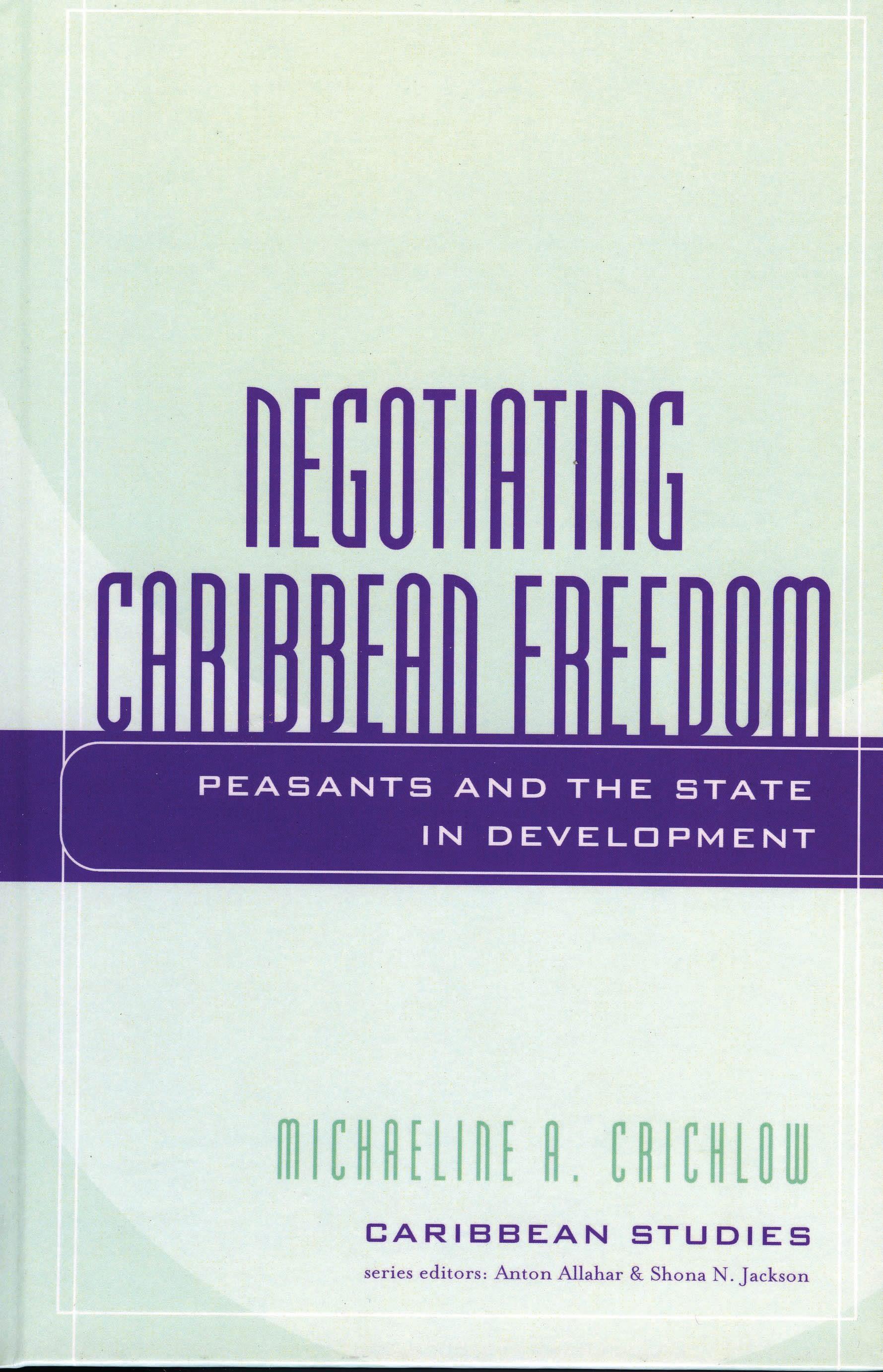
Michaeline A. Crichlow extends the contemporary critique of development projects by examining the political and discursive relationship of the state to the land-based working people, or "smallholders," in modern Jamaica. The first book of its kind, Negotiating Caribbean Freedom does for Jamaican historiography and sociology what Akhil Gupta's PostColonial Developments did for studies of India. Michaeline A. Crichlow gives us an incredibly nuanced discussion of how development dominates the lives of the subsistance peasantry, not through force, but through the instrumentalization of social relationships that were once ends in themselves. For example, what were once effective agricultural practices-embedded in the every day lives of smallholders all over the island-have, in the interest of serving international captial, been bureaucratized to the point that they are untenable to support the livelihoods of smallholders. Not content to measure the success or failure of development to deliver on its promises, she discloses both the continuities and differences between development projects of very different political regimes and helps to establish why smallholders support development projects even when those projects fail to address their needs.
Pay easily by card, Klarna, Apple Pay or Google Pay. Not happy? You always have a 14-day money-back guarantee. Read more in our terms. If you have any questions, email us at hello@memmo.org.
Memmo makes studying easier – wherever you are in the world. We bring your course books and smart study tools together in one place: summaries, quizzes, podcasts and flashcards. Plus Ted, your study buddy who answers anything you wonder. Over 50,000 students already study here – built to help you learn faster and stress less.