
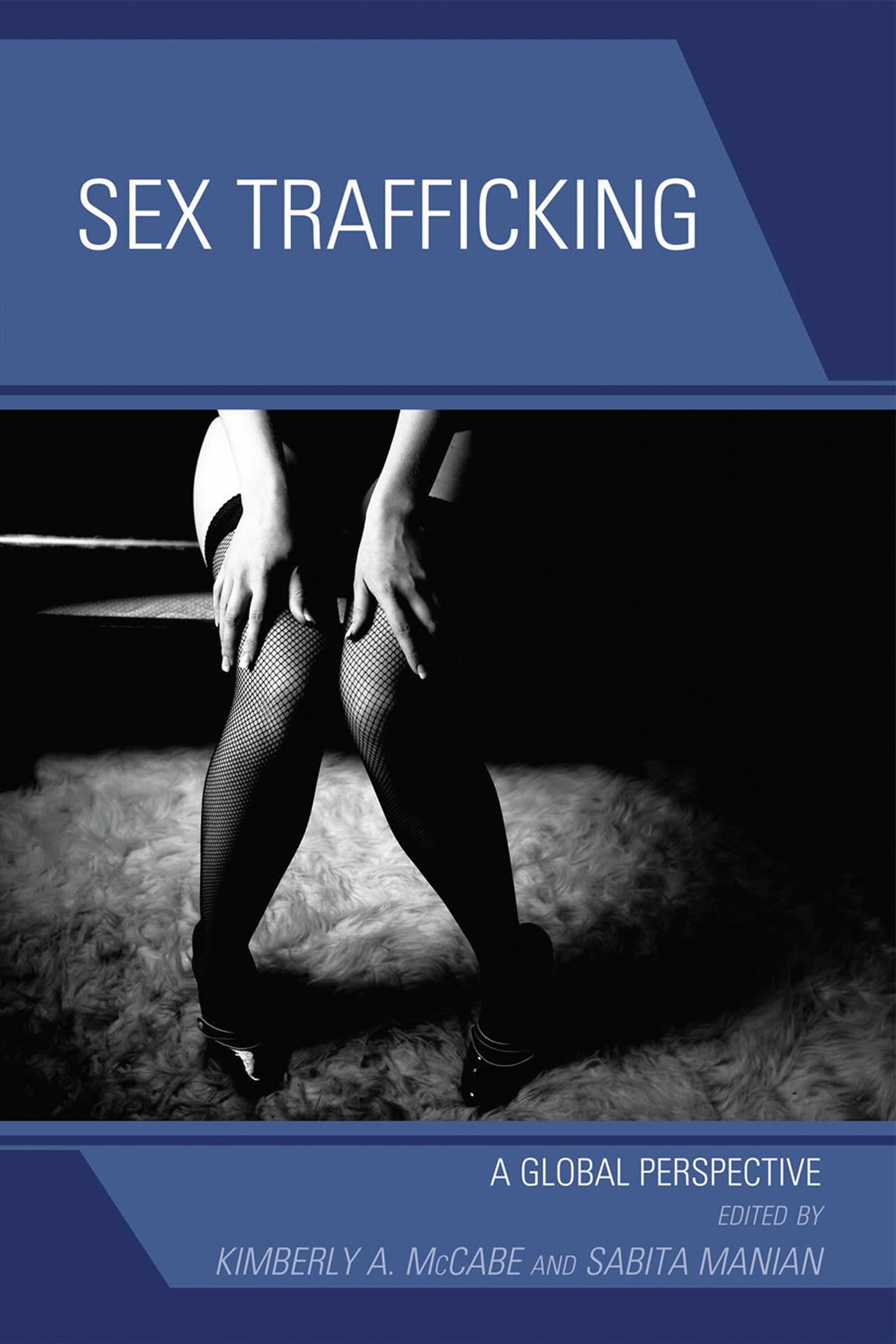
Global estimates of human trafficking range from 600,000 to four million victims each year with the majority being victims of sex trafficking. This strikingly large range belies the difficulty in gathering, defining, and accountability of sex-trafficking data. Victims of sex trafficking may be forced into pornography, prostitution for the military or militia, spousal prostitution, and prostitution for the sex-tourism industry. In response to the problem of sex trafficking, many nations have either misunderstood the definition or failed to comprehend the magnitude that have occurs within their borders. The United Nations has defined "human trafficking" as "the recruitment, transfer, harboring or receipt of persons by threat or use of force." Similarly, the U.S. State Department's Trafficking Victims Protection Act 2000 describes severe forms of trafficking as: (a) sex trafficking in which a commercial sex act is induced by force, fraud, or coercion, or in which the person induced to perform such an act has not attained 18 years of age; or (b) the recruitment, harboring, transportation, provision, or obtaining of a person for labor or services, through the use of force, fraud, or coercion for the purpose of subjection to involuntary servitude, peonage, debt bondage, or slavery.
In Sex Trafficking: A Global Perspective, sex trafficking is discussed in terms of its multiple purposes and its victims. The essays provide information to build upon the limited knowledge-base on the subject of sex trafficking and the legislative responses to human trafficking by the various highlighted countries. This collection is unique because it serves the needs of those studying human trafficking from a global perspective by targeting the issue within every geographic region, it provides a general profile of geographic regions in terms of demographic characteristics and political conditions that may support the growth of sex trafficking, and it is written on a basic information-supply-level to provide readers with a fo
In Sex Trafficking: A Global Perspective, sex trafficking is discussed in terms of its multiple purposes and its victims. The essays provide information to build upon the limited knowledge-base on the subject of sex trafficking and the legislative responses to human trafficking by the various highlighted countries. This collection is unique because it serves the needs of those studying human trafficking from a global perspective by targeting the issue within every geographic region, it provides a general profile of geographic regions in terms of demographic characteristics and political conditions that may support the growth of sex trafficking, and it is written on a basic information-supply-level to provide readers with a fo
Pay easily by card, Klarna, Apple Pay or Google Pay. Not happy? You always have a 14-day money-back guarantee. Read more in our terms. If you have any questions, email us at hello@memmo.org.
Memmo makes studying easier – wherever you are in the world. We bring your course books and smart study tools together in one place: summaries, quizzes, podcasts and flashcards. Plus Ted, your study buddy who answers anything you wonder. Over 50,000 students already study here – built to help you learn faster and stress less.