
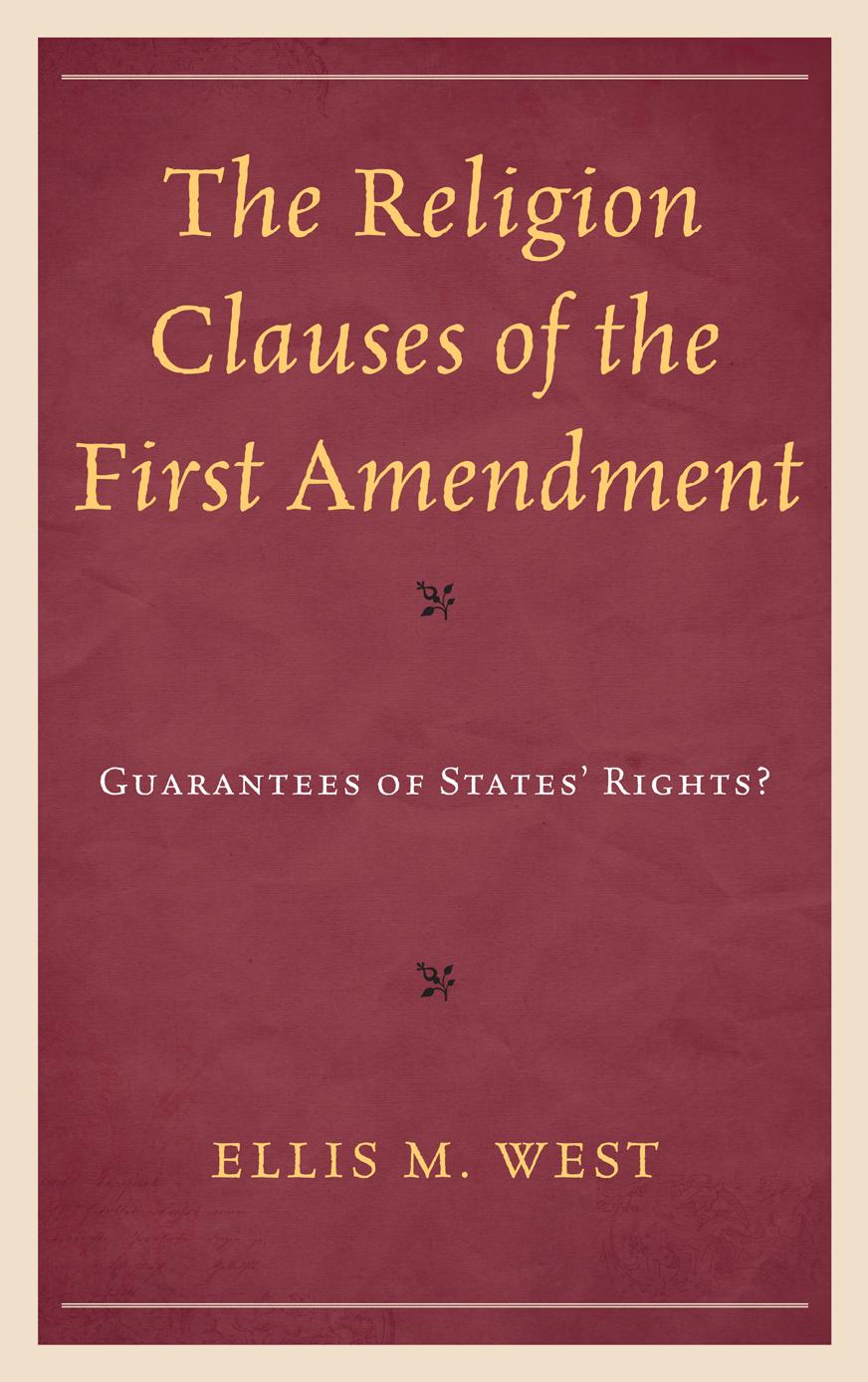
The First Amendment of the U. S. Constitution begins: "Congress shall make no law respecting an establishment of religion, or prohibiting the free exercise thereof . . . ." The Supreme Court has consistently held that these words, usually called the "religion clauses," were meant to prohibit laws that violate religious freedom or equality. In recent years, however, a growing number of constitutional law and history scholars have contended that the religion clauses were not intended to protect religious freedom, but to reserve the states' rights to legislate on. If the states' rights interpretation of the religion clauses were correct and came to be accepted by the Supreme Court, it could profoundly affect the way the Court decides church-state cases involving state laws. It would allow the states to legislate on religion-even to violate religious freedom, discriminate on the basis of religion, or to establish a particular religion. This book carefully, thoroughly, and critically examines all the arguments for such an interpretation and, more importantly, all the available historical evidence. It concludes that the clauses were meant to protect religious freedom and equality of the individuals not the states' rights
Pay easily by card, Klarna, Apple Pay or Google Pay. Not happy? You always have a 14-day money-back guarantee. Read more in our terms. If you have any questions, email us at hello@memmo.org.
Memmo makes studying easier – wherever you are in the world. We bring your course books and smart study tools together in one place: summaries, quizzes, podcasts and flashcards. Plus Ted, your study buddy who answers anything you wonder. Over 50,000 students already study here – built to help you learn faster and stress less.