
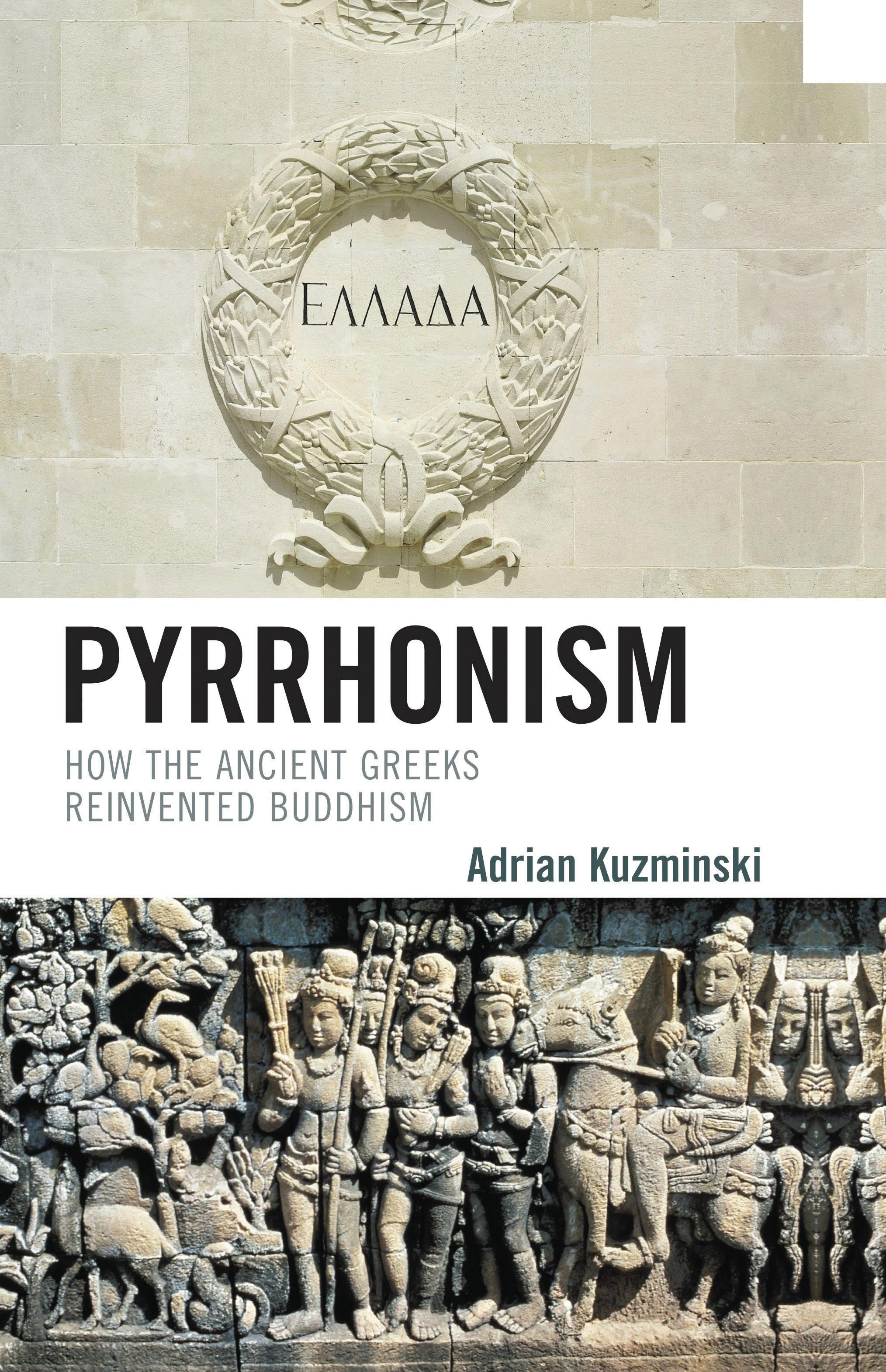
Pyrrhonism is commonly confused with scepticism in Western philosophy. Unlike sceptics, who believe there are no true beliefs, Pyrrhonists suspend judgment about all beliefs, including the belief that there are no true beliefs. Pyrrhonism was developed by a line of ancient Greek philosophers, from its founder Pyrrho of Elis in the fourth century BCE through Sextus Empiricus in the second century CE. Pyrrhonists offer no view, theory, or knowledge about the world, but recommend instead a practice, a distinct way of life, designed to suspend beliefs and ease suffering. Adrian Kuzminski examines Pyrrhonism in terms of its striking similarity to some Eastern non-dogmatic soteriological traditions-particularly Madhyamaka Buddhism. He argues that its origin can plausibly be traced to the contacts between Pyrrho and the sages he encountered in India, where he traveled with Alexander the Great. Although Pyrrhonism has not been practiced in the West since ancient times, its insights have occasionally been independently recovered, most recently in the work of Ludwig Wittgenstein. Kuzminski shows that Pyrrhonism remains relevant perhaps more than ever as an antidote to today's cultures of belief.
Pay easily by card, Klarna, Apple Pay or Google Pay. Not happy? You always have a 14-day money-back guarantee. Read more in our terms. If you have any questions, email us at hello@memmo.org.
Memmo makes studying easier – wherever you are in the world. We bring your course books and smart study tools together in one place: summaries, quizzes, podcasts and flashcards. Plus Ted, your study buddy who answers anything you wonder. Over 50,000 students already study here – built to help you learn faster and stress less.