
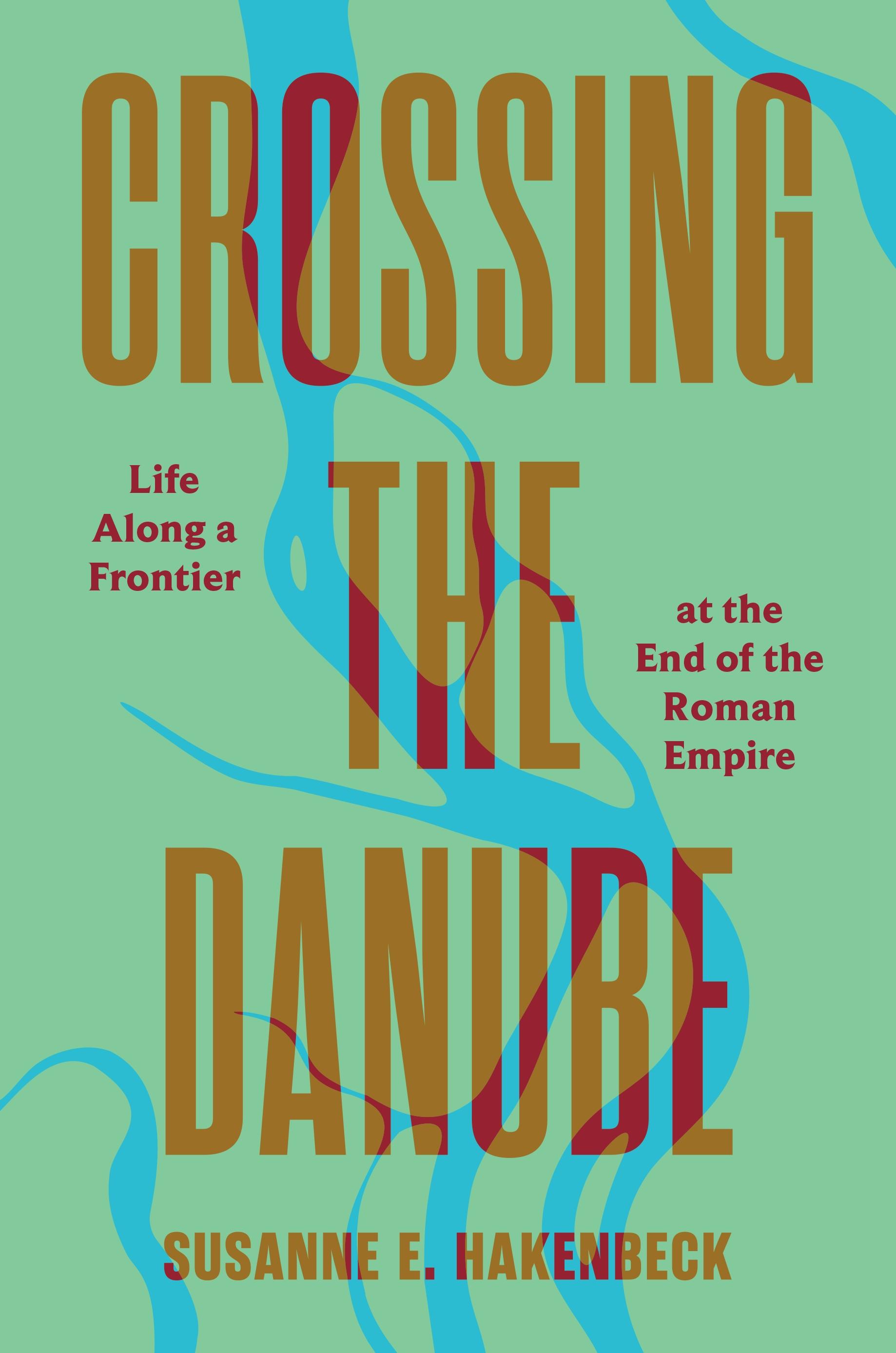
A richly illustrated history that reveals how the peoples living along the Danube frontier helped transform the Roman Empire
Crossing the Danube offers a new account of the peoples who lived along Europe’s greatest river—the nearly 2,000-mile-long Danube—during the dramatic centuries leading up to the end of the Roman Empire in the West. Written sources of this period are dominated by accounts of Rome’s struggle against the “barbarians” along the Danube, which marked the border between the empire and the lands beyond, and the crossing of the river by Gothic refugees escaping the Huns in 376 CE was long seen as a catalyst of Rome’s fall. But, as Susanne Hakenbeck shows, that is not the whole story. The Danube was not only a political boundary, but a living landscape. Using archaeological evidence, she traces four tumultuous centuries along the river through the material world of the people who lived there.
Crossing the Danube describes how ordinary people and local elites navigated, exploited, and ultimately transformed the Roman frontier. It tells how generations of interactions—through diplomacy, trading, raiding, and recruitment into the Roman army—bound the empire and the people beyond the frontier together. By the fifth century, former “barbarians” embraced the trappings of Roman imperial power and moved toward full political participation. In doing so, the people from beyond the Danube ended up fracturing the empire.
Sweeping in scope yet rich in detail, Crossing the Danube overturns longstanding myths about the role of the so-called barbarians in Rome’s collapse.
Pay easily by card, Klarna, Apple Pay or Google Pay. Not happy? You always have a 14-day money-back guarantee. Read more in our terms. If you have any questions, email us at hello@memmo.org.
Memmo makes studying easier – wherever you are in the world. We bring your course books and smart study tools together in one place: summaries, quizzes, podcasts and flashcards. Plus Ted, your study buddy who answers anything you wonder. Over 75,000 students already study here – built to help you learn faster and stress less.